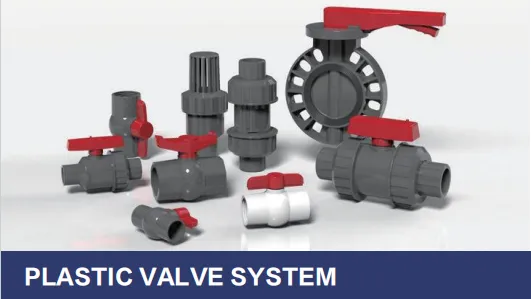
When you're working with fluid systems, plastic valves are the unsung heroes that keep everything flowing smoothly. They're lightweight, resist corrosion like champions, and handle chemicals without batting an eye. But let's be honest - with so many options out there, choosing the right valve can feel overwhelming. Don't worry though, by the time you finish reading this guide, you'll be navigating valve selection like a pro.
Materials Matter: Plastic Valve Fundamentals
Before we dive into valve types, let's talk about what they're made of. Not all plastics are created equal, and picking the right material makes all the difference:
The Plastic Hall of Fame
PVC (Polyvinyl Chloride):
The workhorse of plastic valves. It's affordable, works great with water systems, and has enough flexibility to forgive minor installation mishaps.
CPVC (Chlorinated PVC):
Think of PVC's tougher cousin. Handles higher temperatures like hot water lines without breaking a sweat.
PVDF (Polyvinylidene Fluoride):
The chemical resistance champion. If you're dealing with aggressive chemicals or ultra-pure water, this is your go-to.
PP (Polypropylene):
Tough and UV-resistant. Perfect for outdoor applications where sun exposure is a concern.
The material you choose directly affects what your valve can handle - things like temperature limits, chemical compatibility, and pressure ratings. Getting this right is half the battle.
The Plastic Valve Lineup: 12 Key Players
Alright, let's meet the players. Each valve type has its specialty, and knowing these differences will help you match the valve to your needs.
1. Ball Valves
How they work:
Simple quarter-turn operation - straight through flow when open, blocked when closed.
Best for:
Quick shut-off applications where you need reliability (like main water lines).
Watch out:
Not great for precise flow control.
2. Butterfly Valves
How they work:
A disc rotates within the pipe - parallel to flow when open, perpendicular when closed.
Best for:
Large diameter pipes where space is limited (HVAC systems are a common spot).
Watch out:
May create slight pressure drop even when fully open.
3. Check Valves
How they work:
Automatically allow flow in one direction only - perfect for preventing backflow.
Best for:
Pump discharge lines to avoid water hammer issues.
Watch out:
Need sufficient pressure to open properly.
4. Diaphragm Valves
How they work:
A flexible diaphragm moves up and down to control flow.
Best for:
Sterile applications like food processing or pharmaceuticals where contamination must be avoided.
Watch out:
The diaphragm is a wear component that'll need replacement over time.
5. Globe Valves
How they work:
A plug moves perpendicular to the flow path for precision control.
Best for:
Situations requiring fine-tuned flow adjustments.
Watch out:
They create noticeable pressure drop.
6. Pressure Relief Valves
How they work:
Automatically open when pressure exceeds preset levels.
Best for:
Safety applications like boilers or compressed air systems.
Watch out:
Need regular testing to ensure they'll work when needed.
7. Solenoid Valves
How they work:
Electrically controlled opening/closing via electromagnetic coil.
Best for:
Automated systems where remote control is essential.
Watch out:
Requires electrical wiring and proper voltage.
8. Gate Valves
How they work:
A gate slides up and down across the flow path.
Best for:
On/off service in large diameter pipes.
Watch out:
Not meant for throttling - partial opening can damage the gate.
9. Plug Valves
How they work:
Rotating plug with hole aligns with flow path.
Best for:
Handling slurries or liquids with particulates.
Watch out:
Seals may degrade over time with gritty media.
10. Needle Valves
How they work:
Precision tapered stem for fine flow control.
Best for:
Calibration or instrumentation lines where every drop matters.
Watch out:
Narrow passages can clog with dirty media.
11. Foot Valves
How they work:
Special check valve with integrated strainer.
Best for:
Pump suction lines to maintain prime.
Watch out:
Strainers need periodic cleaning.
12. Pinch Valves
How they work:
Flexible sleeve pinched closed by mechanical force.
Best for:
Handling aggressive slurries or abrasive media.
Watch out:
The sleeve wears over time and needs replacement.
Remember: The right valve often combines functionality with application requirements. A ball valve might be perfect for isolation, while a needle valve handles fine control downstream.
Making the Right Choice: Your Selection Toolkit
Choosing the perfect valve isn't just about types - it's about aligning with your system's personality. Here's how to think about it:
The Flow Story
Ask yourself: What's flowing through this pipe? Water? Chemicals? Slurry? Each fluid has different needs. Aggressive chemicals need PVDF valves, while simple water systems do fine with PVC.
Temperature Tales
Is your system dealing with boiling liquids or freezing winter conditions? CPVC handles heat better than standard PVC, while PP is better for outdoor temperature swings.
Pressure Plot
High-pressure systems demand thicker walls and robust designs. Always check the valve's pressure rating against your system's maximum operating pressure.
Connection Compatibility
How will this valve connect to your pipes? Threaded? Flanged? Solvent weld? Make sure your chosen valve has compatible connection types with existing infrastructure.
Control Character
Will you just turn it on/off occasionally? Or constantly adjust the flow? Simple on/off needs are met with ball valves, while globe or needle valves handle fine control.
Automation Angle
Does this need to tie into automated systems? Solenoid valves are your friend here, especially when incorporating them into larger
water supply and drainage systems
.
Installation Insights
Even the best valve fails if installed wrong. A few pro tips:
-
Never force misaligned pipes - it creates stress points that lead to cracks
-
Follow solvent welding instructions to the letter if using cemented connections
-
Support pipes properly near valves to prevent sagging or stress
-
For threaded valves, use the right tape or sealant - but don't overdo it!
Maintenance Must-Knows
Plastic valves are low-maintenance, but not no-maintenance:
-
Operate valves periodically (monthly) to prevent sticking
-
Watch for leaks around stems or connections - early detection prevents bigger issues
-
Keep moving parts clean from debris buildup
-
Follow manufacturer specs for rebuild kits when seals wear out
Putting It All Together
Navigating the world of plastic valves doesn't have to be intimidating. Whether you're working with industrial chemical processes, agricultural irrigation, or residential
water supply and drainage systems
, there's a plastic valve engineered for your specific challenges.
Start by understanding what you're asking the valve to handle - the chemistry, temperature and pressure demands. Then consider how it needs to operate - simple on/off duty or precision flow control? From there, the choices narrow dramatically. Ball valves handle isolation with quarter-turn efficiency, needle valves fine-tune critical flows, and solenoid valves integrate with automation systems.
The right plastic valve blends seamlessly into your system, providing years of reliable service. Armed with this knowledge, you're now ready to make informed choices that optimize both performance and longevity.