
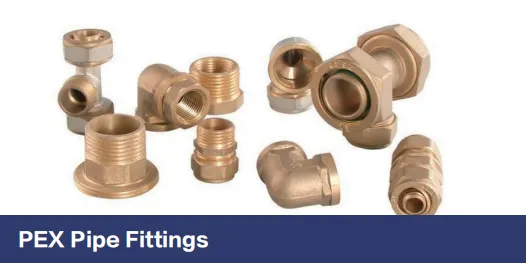
If you've ever tackled a plumbing project—whether upgrading your home's bathroom or fitting out a commercial space—you know that the smallest parts often make the biggest difference. Enter 1/2 inch PEX pipe fittings: those unassuming connectors that keep water flowing smoothly through your walls, under your floors, and into every tap and shower in your building. But not all PEX fittings are created equal. Today, we're breaking down two of the most popular types: compression fittings and crimp fittings. We'll talk about how they work, when to use each, and why choosing the right supplier matters—especially if you're in markets like Saudi Arabia, where reliability and local expertise can make or break your project.
Let's start with the basics. PEX (cross-linked polyethylene) pipes have taken the plumbing world by storm over the past few decades, and for good reason. They're flexible, resistant to corrosion, and handle temperature changes better than traditional copper or PVC. But PEX pipes alone can't do the job—they need fittings to connect to valves, fixtures, and other pipes. That's where 1/2 inch PEX pipe fittings come in. At 1/2 inch, they're the sweet spot for most residential and light commercial plumbing: small enough to fit in tight spaces (hello, bathroom walls!) but sturdy enough to handle the water pressure needed for sinks, showers, and appliances like dishwashers.
Think of them as the "glue" of your plumbing system—except instead of glue, they use mechanical connections to create watertight seals. And when we say "watertight," we mean it. A bad fitting can lead to leaks, water damage, and costly repairs down the line. That's why understanding the difference between compression and crimp fittings is so important. Let's dive in.
Compression fittings are like the "easy button" of PEX connections. They're designed to be simple to install, even if you're not a professional plumber. Here's how they work: each fitting has three main parts—a brass or plastic body, a compression ring (sometimes called a "ferrule"), and a nut. You slide the nut over the PEX pipe, then the compression ring, then push the pipe into the fitting body. Tighten the nut, and the ring compresses around the pipe, creating a seal. No fancy tools, no complicated steps—just a wrench and a little elbow grease.
Compression fittings shine in low-to-medium pressure systems. Think residential bathrooms, kitchens, or small commercial spaces like coffee shops. They're also great for temporary setups or projects where you might need to disassemble and reassemble the plumbing later (like a rental property renovation). Just keep in mind: they're not ideal for high-pressure applications, like main water lines in large commercial buildings, or for systems that handle extreme temperatures (over 200°F), as the compression seal can weaken over time under stress.
If compression fittings are the easy button, crimp fittings are the industrial-grade solution. They're the go-to for professional plumbers and large-scale projects because they create a super strong, permanent seal. How do they work? Crimp fittings have a barb (a ridged end) that you push the PEX pipe onto. Then you slide a copper or stainless steel crimp ring over the pipe and fitting, and use a crimping tool to squeeze the ring tightly around both, deforming it to lock the pipe and fitting together. It's like shrink-wrapping the connection—once it's crimped, it's not going anywhere.
Crimp fittings are your best bet for high-pressure systems, large commercial projects, or any plumbing that's hidden behind walls or under floors (since you won't want to take it apart later). They're also ideal for hot water lines, as the crimp seal holds up better than compression under repeated temperature cycles. The only downside? You need a crimping tool, which can cost $50–$200. But if you're a contractor or planning multiple projects, it's a worthwhile investment. Pro tip: Always use the right size die for your fitting (1/2 inch, in this case) to ensure a proper crimp—too loose, and it leaks; too tight, and you might crack the pipe.
| Feature | Compression Fittings | Crimp Fittings |
|---|---|---|
| Installation Tools | Adjustable wrench | Crimping tool + matching die |
| Seal Type | Compressed ring (ferrule) | Deformed metal crimp ring |
| Reusability | Yes (loosen and re-tighten) | No (permanent once crimped) |
| Max Pressure Rating | Up to 80 psi (residential) | Up to 100+ psi (commercial) |
| Best For | DIY projects, small spaces, low-pressure systems | Professional installs, high-pressure systems, large projects |
Okay, so now you know the difference between compression and crimp fittings—but where do you buy them? Not all plumbing suppliers are created equal, especially if you're working on a big project or in a market like Saudi Arabia, where local knowledge and reliability are key. That's where companies like Coloria come in. As a one-stop architectural solution provider with deep roots in the Middle East, Coloria isn't just a pex pipe and fitting supplier—they're a partner who understands the unique needs of the region.
First, they're a saudi arabia building materials supplier with decades of experience. That means they know the local codes, the climate challenges (hello, high temperatures and hard water!), and the demands of projects ranging from luxury villas to commercial towers. When you order 1/2 inch PEX fittings from them, you're not just getting a part—you're getting a product that's been tested to work in Saudi Arabia's unique conditions.
Second, they're a one-stop architectural solution provider . Need PEX fittings for your plumbing? They've got it. But what about the rest of your project? Flooring, ceiling tiles, kitchen appliances, even sustainable green? Coloria offers 14 product lines, so you can order everything from PEX pipes to solar panels in one go. That saves you time, reduces shipping headaches, and ensures all your materials are compatible (no more worrying if your fittings will work with your pipes—they're all from the same supplier).
Third, their global reach with local support. They've got a in Saudi Arabia, so if you need help with installation questions or have an urgent order, there's someone nearby to assist. And because they're part of a global network, they can source high-quality materials from around the world—meaning you get the best of both worlds: local service and international expertise.
Here's the thing: 1/2 inch PEX fittings don't exist in a vacuum. They're part of a larger plumbing system, and that system needs to work together seamlessly. That's why choosing a supplier who understands plumbing pipes and fittings as a whole is so important. Coloria doesn't just sell PEX fittings—they sell peace of mind. Their team knows which fittings work best with which PEX pipes (oxygen-barrier vs. non-oxygen barrier, for example), which materials hold up in salty coastal areas vs. inland deserts, and how to match your plumbing needs with your budget.
Take, for example, a hospital project. Hospitals need plumbing systems that are not just reliable but also hygienic and fire-safe. Coloria offers Class A fireproof CPL inorganic boards for walls, which pair perfectly with their PEX fittings—ensuring your plumbing is both functional and up to code. Or a commercial kitchen: you need PEX fittings that can handle hot water from dishwashers and high pressure from multiple sinks. Coloria's crimp fittings, designed for high-pressure systems, would be the ideal choice here. And because they're a one-stop shop, you can order the fittings, the pipes, the kitchen appliances, and even the flooring all in one order—saving you the hassle of coordinating with multiple suppliers.
Now that you're armed with knowledge about compression vs. crimp and why a good supplier matters, let's walk through how to pick the right fitting for your project. Ask yourself these questions:
If it's a residential bathroom (low to medium pressure), compression fittings might be enough. If it's a commercial building with multiple floors (high pressure), go with crimp.
DIYer? Compression fittings are easier. Professional plumber? Crimp is the way to go for a permanent, strong seal.
Hot water lines? Crimp fittings hold up better to temperature changes. Tight spaces? Compression's compact design might be better.
If you think you might need to modify the plumbing later, compression's reusability is a plus. If it's a permanent install, crimp is more durable long-term.
And when in doubt, ask your supplier! A good supplier like Coloria will take the time to understand your project and recommend the best fittings for your needs. They can even provide samples or technical specs to help you make the right choice.
Let's clear up some misconceptions we often hear:
At the end of the day, 1/2 inch PEX pipe fittings might seem like small parts, but they're the backbone of your plumbing system. Choosing between compression and crimp fittings isn't just about preference—it's about safety, reliability, and ensuring your project stands the test of time. And choosing the right supplier? That's about peace of mind. With a partner like Coloria—who brings local expertise, global resources, and a one-stop shop approach—you can focus on building, not worrying about whether your fittings will hold.
So whether you're upgrading your home's plumbing or managing a commercial build in Saudi Arabia, remember: the right fittings make all the difference. And when you're ready to start your project, look for a supplier who offers not just parts, but solutions. Because in the world of building materials, it's not just about what you buy—it's about who you trust to support you every step of the way.
Recommend Products












