
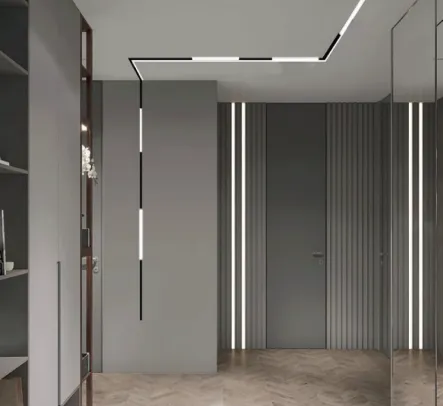
Ever notice how some stores just feel… off? The lighting's too harsh in the dressing rooms, shadows creep across product displays, or your café feels like an interrogation room. Nine times out of ten, that’s a track lighting problem. And if you're thinking about installing magnetic track lights, you're already ahead—they offer killer flexibility. But get the specs wrong, and you'll be cursing flickering fixtures and dark spots.
Real talk: I've seen restaurants lose ambiance because they overloaded a 12V system, and retail spaces with dead zones from uncalculated track runs. Your lighting fixtures aren't just functional pieces; they’re mood-setters, sales boosters, and energy savers wrapped in one.
Here's where most people trip up. You've got two main options:
Best for: Boutiques, galleries, anywhere you want spotlight drama
Pros: Safer touch, smaller fixtures, crisp light quality
Gotcha: Requires transformers and has strict cable run limits
Best for: Warehouses, restaurants, high-ceiling spaces
Pros: Handles longer runs, powers heavier fixtures, simpler setup
Gotcha: Fixtures bulkier, glare risk if not diffused properly
A trendy wine bar client learned this the hard way—installed 12V tracks without checking their transformer capacity. Half the fixtures dimmed whenever the espresso machine kicked on! Lesson? Match your voltage to both safety needs and power demands.
Think of track runs like garden hoses—too long and pressure drops. Here’s the cheat sheet:
For that big lobby project? Combine parallel runs instead of one marathon track. Use "T" and "L" connectors to create zones—it looks intentional, not lazy. Pro tip: Leave 10% slack in length for future adjustments.
Load capacity isn't just a number—it’s your system's stamina. I watched a bookstore’s track system shutdown mid-event because they'd added RGBW fixtures without checking the math.
Calculate safe limits:
Remember: LED fixtures aren't "free passes"—their drivers draw power too! Always factor in commercial-grade lighting fixtures that handle constant cycles.
Not all magnetic heads play nice with all tracks. You’ll encounter three main systems:
Mix brands? You'll waste hours wrestling connectors. Stick to one brand per track run—your installers will thank you.
Let’s skip theory and talk brass tacks. I’ve sweated through these scenarios:
Spend more upfront on:
Your track’s skeleton matters, but the fixtures are the soul. Always:
Great lighting makes jewelry sparkle, food glisten, and art pop. But it fades to background noise when done right—that’s the real magic.
Recommend Products












