
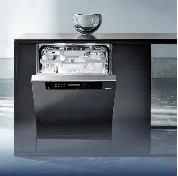
Hey there! If you're running a busy restaurant, cafe, or any food service operation, you know the nightly mountain of dirty dishes isn't just annoying – it's a battlefield. Choosing the right commercial dishwasher isn't about finding another appliance; it's about investing in your kitchen's backbone. Get this decision wrong, and you'll face bottlenecks during rush hour, skyrocketing utility bills, and maybe even unhappy health inspectors.
Today, we're cutting through the noise to focus on three game-changing factors most people overlook: basket configuration, water consumption, and washing cycles. Forget generic specs – these are the silent workhorses that make or break your dishwashing efficiency. Whether you're outfitting a new kitchen or upgrading old equipment, this guide gives you the insider knowledge to choose a dishwasher that works with your flow, not against it.
Think of dishwasher baskets as the unsung heroes of your dish pit. They're not passive racks – they're precision-engineered tools that determine how well water reaches every surface of your dishes. I've seen kitchens lose hours of productivity simply because their baskets couldn't handle their specific mix of plates, glasses, and oddly-shaped serviceware.
Every basket configuration creates specific water flow patterns. Deep perforations let water penetrate stacked plates? Check. Angled holders prevent glasses from nesting together? Absolutely. Well-designed baskets consider three things:
Spray arms need clear lanes to blast away debris. Cluttered baskets create "shadow zones" where food hides, forcing rewashing.
Dishes shouldn't nest. Glassware especially needs separation so water hits all surfaces – including those pesky wine glass stems.
Can staff load racks quickly without overthinking placement? Every second counts during dinner rush.
Here's the reality: manufacturers like Hobart and Jackson spend hundreds of hours testing basket designs for a reason. Generic "one-size-fits-all" solutions simply won't cut it for high-volume operations.
| Basket Type | Best For | Water Flow Impact |
|---|---|---|
| Plate Racks | Standard dinner plates, saucers | Vertical spacing prevents nesting; ensures full spray coverage |
| Utensil Trays | Forks, knives, spoons, serving tools | Mesh bottoms prevent small items from blocking jets |
| Glass Holders | Wine glasses, tumblers, pint glasses | Angled design prevents contact; protects delicate stems |
| Platter Units | Oval serving platters, cutting boards | Adjustable side clips secure large items without crowding |
| Custom Inserts | Specialty items: ramekins, coffee pots, etc. | Tailored fit prevents shifting during wash cycles |
Here's the painful truth: a water-inefficient dishwasher can quietly drain your profits. I audited a mid-sized bistro last year where water consumption from their old clunker was costing them over $2,400 annually – money they thought was just "operating costs." But modern dishwashers? They're engineered to be water misers.
It's not magic – it's smart engineering. Water savings happen through:
High-end machines filter and reuse water from pre-rinse cycles for main washing (unlike manual washing's continuous flow).
Optimized nozzles target water like laser beams, not indiscriminate flooding.
Adjustable settings for lighter soil loads that use significantly less water per cycle.
A conveyor dishwasher might use just 0.5–1.5 gallons per rack compared to 2–3 gallons for older models. Multiply that by hundreds of racks daily and the savings scream for attention.
Mineral buildup from hard water isn't just gross – it's a workflow assassin. Scale reduces heat transfer (meaning longer dry times) and clogs spray jets (meaning dirtier dishes). If your water hardness exceeds 7 grains per gallon (gpg), consider these options:
Ignoring hardness leads to 20-30% higher energy/water use over time and constant service calls. Proactive care pays off.
Here’s where most operators miss opportunities. Your dishwasher isn't a toaster with one setting. Modern commercial units offer specialized cycles designed for different situations. Using the "heavy wash" setting for lightly soiled glassware is like using a sledgehammer to crack a nut – wasteful and damaging.
When evaluating machines, look beyond just "light/medium/heavy" labels. Ask about:
I've seen kitchens cut 15 minutes off closing time simply by optimizing cycles instead of default settings.
The magic happens when basket design, water efficiency, and cycle selection work together. Let’s examine two real-world cases:
Problem:
Water spots on $40 wine glasses; rewashing required
Solution:
Glass-specific baskets + low-water crystal cycle + rinse aid injection
Result:
Zero rewash + 20% water reduction
Problem:
Syrup-coated plates clogging standard baskets
Solution:
Adjustable plate rack dividers + pre-soak cycle setting
Result:
30% faster turnarounds during AM rush
Choosing a commercial dishwasher solely on upfront cost is like buying a car based only on its paint color. The real value lies in how its basket system handles your specific dishware, how intelligently it manages water (and chemicals), and how flexible its cycle programming adapts to your workflow. Visit suppliers armed with samples of your trickiest items (that fluted dessert dish! that enormous paella pan!) and test them under pressure. Time cycles. Measure water use. Your perfect dishwasher isn't the shiniest or the cheapest – it's the one that disappears into your operation because it just works.
Because at the end of a brutal double shift, when that last rack comes out spotless and dry? That’s not just clean dishes. That’s peace of mind.
Recommend Products












