


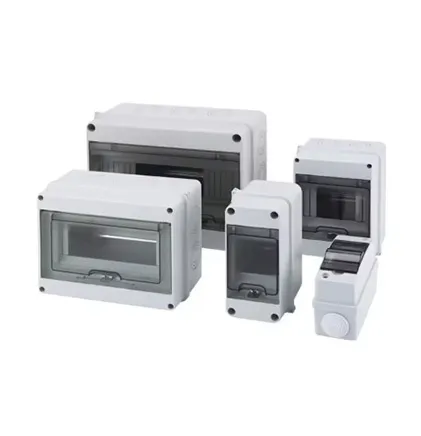
Picture this: You've designed the perfect distribution box for industrial facilities. It's sleek, efficient, and ready to revolutionize power management. But when you try selling it in North America, distributors keep asking: "Is it UL certified?" That question stops more shipments than customs officials. If you're exporting electrical equipment across the Atlantic, understanding UL certification isn't just paperwork—it's your golden ticket to the world's most lucrative market.
The UL mark does more than just satisfy regulations. It whispers to engineers, facility managers, and safety inspectors: "This won't explode, electrocute anyone, or burn down buildings." Unlike European CE marking where manufacturers often self-declare compliance, UL certification involves rigorous third-party testing that turns safety into a visible promise.
Why UL Certification is Non-Negotiable for Distribution Boxes
Let's cut through the jargon first. UL certification comes in two flavors that trip up many exporters:
UL Listed
Think finished products ready for action. Your distribution box standing alone in a factory? That needs UL Listing. It means:
- Complete product passed safety tests
- Suitable for end-use without modifications
- Rigorously evaluated for fire, shock, and mechanical risks
UL Recognized
These are the behind-the-scenes heroes—components inside your masterpiece. The circuit breaker inside your distribution box? UL Recognized. Key characteristics:
- Only safe when integrated properly into final equipment
- Critical for industrial control panels assembly
- Requires specific installation conditions
Now, why does this matter for distribution boxes specifically? Because these units manage electrical loads for entire facilities. One faulty connection can cascade into:
- Arc flashes melting steel enclosures
- Overheated wires igniting nearby materials
- Ground faults knocking out critical hospital equipment
Canadian and U.S. authorities don't just prefer UL certification—they legally require it through codes like NFPA 70. Try shipping without it? Expect your containers to be turned back faster than expired milk.
Cracking the UL 508A Code for Distribution Boxes
UL 508A is the bible for industrial control panels, and since distribution boxes often contain these panels, it's your blueprint for certification. Forget dry technical manuals—think of it as building a safety fortress:
The 5 Pillars of Compliance
-
Component Selection
Every piece must be UL Recognized or Listed—no exceptions. Picture an engineer inspecting your box:
- Terminal blocks stamped with UL recognition mark
- Circuit breakers bearing the UL Listed emblem
- Even wire gauges matching UL documentation
Pro Tip: Mixing components from different UL files? That's like blending fire hydrants—verify compatibility through UL's online certification directory.
-
Spacing and Isolation
This is where physics meets paperwork. Air gaps and creepage distances prevent:
- Arcing between conductors
- Heat transfer to flammable materials
Fun fact: UL requires specific spacing even between labels and components—safety leaves no detail to chance.
-
Circuit Protection
Beyond basic fuses, UL 508A demands:
- Branch circuit protection for every power feed
- Ground fault protection for 480V+ systems
- Short-circuit current ratings matching utility feeds
Real-talk: Most failed inspections trace back to underrated protection devices.
-
Documentation Goldmine
Paperwork isn't bureaucracy—it's your legal armor. Required documents include:
Document Purpose Bill of Materials Lists every UL-certified component Schematic Diagrams Prove correct integration Wire Connection Charts Verify proper terminations Short-Circuit Calcs Show protection adequacy -
Labeling Like Your Business Depends on It
Because it does. Every distribution box requires:
- UL listing mark with control number
- Electrical rating plate
- Warning symbols for arc flash hazards
- Manufacturer details
Your Step-by-Step Journey to Certification
Getting UL certified feels like training for a marathon—doable with the right preparation. Here's your roadmap:
Pre-Evaluation Audit
UL engineers review your designs before manufacturing . Benefits:
- Catch errors when changes are cheap
- Confirm component compatibility
- Get spacing calculations validated
Smart Move: Send prototypes with design docs. Physical samples reveal issues blueprints hide.
Testing Gauntlet
Your distribution boxes face trials by fire—literally:
| Test | Simulates | Pass Criteria |
|---|---|---|
| Dielectric Withstand | Lightning strikes | No arcing at 1000V + 2x rating |
| Temperature Rise | Maximum load | Copper below 90°C, aluminum below 105°C |
| Fault Current | Short circuits | No enclosure rupture |
Factory Inspection
UL visits production facilities to verify:
- Components match approved designs
- Workers follow assembly procedures
- Quality control systems exist
Ongoing Surveillance
Certification isn't one-and-done. Expect:
- Unannounced factory audits
- Market sample testing
- Documentation reviews
Timeframe Reality Check: Budget 12-16 weeks minimum. Rushed jobs invite disaster.
Distribution Box Product Lines: What North America Wants
Knowing certification requirements is half the battle. The other half? Building products buyers actually need. These UL-certified distribution box categories dominate North American industrial projects:
Main Distribution Boards
The heartbeat of facilities. Top sellers include:
-
Heavy-Duty Power Centers
- Voltage: 480V 3-phase
- UL 67 compliance
- NEMA 3R/4X rated enclosures
-
Hybrid Solar-Commercial Boards
- UL 1741 + UL 67 dual certification
- DC disconnect integration
- Rapid shutdown compliance
Subdistribution Cabinets
Specialized boxes for specific zones:
-
Hazardous Location Panels
- Class I Div 2 / Class II Div 2 rated
- Explosion-proof components
- Essential for oil refineries, grain mills
-
Medical Facility Distribution
- UL 67 + UL 506 compliance
- Isolation monitoring
- Hospital-grade ground fault protection
Case Study: The Certification Turnaround
A German manufacturer of explosion-proof distribution panels spent years struggling with Canadian customs. Their mistake? Assuming IECEx certification sufficed. Reality check:
- Month 1: Submit UL 1203 + UL 67 application
- Month 2: Pre-audit reveals incompatible European busbars
- Month 4: Successful dielectric testing on redesigned units
- Month 6: UL certification granted
The payoff? Canadian oil sands contracts worth €2.3M annually. Certification wasn't a cost—it was revenue infrastructure.
Sealing the Deal with Safety
Getting UL certification feels like navigating a labyrinth blindfolded. But remember: UL doesn't test products—they test systems. Your paperwork, manufacturing rigor, component choices—everything forms the certification ecosystem.
North American buyers don't see UL marks as bureaucratic stamps. They read them as promises: "This distribution box won't kill workers or trigger million-dollar downtime." That assurance converts into purchase orders, even when competitors offer 20% lower prices.
Key Takeaway: View UL certification not as a tax on exports, but as the most compelling feature your distribution boxes can offer in North America's high-stakes industrial landscape.










