
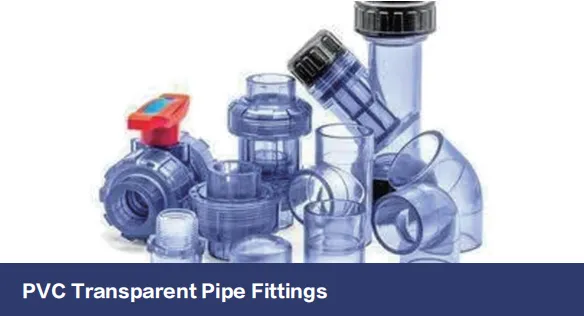
If you're in the business of exporting PVC transparent pipe fittings, you know it's not just about having a quality product. It's about navigating a complex world of certifications that can make or break your international sales. Let's unpack why these technical requirements actually determine your market access and customer trust across borders.
Think of certifications as your global passport. Without them, your PVC fittings might as well stay in the warehouse. Recent data shows exporters with proper certifications see up to 68% faster market entry and 45% higher price premiums in markets like the EU and North America.
That NSF mark or CE logo does more than decorate your packaging. For European plumbing contractors, seeing a certification stamp means they don't have to lose sleep about leaking pipes. Hospital project managers in the Middle East view certifications as insurance against costly system failures.
Consider this real example: A Thai manufacturer lost a $2M Saudi hospital project because their fittings lacked the WRAS certification needed for medical water systems. Meanwhile, their Malaysian competitor landed the deal solely because their certificates checked all boxes. That's the difference between being perceived as a premium supplier versus a liability.
| Certification | What It Covers | Key Markets | Testing Focus |
|---|---|---|---|
| NSF/ANSI 61 | Drinking water system components | USA, Canada, Australia | Material safety and leaching |
| WRAS (UK) | Water fittings regulations | UK, Middle East | Contamination prevention |
| ACS (France) | Potable water contact | France, Francophone Africa | Chemical migration limits |
| KTW-BWGL (Germany) | Plastics in drinking water | Germany, Central Europe | Material composition analysis |
| ISO 9623 | Fittings for thermoplastics | Global industrial projects | Pressure and temperature endurance |
| CE Marking | EU market access | European Economic Area | General safety compliance |
Practical Tip: Prioritize NSF and WRAS first if targeting Western markets. Industrial clients in Germany won't blink at your ISO certifications without the complementary KTW-BWGL approval.
While colored PVC fittings can hide some composition sins, transparent versions put everything on display—literally. This visibility means certification labs will scrutinize:
A common mistake exporters make is using optical brighteners to maintain crystal-clear appearance. Certification bodies instantly flag these additives since they can migrate into water streams. Instead, premium manufacturers now use molecular-stabilized PVC compounds that maintain clarity without risky additives.
The regulatory map varies wildly depending on destination. When bidding on UAE infrastructure projects, you'll need GSO Mark plus WRAS. For high-rise plumbing in Toronto, CSA B137.3 and NSF 61 are required. Australia's WaterMark certification demands separate material compression tests beyond ISO standards.
Avoid the "one certificate fits all" trap. A Korean manufacturer wasted $37K on inappropriate certifications by not recognizing that Swiss hospital projects require specialized SVGW approvals even with existing EU CE marks.
Typically, prepare for a 10-16 week process per certification:
Savings Strategy: Schedule audits when labs have testing continuity. Sequential certifications add 20-30% to costs versus grouping compatible certifications like CE and WRAS.
Beyond the obvious $8K-15K per certificate, budget for:
However, these pale compared to penalties when buyers discover non-compliance. A Malaysian contractor faced €1.2M in replacement costs when authorities condemned uncertified pipes in a Dublin housing project.
Stay ahead with these emerging requirements:
Forward-thinking plants like Taiwan's GF Piping Systems now run mini-certification labs onsite for immediate compliance checks. This allowed them to certify 6 new fitting variations in under 3 months instead of the usual 12+ months.
| Certification Investment | Direct Costs | Value Benefits | ROI Period |
|---|---|---|---|
| Full NSF/ANSI 61 | $12K initial + $2.5K annual | 35% higher price acceptance in US markets | 14 months |
| Complete WRAS Suite | $18K initial + $3K annual | Access to $9B+ Gulf infrastructure projects | 9 months |
| ISO 9623 + CE Mark | $9K initial + $1.8K annual | Required for EU tenders above €150K | 18 months |
| Full GSO Mark | $16K initial + $2.8K annual | Saudi Aramco vendor list eligibility | 11 months |
Notice the pattern? Premium markets demand premium documentation. Top manufacturers report certification costs at 3-5% of export revenue while yielding 20-30% margin premiums. As Vietnam's Tien Tien Plastics learned, the 37% export growth in Germany didn't happen until their KTW-BWGL clearance came through.
Follow this action plan for efficient certification:
Industry Insight: Leading exporters now build certification costs into product development from prototype stage. This avoids costly material changes later that could invalidate test results.
Mark these critical dates:
Several prominent manufacturers faced temporary export bans due to outdated certificates. Italy barred a full shipment of Egyptian fittings when auditors discovered the NSF seal had expired three weeks prior during ocean transit.
The winners in this game recognize one universal truth: For PVC fittings crossing borders, certifications aren't just paperwork—they're the currency of trust. They transform opaque production processes into transparent guarantees that buildings won't flood, drinking water stays pure, and mechanical rooms don't become disaster zones. That's why the premium exporters treat certification not as a cost center but as their #1 competitive advantage in the world of transparent pipe fittings.
Final tip: Don't gamble with certifications. One properly certified fitting shipment to Germany can fund an entire year's certification budget.
Recommend Products












