
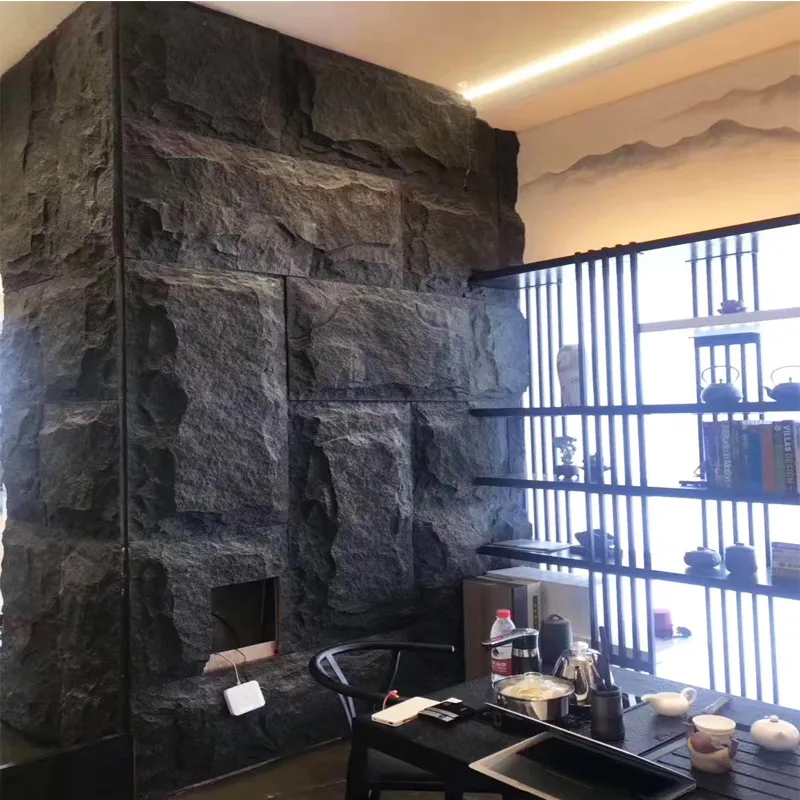
There's something profoundly captivating about stone that carries the imprint of nature's hand – where wind, water, and time collaborate to create art far beyond human imagination. Enter mushroom stone, one of Earth's most extraordinary geological storytellers. This organic masterpiece doesn't just decorate spaces; it whispers tales of millennia through its unique formations.
When it comes to natural parks, where the boundary between human craftsmanship and wilderness blurs, mushroom stone emerges as the perfect ambassador. Its rugged charm doesn't shout for attention but instead beckons visitors with a quiet, earthy elegance. Unlike manufactured materials that can feel cold and impersonal, each mushroom stone carries its own character – subtle variations in texture, color, and form that make every installation feel uniquely alive.
"Where architects strive to mimic nature, mushroom stone is nature. It brings geological history into the present, turning park entrances and walls into open-air museums," explains Elena Rossi, a landscape architect specializing in ecological design.
At first glance, you might wonder how these curious formations came to exist. Mushroom stone isn't crafted in a factory but shaped by nature's patient forces over centuries. Its distinctive appearance features a slender base topped by a broad, cap-like upper portion – a silhouette resembling wild mushrooms pushing through forest floors.
This unique geometry isn't accidental but the result of natural processes where wind-driven particles meticulously erode softer rock layers, leaving behind the characteristic mushroom profile. Depending on its geological origin, mushroom stone can be sourced from:
Unlike uniform quarried stone, no two mushroom stones are identical. You'll find delightful irregularities – natural dimples created by erosion, subtle gradations in color from iron oxidation, and the beautiful imperfections that prove its natural authenticity.
What makes mushroom stone particularly special for natural parks isn't just its appearance, but its environmental credentials. As the demand for green and environmentally friendly building materials grows, this natural stone delivers remarkable ecological benefits:
"Mushroom stone is essentially pre-weathered," notes Dr. Benjamin Carter, geologist and sustainability consultant. "Its vulnerability to erosion has been eliminated through millennia of exposure. This makes it one of the longest-lasting natural building materials without maintenance requirements."
Laying mushroom stone requires a gentle touch and deep understanding of its character. The installation process marries modern construction techniques with almost artisanal care:
Working with the natural topography rather than flattening it creates authentic landscapes. Minor contours become opportunities rather than obstacles, preserving existing root systems and drainage patterns.
Using sand-bed foundations allows for slight settling that mimics natural stone formations. The goal isn't mechanical precision but stable placements that appear effortless.
Like arranging puzzle pieces, installers carefully rotate stones to find their "happy positions" – places where natural contours meet harmoniously. Wider gaps welcome climbing vines and plants.
Breathable mortars maintain moisture equilibrium crucial for park ecosystems. Non-intrusive anchoring preserves stones' structural integrity for generations.
Intentionally leaving cracks and crevices becomes an invitation for nature's participation – soon mossy accents and trailing plants transform new walls into mature elements.
Natural parks present unique opportunities where mushroom stone truly shines, blurring boundaries between landscape and structure:
Park entrances set visitor expectations while establishing place identity. At Redwood Horizon Reserve, tapered mushroom stone columns frame the entry without competing with towering ancient trees. The natural stone transition eases visitors from pavement into wilderness.
Conventional retaining walls create ecological dead zones. Not so with mushroom stone installations like in Alpine Meadow Sanctuary, where stones were deliberately placed with voids becoming miniature ecosystems:
Unlike poured concrete stairs that interrupt migration paths, Cascade Valley Park built switchback trails with mushroom stone steps integrated into hillsides. Over three seasons, native columbines and lupines have colonized step margins, creating a stunning "floating garden" effect.
At Riverbend Nature Preserve, mushroom stone wasn't just used around water but became aquatic habitat. Strategic placement created oxygenation cascades and protected micro-pools for amphibian breeding. During summer droughts, moisture-retaining stone pockets sustain plant life.
Perhaps most inspiring is the Prairie Wind Sculpture Garden, where mushroom stone pillars serve both as viewing platforms and interactive ecology exhibits:
Why does mushroom stone resonate so profoundly in natural spaces? Perhaps because it reminds us that perfection lies not in uniformity but in authenticity. Its weathered surfaces, natural variation, and small irregularities demonstrate that beauty emerges through endurance rather than precision.
"This stone teaches us patience," observes master stonemason Leo Gutierrez. "You don't force mushroom stone into positions – you listen to what each piece wants to be. Installing it becomes a meditative collaboration with materials shaped long before we existed."
As parks increasingly balance accessibility with wilderness preservation, mushroom stone offers a rare solution that serves both needs. It provides necessary structures while enriching ecosystems rather than diminishing them. The rocks stand proudly, not as foreign impositions but as features that seem to have always been part of the landscape – ancient guardians welcoming new generations of park visitors.
Ultimately, mushroom stone shows how humanity can build without conquering, shaping without subduing, and creating while celebrating the imperfections that make nature endlessly fascinating. In our pursuit of ecological harmony, these weathered stones become humble yet powerful teachers - showing us how to build with time rather than against it.
Recommend Products












