
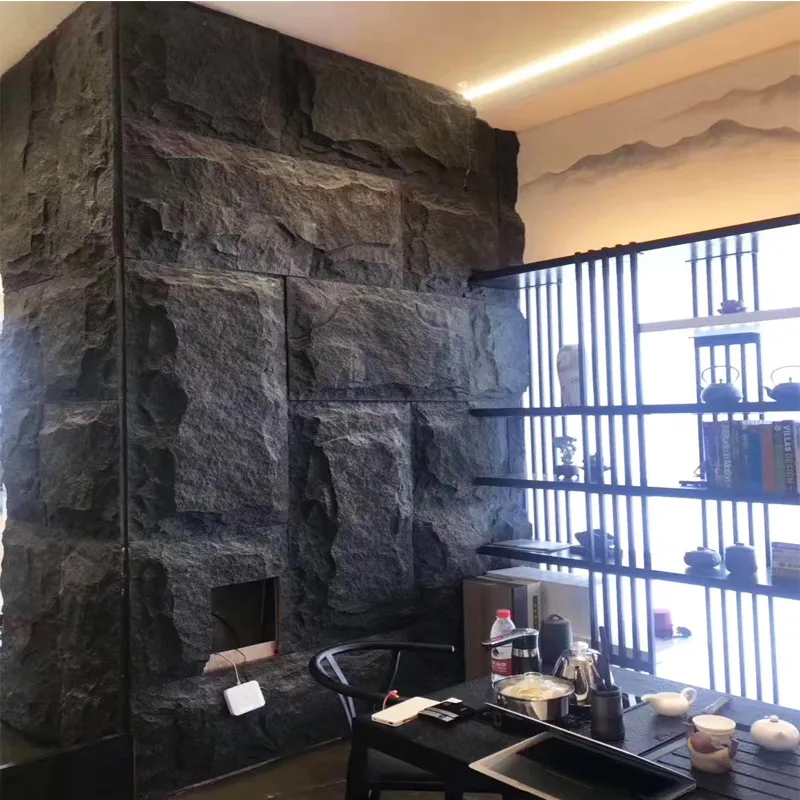
Walk through any new commercial district or residential development, and you will notice a pattern: the buildings that draw the eye are rarely the ones with plain painted walls. They are the ones where texture, shadow, and natural material character do the talking. A stone-clad entrance. A feature wall that catches the afternoon light. A façade that looks like it was carved from a mountainside, not assembled from flat sheets.
The material behind that effect is often not quarried stone at all. It is a family of products known as decorative stone panels — mushroom stone solutions, PU stone wall panel solutions, and flexible cladding systems that deliver the look of natural stone at a fraction of the weight and cost. For architects, builders, and importers sourcing materials for large-scale projects, understanding the differences between these options is not just helpful — it is the difference between a project that stays on budget and one that spirals.
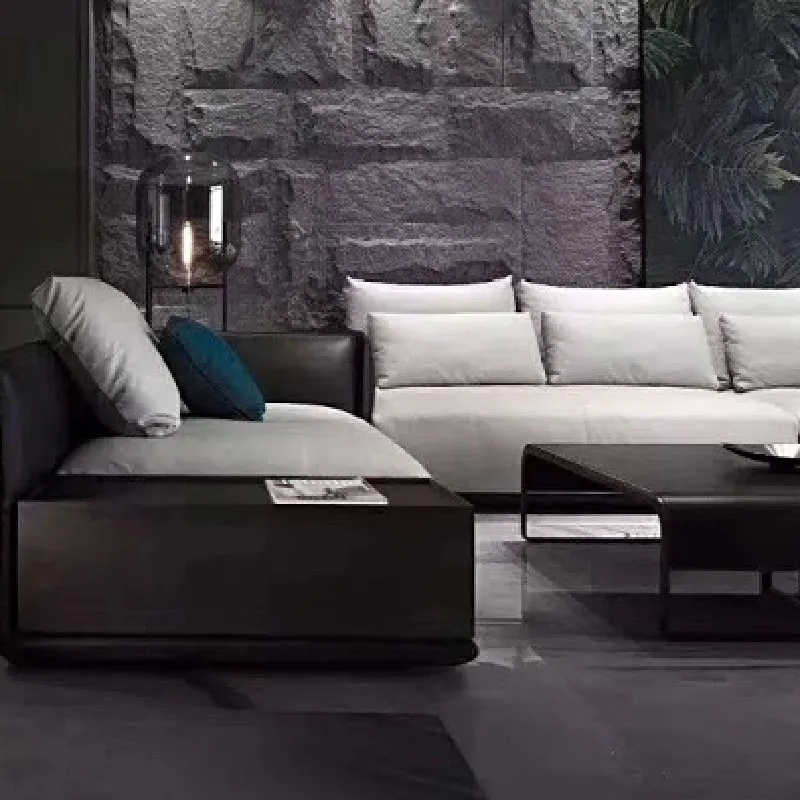
Mushroom stone gets its name from its distinctive shape — each panel has a protruding, rounded surface that resembles the cap of a mushroom, creating a pronounced three-dimensional texture across the wall. Unlike flat stone veneers that rely on colour variation alone to create visual interest, mushroom stone panels use depth and shadow to produce a rugged, hand-crafted appearance.
This type of cladding is increasingly specified for exterior feature walls, entrance lobbies, garden boundaries, and commercial façades where architects want the building to make a statement. The installation process is straightforward: panels are fixed to the wall substrate using adhesive and mechanical fasteners, with most systems designed for dry-installation workflows that keep the construction schedule moving.
What makes modern mushroom stone solutions particularly attractive is the material itself. Traditional mushroom stone was cut from natural rock, which meant heavy panels, high transport costs, and limited colour options. Today's engineered alternatives use polyurethane (PU) composites, modified clay materials (MCM), and other lightweight formulations that replicate the texture and appearance of natural stone while weighing as little as one-tenth of the original.
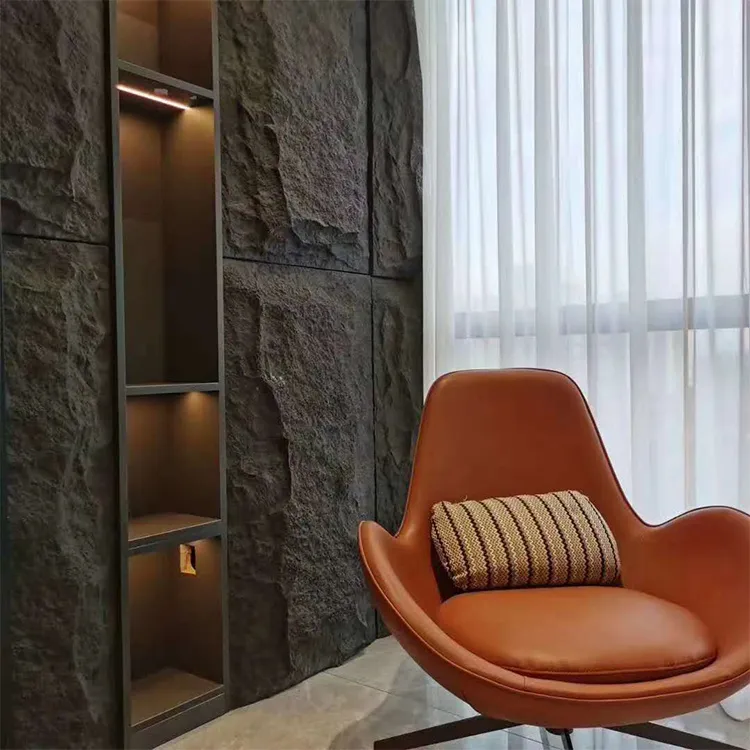
When evaluating decorative stone panels, two product categories dominate the conversation: PU stone and MCM (Modified Clay Material) flexible cladding. Both aim to deliver the aesthetics of natural stone without the structural and logistical burdens, but they take different routes to get there.
| Feature | PU Stone Wall Panels | MCM Flexible Cladding |
|---|---|---|
| Material Base | High-density polyurethane foam | Modified inorganic clay composite |
| Weight | Extremely lightweight (approx. 1-2 kg/m²) | Lightweight (approx. 3-5 kg/m²) |
| Flexibility | Moderate — can accommodate slight curves | High — can wrap around curved surfaces and columns |
| Fire Rating | Standard (B1/B2 grade available) | Class A fireproof options available |
| Texture Realism | High — moulded from real stone surfaces | Very high — printed and textured from real stone scans |
| Best For | Residential exteriors, feature walls, retail façades | Hospitals, schools, high-rise exteriors, curved architecture |
| Installation | Adhesive + mechanical fix, DIY-friendly | Professional adhesive application recommended |
PU stone wall panel solutions excel in residential and light commercial applications where cost control and ease of handling are priorities. Their feather-light weight means a single installer can carry and position panels that would require two people and a mechanical lift if they were natural stone. Cut them with standard woodworking tools, fix them with construction adhesive, and the job is done.
MCM flexible cladding stone wall panel solutions step in where the requirements are more demanding. Hospitals and schools, for instance, cannot compromise on fire safety — and MCM panels with Class A fireproof certification meet the strictest building codes. Their ability to bend around curved surfaces also makes them the go-to choice for architects designing organic, flowing forms that rigid panels cannot follow.
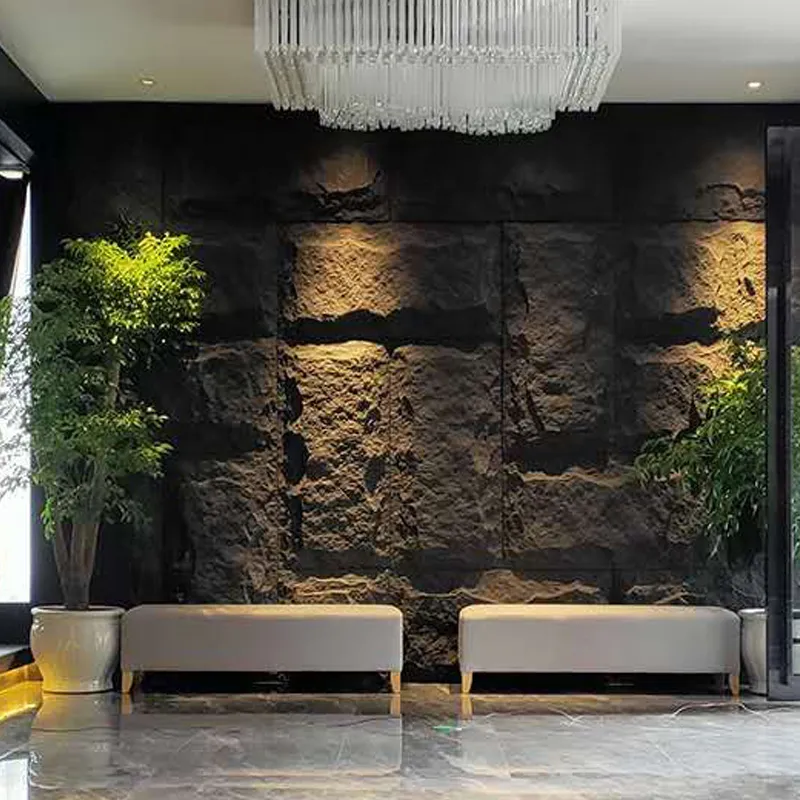
Mushroom stone is just one entry in a much larger catalogue. A comprehensive decorative profiles solutions provider will offer a spectrum of textures and finishes that give architects the freedom to mix and match across different areas of a project. A single building might use mushroom stone on the ground-floor façade for impact, wood-grain panels on upper levels for warmth, and a metal-series finish on the entrance canopy for contrast.
The most versatile decorative profiles ranges include:
Having access to this breadth of options from a single supplier solves a practical problem on large construction projects. When different materials come from different sources, the logistics multiply — separate shipments, separate quality inspections, separate payment terms, and separate points of contact when something goes wrong. Consolidating decorative profiles solutions under one roof eliminates that friction.
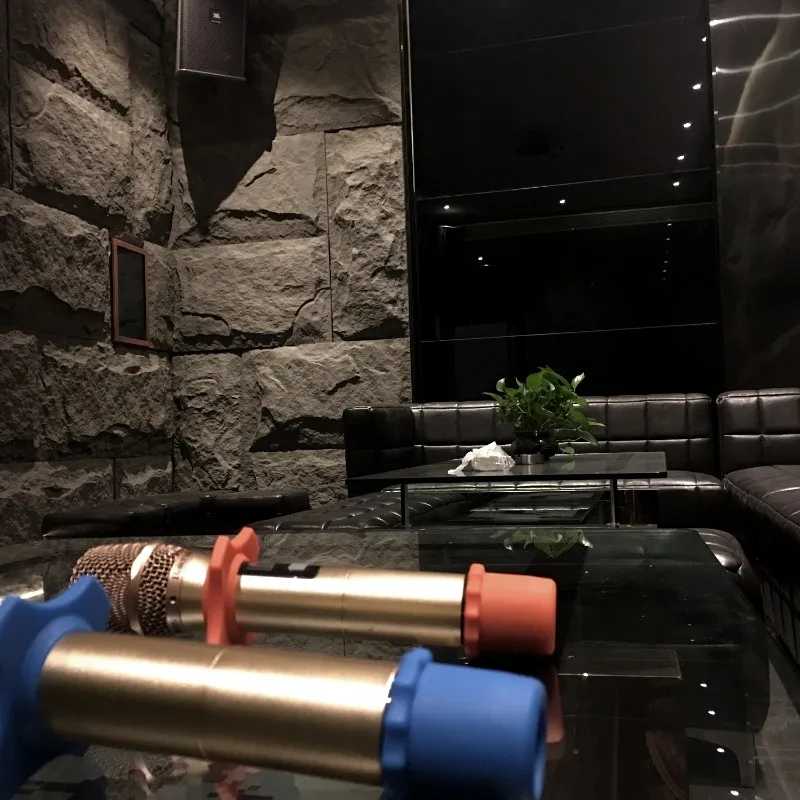
Not all decorative panels are manufactured to the same standard. Here are five questions that separate a reliable supplier from a gamble:
1. Can they provide fire test certificates? If the panels are going onto a multi-storey building, the local building code will almost certainly require a specific fire rating. Ask for third-party test reports — not just a claim on the datasheet.
2. What is the UV and weather resistance? Exterior panels face sun, rain, and temperature swings. Look for panels with documented accelerated weathering test results (QUV or Xenon arc testing) that simulate years of outdoor exposure.
3. Can they supply matching accessories? A professional supplier should offer corner pieces, edge trims, connecting profiles, and compatible adhesives — not just the flat panels. Without these, the installer will be improvising on site.
4. What is the colour consistency across batches? Ask about their batch-to-batch colour tolerance. A 10-square-metre sample wall may look perfect, but if the next container arrives a shade lighter, the entire façade will tell the story.
5. Do they offer the full range, or just one product line? A supplier that only sells PU stone or only sells MCM may steer you toward their product regardless of whether it is the right fit. A supplier with a broad catalogue can recommend the best material for each application without bias.
Here is a scenario that plays out on construction sites around the world: a project manager orders decorative stone panels from one supplier, flooring from another, ceiling materials from a third, and sanitary fixtures from a fourth. Four shipments. Four sets of customs documents. Four quality inspections. Four payment schedules. When the wall panels arrive two weeks late, the floor installer has already moved to another job, and the schedule unravels.
COLORIA GROUP, headquartered in Foshan, China — one of the world's largest building materials manufacturing hubs — operates on a different model. As a one-stop solution provider, the company supplies decorative profiles, wall panels, flooring, ceiling systems, sanitary fixtures, customized furniture, windows and doors, elevators, lighting, and solar panels from a single source. For a project manager, that means one shipment, one set of documents, one point of contact, and a single timeline to manage.
With an overseas agent in Saudi Arabia and a track record of serving clients across residential and commercial sectors globally, the company has built its reputation on simplifying the procurement process. Whether the project requires a full container of mushroom stone panels for a hotel exterior or a mixed consignment of wall panels, flooring, and bathroom fixtures for a residential development, the supply chain follows the same streamlined path.
Even the best panel will underperform if it is installed incorrectly. Here are a few practical guidelines that apply across PU stone, MCM flexible cladding, and mushroom stone panels:
The right decorative stone panel does more than cover a wall — it gives a building its identity. Whether you are sourcing mushroom stone for a commercial façade, PU stone panels for a residential development, or MCM flexible cladding for a high-spec institutional project, the quality of the material and the reliability of the supplier determine the outcome.
COLORIA GROUP offers a comprehensive range of decorative profiles solutions, mushroom stone solutions, PU stone wall panel solutions, and MCM flexible cladding stone wall panel solutions — all backed by a supply chain that spans from Foshan to Saudi Arabia and beyond. Browse the full product range or reach out to discuss your project requirements today.
Recommend Products












