
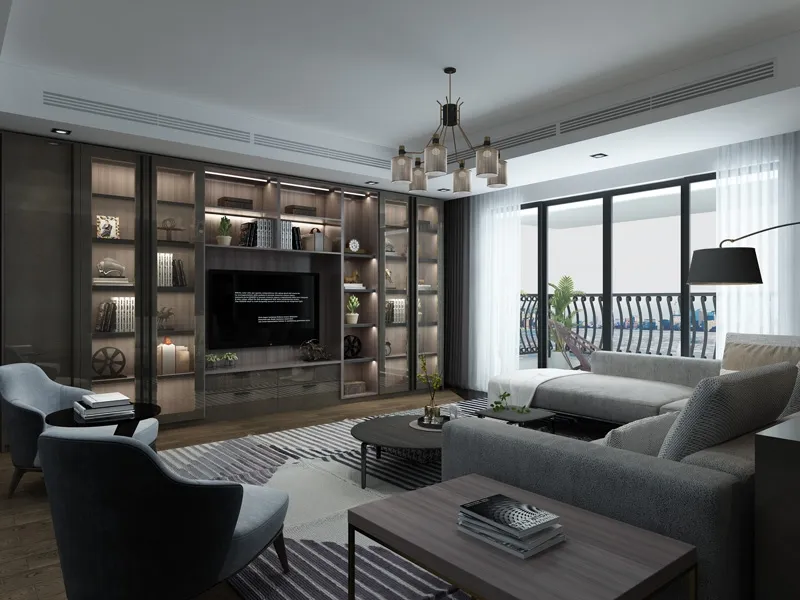
Remember that awkward corner in your living room? The one too small for proper furniture but too big to ignore? Modern homes face a constant battle between style and practicality, especially in urban spaces where square footage comes at a premium. This tension is why multifunctional furniture isn't just trendy – it's become essential for contemporary living.
Enter the ultimate space-saving hero: TV cabinets that transform into workspaces or dining surfaces. These ingenious hybrids solve multiple problems simultaneously: reducing clutter, maximizing utility, and creating visual harmony in rooms that serve multiple purposes. No more choosing between entertainment and productivity – the solution elegantly combines both.
Today's homes aren't just living spaces – they're offices, classrooms, entertainment hubs, and sometimes even gyms. That gorgeous mid-century console you bought pre-pandemic suddenly feels inadequate when you're balancing a laptop on one knee during Zoom meetings. Dual-purpose furniture bridges this gap beautifully.
What looks like a sleek media console by day becomes a functional workspace or dining area within seconds. The mechanics behind these transformations range from smooth-sliding panels to innovative pivot systems that maintain stability while adapting to your needs. And yes – they're designed with your electronics in mind, featuring integrated cable management so you're not tripping over wires.
There's something mentally refreshing about reclaiming visual space. Instead of seeing a desk reminding you of unfinished work during movie night, everything tucks away neatly. This psychological separation between "work mode" and "relaxation mode" proves surprisingly valuable for mental well-being in our always-on world.
The most popular approach features a motorized or counterweighted lift system. Press a button or slide a lever, and the TV lifts vertically while a workspace unfolds from beneath. Higher-end models integrate glass panels that slide laterally to protect your screen during the transition. Surfaces maintain ample depth for dining while providing ergonomic heights for working.
For corner installations, rotating consoles perform a beautiful double pirouette. One side faces the living area with media storage while the reverse contains a fold-out desk surface. Perfect for studios where a simple swivel redefines the room's purpose without moving furniture.
Some innovative designs stack functions vertically. Imagine a console where multiple platforms glide independently: middle shelf becomes a work surface, bottom drawer converts to footrest or stool storage, while top section houses media components. It's spatial Tetris brought to life.
Oak, walnut, and teak bring warmth and durability to multifunctional designs. While requiring higher investment, solid wood construction ensures mechanisms function smoothly for decades. Perfect for those wanting furniture that evolves with their home.
Modern laminates rival natural materials in appearance while providing scratch-resistant surfaces ideal for dining and working. Bamboo composites offer eco-conscious homeowners sustainable options without sacrificing strength in transforming joints.
Industrial designs featuring powder-coated steel frames create surprisingly warm aesthetics. The hidden advantage? Unmatched stability for cantilevered surfaces during dining or laptop use.
Long, narrow living rooms benefit from dual-view designs that work across the space width. Square layouts gain from corner-rotating units that maximize unused areas. Measure twice: clearance space behind rotating mechanisms proves essential for smooth operation.
Not all consoles handle oversized screens equally. Check maximum load ratings not just for the TV platform but for surfaces extended horizontally. Remember to account for weight when surfaces hold dinnerware or computer equipment.
The unsung hero of multifunctional furniture! Look for designs featuring:
Emma, an architect in Seattle, shares her experience: "My multifunctional tv cabinet turned my tiny loft into a legitimate two-zone space. Breakfast happens at the extended surface while I watch news, then it becomes my drafting table. Evenings? Everything vanishes for movie nights. I gained a room without moving walls."
The key to success? Establishing routines. Just like making your bed sets a morning tone, transforming furniture creates mental transitions between activities. Families often adopt rituals – "clearing the surface" becomes part of switching from homework to entertainment mode.
The latest innovations address evolving needs:
Expect future designs to incorporate modular components. Imagine swapping drawer units for terrariums, bookshelves, or even compact pet spaces as your lifestyle changes – true custom furniture evolution.
Beyond practical benefits, these pieces deliver unexpected emotional returns. There's satisfaction in optimization – like solving a spatial puzzle that makes daily life flow better. The reduction of visible clutter decreases cognitive load while the ability to quickly adapt spaces creates a sense of mastery over your environment.
As urban dwellers increasingly value experiences over possessions, furniture that "does more" allows homes to become truly adaptive stages for life's changing scenes without constant remodeling. Your living space shouldn't force compromises between function and comfort – with thoughtful design, it can deliver both seamlessly.
Smart choices in custom furniture transform houses from containers of stuff into responsive environments that actively support how we live today. The TV cabinet/desk hybrid isn't just practical innovation – it's a philosophy that respects both our space constraints and our multi-faceted lives.
Recommend Products












