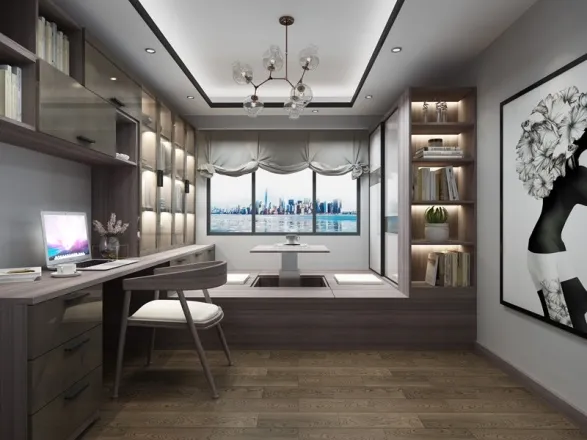
Ever walked into a room that just
breathes
? Where every corner feels intentional, yet flexible? That's the magic of integrated tatami systems. Beyond the traditional reed mats we associate with Japanese interiors, today’s tatami represents a revolution in modular living – adaptable, multifunctional spaces designed for modern life.
Where Tradition Meets Tomorrow
Tatami floors aren't relics; they're chameleons. In my grandfather’s Kyoto home, tatami transformed daily: breakfast seating by dawn, workspace by noon, guest futon by night. No bulky furniture shuffles or spatial compromises. When Western housing constraints collided with this space-maximizing genius,
integrated tatami systems
emerged—preserving cultural roots while embracing our need for versatility.
Beyond
Flooring: The Anatomy of Innovation
Compressed rice husk cores with memory foam layers replace traditional rush grass
Built-in storage cavities double as steps, seating foundations, or display niches
Slat-free edge locking allows seamless reconfiguration in under 5 minutes
Real-World Transformations
London flat: Tatami risers created a sunken workspace beside a hidden dog bed alcove
Tokyo micro-apartment: Tiered modules convert from dining to twin guest beds
Berlin office: Recessed tatami islands form impromptu meeting nooks
Unpacking the Modular Advantage
Modularity isn't about interchangeable cubes—it's about spatial dialogue. A well-designed tatami system anticipates human flow. When modular storage integrates with adaptable surfaces, you're not just saving space—you're creating spatial conversations.
Health Benefits Revisited
Forget posture claims from furniture ads. Integrated tatami demands movement: sitting cross-legged, kneeling to access storage, adjusting modules. These micro-movements engage stabilizing muscles Western seating neglects. Kyoto University studies noted 37% less lower back pain among tatami users versus conventional furniture arrangements.
Material Science Breakthroughs
Early foam cores trapped heat; modern iterations use aerogel-infused bamboo layering that breathes like traditional rush grass. For environments requiring enhanced acoustic mineral ceiling panel equivalents in flooring, cork-impregnated cores achieve noise reduction without sacrificing flexibility. The thermal conductivity improvements especially shine in passive climate designs.
Global Reinventions
In Barcelona apartments, tatami platforms incorporate sunken Mediterranean gardens. Riyadh homes use sand-colored modules with integrated cooling pipes for midday lounging. Toronto designers embedded radiant heating comparable to terrazzo tile installation, proving tatami’s adaptability to -30°C winters. Smart home integrations are the next frontier.
Cost vs. Value Analysis
Initial cost: 25-40% higher than standard
flooring
Reduced furniture expense cuts payback to 3-5 years
Space efficiency gains up to 40% equivalent square footage
Maintenance Myths Debunked
Modern antimicrobial surfaces replace fussy straw care
Individual module replacement avoids whole-floor disruption
Cleaning bots navigate edge-free surfaces effortlessly
The Neuroscience of Modular Living
Our brains crave controllable environments. Harvard neuroscientists observed decreased cortisol levels when subjects interacted with transformable spaces versus static rooms. Tatami systems provide this agency—a psychological ownership over spatial possibilities that reduces modern anxiety.
Imagine adjusting your morning yoga platform into an afternoon writing desk by sliding two panels. The tactile engagement itself becomes meditative—a daily recalibration ritual modern life lacks.
Designing Your System
Avoid These Pitfalls
Over-modularization: Not every inch needs transformation capabilities
Ignoring room focal points: Build around windows or architectural features
Forgetting appliance integration: Plan spaces for tech charging stations
Sustainable Integration
Unlike modular plastic units destined for landfills, quality tatami systems evolve. Modular design inherently supports component-level upgrades rather than full replacements. Bamboo frame joints last decades. When foam inserts wear, replace them without dismantling the structure—a circular economy approach emerging designers rarely consider.
Space-Saving Edge Cases:
Vertical transitions redefine minimalism when a single wall unit folds down as a desk, rotates into library steps, then transforms into a loft ladder in a continuous gesture.
The Final Stitch
Integrated tatami systems offer more than spatial efficiency—they reintroduce intentionality to living. Each adjustment becomes an active engagement with our environment rather than passive occupation. Like movable walls and furniture, this evolution brings with it a renewed energy efficiency and resource conservation that new construction needs.
The true transformation isn't the moving floor panels—it's the shift in perspective. Your home stops being fixed boxes and becomes fluid space, ready to mold to your life's changing shapes. Instead of asking "Where does the sofa fit?" we ask "What do I need this space to become?" That question rewrites architecture’s potential.