
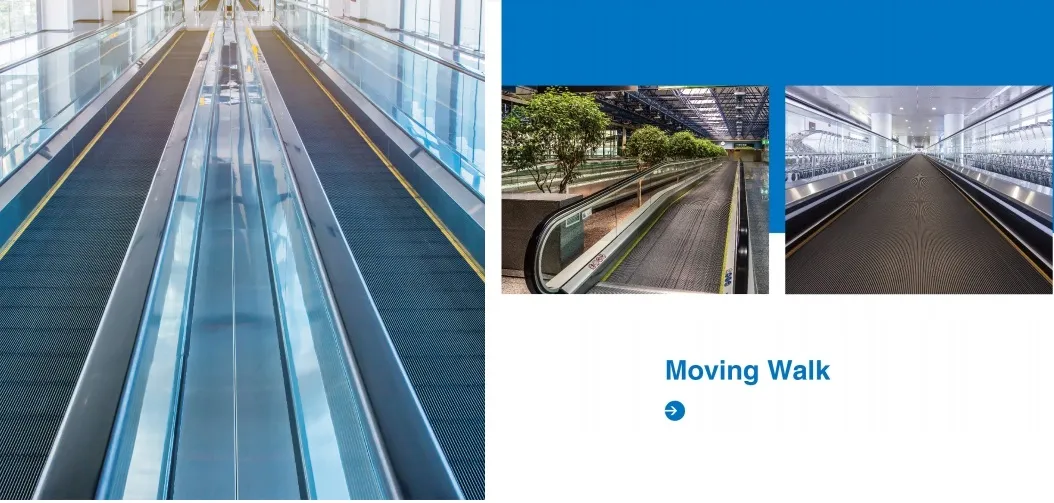
You've probably seen them in airports or shopping malls – those flat, conveyor-like walkways that effortlessly glide people forward. Moving walkways aren't just a futuristic novelty; they're smart engineering solutions transforming how we navigate large spaces. Today, we'll unpack everything about these systems, from their design nuts and bolts to why they're game-changers for modern buildings.
As urban spaces grow denser and accessibility becomes non-negotiable, moving walkways solve real problems. They bridge the gap between escalators and elevators for people who can't climb stairs but need to cover distance. Think about elderly travelers at airports or families with strollers in shopping complexes – these systems give them independence.
Beyond accessibility, architects increasingly incorporate walkways into blueprints for commercial properties. A well-integrated system can double as a design feature while silently handling crowd flow. Plus, with smart sensors and efficient motors, they're no longer the energy hogs of the past.
At first glance, a walkway seems simple – a moving surface with handrails. But underneath lies precision engineering. The core components include:
Modern walkways use specialized flooring systems for durability and safety:
| Feature | Standard Option | Premium Option |
|---|---|---|
| Speed Range | 0.5-0.75 m/s | 0.3-1.0 m/s (adjustable) |
| Loading Capacity | Up to 8,000 people/hour | 12,000+ people/hour |
| Incline Options | Flat or ≤6° slope | Adaptive slope ≤10° |
When architects choose to include walkways, they're solving multiple challenges simultaneously:
A recent Osaka airport retrofit showed moving walkways reduced connection times between terminals by 65%, while LED integration lowered lighting energy costs by 30%.
Successful installations require coordination with other systems:
| Component | Installation Challenge | Professional Solution |
|---|---|---|
| Drive Unit | Vibration transfer to building structure | Anti-resonance mounting plates + structural reinforcement |
| Deck Panels | Seam alignment and leveling | Laser-guided installation with micro-adjustment shims |
Pro tip: Always install walkways before final flooring finishes in adjacent areas. This prevents damage to delicate materials during heavy equipment movement.
Today's installations demand forward thinking:
Architects working on Singapore's Changi Airport expansion incorporated all three principles. Their walkways self-monitor bearing wear and automatically alert technicians before failures occur.
Moving walkways do more than transport people – they shape experiences. A hospital installing them between wings reduces patient stress. An exhibition center uses them to guide visitor flow naturally. With energy efficiency hitting new highs and maintenance demands dropping, these systems offer architectural freedom.
As we reimagine urban mobility, integrating smart transport within buildings isn't just convenient – it's becoming essential. Whether you're planning a transit hub or retrofitting a shopping center, overlooking walkways means missing a key solution for seamless people movement.
Recommend Products












