
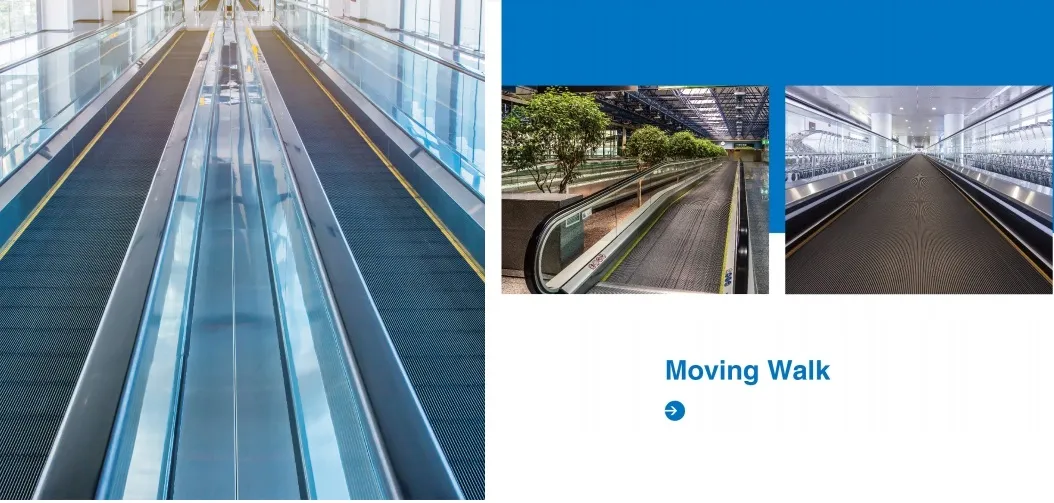
Picture this: You're gliding smoothly on a moving walkway at the airport with luggage in tow. Suddenly, a child trips ahead of you. Your heart races as people scramble to help. Now imagine if that walkway didn't stop immediately – that hesitation could turn a minor stumble into a serious accident. This is exactly why emergency stop mechanisms aren't just technical requirements; they're guardians of human safety in our fast-moving world.
We often take moving walkways for granted – those horizontal escalators in airports, transit hubs, and large complexes. But when things go wrong, it's the emergency stop that transforms an accident from catastrophic to manageable. These devices are to moving walkways what airbags are to cars: silent protectors waiting for critical moments to intervene.
Real impact: Just last year, a properly functioning emergency stop at JFK Terminal 7 prevented a luggage cart collision from injuring multiple passengers. The system reacted in under 0.8 seconds, showcasing why design precision matters down to the millisecond.
Safety doesn't recognize borders. Whether in Tokyo's Narita Airport or Berlin Central Station, people deserve consistent protection. International standards harmonize safety approaches across cultures and legal systems, ensuring you're equally protected whether you're in London or Singapore.
Requires stops that respond within 1.2 seconds of activation. Mandates fail-safe designs that default to stop position during power failures – critical for preventing uncontrolled movements during emergencies.
Specifies "mushroom-head" buttons placed every 15 meters. Dictates minimum 100mm diameter for visibility and requires audible/visual confirmation that the system has responded. These design choices create intuitive stopping points.
Emphasizes human factors – mandating devices at both ends and midpoints of walkways after research showed 67% of emergencies originate midway. Requires immediate restart prevention after emergency engagement.
Technical compliance is just the beginning. Truly effective emergency stops understand human behavior:
The Panic Response Factor: In true emergencies, people don't push buttons – they slap surfaces. Designs must accommodate this instinctive reaction. Pressure-sensitive surfaces with palm-detection technology have shown 40% faster activation compared to traditional button designs in high-stress simulations.
Visual Triggers: International standards now embrace the use of distinctive color markings throughout the moving walkway system, particularly when integrating specialized architectural solutions into large building projects. When elevators are installed near moving walkways, these visual cues ensure cohesive emergency response patterns across different transportation systems.
As we enter the smart infrastructure era, tomorrow's emergency systems might feature:
Predictive Safety: AI analyzing camera feeds to detect abnormal crowd movements or accidents-in-progress, activating slowdown protocols before incidents fully develop. Early trials in Dubai have prevented 12 potentially serious incidents through predictive response before human operators could react.
Integrated Alert Systems: Linking emergency stops to building-wide safety networks that simultaneously notify nearby security personnel while slowing adjacent walkways to create safety buffers.
No safety system works without proper care:
Self-Testing Mechanisms: Modern designs automatically run daily diagnostic checks that include resistance testing, circuit verification, and response time measurements. When deviations beyond 1.7% of benchmark performance occur, maintenance alerts are automatically generated.
From Singapore's high-humidity environments to Oslo's freezing temperatures, materials must adapt. Current research in nanocoatings promises to extend switch reliability from the current 500,000-actuation standard to over 2 million cycles in extreme environments.
Technical precision must meet psychological understanding:
Cultural Color Coding: While international standards recommend red for emergency devices, some airports in East Asia now supplement this with yellow halo lighting based on research showing 31% faster recognition in their user demographics.
Accessible Design: Standards now incorporate anthropometric data ensuring device placement accommodates both wheelchair users and children. The 800-1100mm height range isn't arbitrary – it represents decades of ergonomic research.
Singapore's award-winning airport integrates emergency stops into a holistic safety matrix:
• Pressure-sensitive edge strips detect fallen objects
• Motion-activated slow-down zones near stair connections
• Emergency stop engagement triggers real-time CCTV activation at security desks
• Post-activation analysis has led to 18 design refinements over five years
Safety engineering decisions carry moral weight. Choosing a 10% cheaper component with slightly slower response times might save budget, but at what potential human cost? The industry increasingly recognizes that safety investments yield returns measured in protected lives rather than quarterly profits.
Ultimately, designing emergency stop devices that meet international standards is about designing empathy into our infrastructure. Every detail – from millimeter placement precision to international compliance – represents a commitment to human wellbeing. That glowing red button isn't just a component; it's a promise that technology won't forget our humanity in motion.
Recommend Products












