
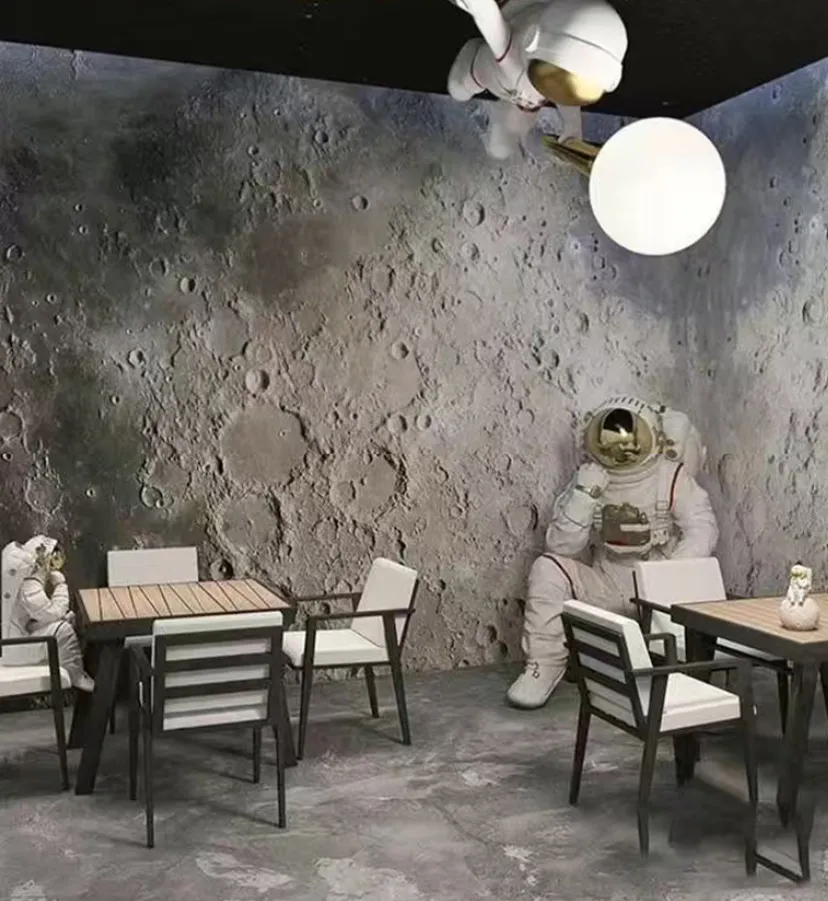
Picture this: You're holding a piece of another world. Not a fantasy novel prop, but actual lunar material older than nearly everything on Earth. That's the magic of moon rocks – celestial time capsules preserving 4.6 billion years of solar system history in their crystalline structures.
When Apollo astronauts first brought back these grayish rocks in the late 60s, scientists were stunned by what they revealed. These weren't just ordinary stones, but puzzle pieces explaining how our Moon formed (hint: it involves an epic planetary collision nicknamed the "Big Splat"). The similarities between Earth and Moon composition turned out to be the biggest plot twist in planetary science!
But why should you care about space rocks? Because they hold revolutionary secrets: Evidence of ancient lunar volcanoes, clues about Earth's early atmosphere, and even the potential for future space resources. Let's decode these cosmic wonders together.
Like siblings with different personalities, moon rocks come in distinct types – each telling its own chapter of the Moon's dramatic history. Forget imagining dry geology lectures; we're going on a guided tour through the Moon's most fascinating geological formations.
Think of these as the Moon's lava lamp remnants. Dark, smooth, and surprisingly heavy, they flood the lunar "seas" (the dark patches you see). Formed during intense volcanic eruptions 3-4 billion years ago when the Moon was geologically hyperactive.
Cool fact: Some contain titanium concentrations higher than any Earth rocks – like finding stainless steel naturally occurring!
The Moon's original crust! These bright, crystalline rocks form the rugged highlands. The legendary "Genesis Rock" (dated at 4.1 billion years) is part of this group – literally a piece of the primordial Moon.
Why it matters: Their reflective properties explain why the Moon shines so brightly in our night sky.
Nature's mosaic artwork. These rocks are Frankenstein creations – shattered fragments from asteroid impacts, fused together by pressure and heat. Each fragment could be from different eras and locations.
Detective work: They preserve evidence of meteor showers that shaped the Moon's face over billions of years.
The Moon's "soil" – but don't picture gardening dirt! This ultra-fine powder blankets the surface, created by constant micrometeorite bombardment. Sharp enough to damage spacesuits yet soft enough to preserve astronaut footprints.
Modern relevance: Future moon bases may use this as radiation shielding or 3D-printed habitats.
Geochemistry's alphabet soup: Potassium (K), Rare Earth Elements (REE), Phosphorus (P). These unusually enriched rocks reveal hotspots in the Moon's mantle where volcanic activity concentrated valuable resources.
Future goldmine: Prime targets for lunar mining missions seeking nuclear fuel and tech minerals.
Nature's jewelry! Tiny glass pearls formed when lunar lava fountain sprays froze mid-air. Found in vivid orange and emerald green varieties near ancient volcanic vents.
Shockingly: Some contain water molecules – challenging the "bone-dry Moon" theory.
Cosmic crime scene evidence. When giant asteroids hit, their energy instantly melts surrounding rock into liquid stone which then re-solidifies. Like geological snapshots capturing impact millisecond moments.
The Moon's underground reservoirs. Unlike surface volcanics, these rocks cooled slowly miles beneath craters, forming large crystals like lunar versions of granite or gabbro.
The ultimate upcycled material. When surface dust gets compacted by impacts into solid rock, trapping tiny glass bubbles and microscopic iron beads (nanophase iron) that create unique reflective **decorative profiles** in thin sections.
Stowaways from space! Chunks of Martian or Vesta meteorites mixed into lunar soil by impacts – like finding European pottery shards in Mayan ruins.
The Moon's earliest building blocks. With beautiful crystalline patterns resembling carved ivory, they've survived relatively unchanged since the Moon's magma ocean first cooled.
Fire fountain fallout. Dark, fine-grained layers formed when gas-rich magma erupted in volcanic "fireworks" displays, distributing material over hundreds of miles.
Water hiding in shadows! Though not rock technically, these chemically-bound volatiles in polar regolith could hydrate future lunar bases. Imagine having cosmic water bottles on the Moon's surface!
Nature's glazed pottery. Rocks covered in shiny splash-melt coatings from asteroid hits, creating glassy surfaces that glitter like obsidian under lunar sunrise.
The Moon's mineral cocktail. A blend of volcanic material and deep mantle elements, rich in thorium and uranium – essentially nature's nuclear reactor components.
Here's where things get dramatic: Owning authentic Apollo moon rocks is illegal for private citizens. Why?
NASA's cosmic treasure rule: All 842 pounds (382 kg) of Apollo moon material are considered U.S. government property. Attempting to sell them carries felony charges – one thief got 21 years for peddling moon dust!
But before you get disappointed:
Funny story: A museum's "moon rock" gifted by Nixon turned out to be petrified wood! Which reminds us – if someone tries to sell you moon rocks online... it's probably scoria slag or other terrestrial rock.
Scientists are buzzing about new missions:
China's Chang'e Program recently returned fresh samples from unexplored lunar regions, while NASA's Artemis aims to establish sustainable lunar exploration. There's even talk of creating moon rock replicas using special concrete mixtures for educational displays that could resemble stone decorative profiles .
The biggest unsolved mysteries moon rocks could reveal:
As one researcher told me, "These rocks are cosmic diaries – we've only read the first few pages." Next time you look at the Moon, remember there's a whole world of geological diversity sparkling in that gray orb – just waiting to tell its stories.
Recommend Products












