


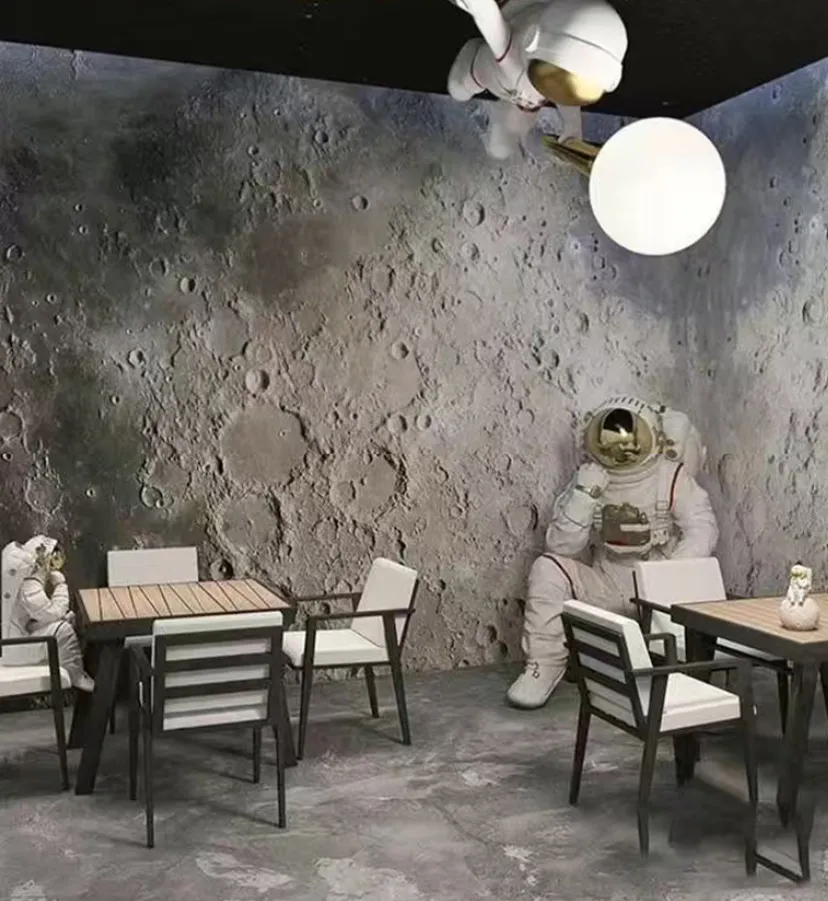
Your Complete Guide to Budgeting, Installation, and Transforming Your Outdoor Space
Why Landscape with Moon Rock?
Picture stepping into your backyard and feeling like you're walking on lunar terrain. That's the magic moon rock brings! This unique decorative stone, with its textured gray surface and cosmic sparkle, adds instant character to any space. But before you get lost in daydreams of craters and constellations in your garden, let's talk real talk: budgeting.
Many homeowners get blindsided by installation costs because they only consider material prices. I've seen folks fall in love with moon rock samples at the store, then panic when contractors quote labor fees. This guide is your stress-free blueprint to navigating costs, avoiding pitfalls, and creating an out-of-this-world landscape without galactic prices.
The Real Cost Breakdown
So, what actually makes up your final bill? Think of it like planning a space mission—multiple systems working together:
Material Quality
Basic crushed moon rock runs $40-$65/ton while premium, larger stones with high mineral content can hit $150+/ton. That sparkle? Those are mica flakes—the more sparkle, the higher the price.
Project Size
Ordering bulk? Great! Most suppliers offer discounts at 5+ tons. For reference, a 10x10 ft area needs about 1.5 tons at 2" depth. Small projects pay premium prices.
Prep Work Needed
Is your ground battle-ready? Sloped yards needing terracing or soil with drainage issues add 20-40% to labor costs. I once saw a $300 rock project balloon to $1,200 because of surprise clay soil!
Geographic Factors
Transportation eats 15-30% of budgets. If moon rock isn't locally quarried (common in mountain states), you'll pay extra. Urban areas often have higher labor rates too.
The Numbers: What You'll Actually Pay
Let's cut through the confusion with real-world pricing. These numbers combine material + professional installation:
| Project Level | Material Price (Per Ton) | Installation Labor | Total Cost (100 sq ft) | Price Per Sq Ft |
|---|---|---|---|---|
| Basic | $40 - $65 | $125 - $150 | $260 - $290 | $2.60 - $2.90 |
| Better | $75 - $100 | $150 - $180 | $300 - $325 | $3.00 - $3.25 |
| Premium | $120 - $160 | $180 - $220 | $340 - $380 | $3.40 - $3.80 |
Why the labor consistency? Spreading rocks is equally labor-intensive whether you chose basic or premium stones. The variation comes from prep complexity. Flat suburban yards? Lower end. Sloped terrain needing retaining walls? Prepare for higher quotes.
When Hiring Pros Makes Sense
Can you DIY moon rock installation? Technically yes. Should you? Let's be honest—those bags weigh 50 lbs each. One client saved $400 DIYing, then spent $800 fixing drainage issues because they skipped proper ground prep.
Hire when:
- Your project exceeds 200 sq ft—the math and muscle add up fast
- Slopes exceed 10 degrees—terracing prevents washouts
- You're combining materials (like moon rock pathways with stepping stones)
- Edging is needed—proper containment keeps rocks looking sharp
7 Insider Tips to Save Money
Landscaping on a budget doesn't mean compromising:
- Time it right: Contractors offer discounts in fall/winter. Saved $250 on my patio by booking November install!
- Hybrid design: Use premium moon rock for focal points (around fire pits) and basic grade for fill areas
- Source creatively: Check FB Marketplace for unused bags from others' projects—got 40% off once
- Layer your depth: Place 1" of inexpensive gravel under 1" of moon rock for fullness
- Rent machinery: Home Depot rents power wheelbarrows for $60/day—lifesaver for large yards
- Reuse existing: Can you incorporate old stones? One client saved $900 blending old river rock
- Bundle services: Getting mulch or planting done? Bundle services for package discounts
Maintenance Made Simple
Moon rock's best feature? It's virtually maintenance-free. Unlike mulch that fades or pavers that shift, rocks stay put. But some TLC keeps them lunar-bright:
- Annual refreshing: Top off thin areas each spring with 1/2" of fresh rock
- Weed prevention: Install quality weed barrier—thick woven polypropylene lasts 10+ years
- Leaf management: Use a shop vac on dry leaves to avoid decomposing debris
- Sparkle revival: Occasional gentle spraying brings out the mica's gleam
Compared to other materials? Huge win. Grass demands weekly mowing ($600+/yr), wood mulch decomposes annually ($200/yr replacement). Moon rock? A one-time investment that looks flawless for a decade.
Why People Are Choosing Moon Rock
Beyond costs, what's the big appeal? As one landscape architect told me: "It's instant atmosphere." Unlike generic gravel, moon rock triggers wonder. Kids adore hunting for sparkly minerals, adults appreciate the modern, neutral palette that complements any architecture.
Environmentally, it's stellar—no watering, no chemicals, permanent erosion control. When sourcing materials, connect with reliable natural stone manufacturers who ethically quarry stones. Bonus: Unlike synthetic materials, aged moon rock develops character, making your space uniquely yours.
Landscaping with moon rock isn't just about rocks—it's creating a personal cosmos. Yes, costs vary, but consider this: a well-executed moon rock installation adds beauty for years with minimal upkeep. Whether it's a small meditation circle or an entire backyard transformation, strategic planning prevents budget black holes.
Start with a sketch. Get multiple quotes. Remember that labor matters as much as materials. And when you step onto your finished moon rock path for the first time? You'll realize—it's not an expense, but an investment in daily joy that literally grounds you.










