
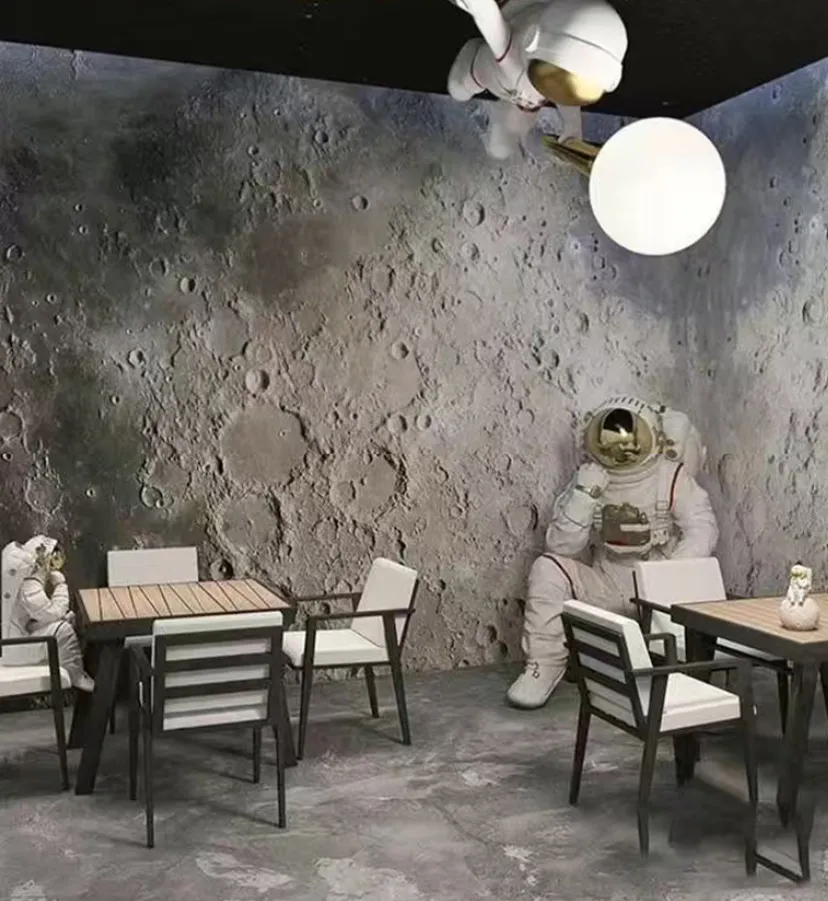
China has quietly become the beating heart of moon rock production, transforming what many thought was strictly NASA territory into a thriving commercial industry. From shimmering moon-inspired tiles to glowing lunar lamps, Chinese manufacturers have perfected the art of bringing celestial magic down to Earth. The moon rock products we're talking about aren't just raw materials – they're the marriage of technology, craftsmanship, and human creativity that makes our everyday spaces feel extraordinary.
What we're seeing today is nothing short of a renaissance in decorative and architectural materials. Factories across China are experimenting with everything from moon-inspired resins to lunar-patterned ceramics that seem to capture actual moon dust suspended in time. It's like having a piece of the night sky in your living room.
This industry doesn't just serve people looking to bring some cosmic beauty into their homes. It stretches into commercial spaces, hotels trying to create unique experiences, and even public art projects aiming to inspire wonder. The level of innovation happening is staggering – some manufacturers have even developed illuminated moon stones that absorb sunlight during the day to softly glow at night.
If you follow the supply chain, you'll find moon rock production concentrated in three key regions:
These regions have distinct personalities. Walk into a Foshan facility and you'll find humming automated production lines creating thousands of identical moon lamps. But visit a Zhejiang workshop? That's where artists shape moon-inspired sculptures using stainless steel and glass, making pieces feel alive in shifting light.
This is no one-trick industry. Chinese manufacturers have expanded the "moon rock" concept across categories:
Moon-inspired tiles and slabs that transform spaces with starlight patterns. These flexible stone wall panels are reshaping how architects think about both interior and exterior surfaces. Factories like Quanzhou Source Green New Materials specialize in making these surprisingly durable surfaces that carry the mystery of moon valleys in their patterns.
Lamps that recreate the actual lunar surface texture in jaw-dropping detail. The market leaders here have mastered LED integration that mimics moon phases or even projects constellations. You haven't experienced nighttime indoors until you've seen a premium moon lamp cast soft shadows across your ceiling.
Sculptures ranging from contemporary steel moons to intricate resin pieces that capture lunar mythology. These items turn homes, galleries, and hotels into places where art meets astronomy.
What surprises many is how these manufacturers approach customization. They don't just sell products – they collaborate. I've seen cases where a designer sent a photo of moon craters they loved, and a Foshan factory recreated that exact pattern in a table-sized moon lamp within weeks.
Beyond the factories and products, there's a human story in this industry. Mr. Chen from Xiamen TSP Stone Industry describes their approach: "We're not selling rocks, we're selling imagination. When someone brings home one of our moon surface tiles, they're connecting with something ancient and beautiful."
Designer partnerships have become essential too. Young Chinese artists like Li Wei work directly with factories to create limited edition collections – think moon phase wall installations that track real lunar cycles using hidden tech. This collaboration between art and manufacturing is what transforms functional items into conversation pieces.
The most successful moon rock companies don't see themselves as suppliers, but as collaborators. They live for those emails that start with "This might sound crazy, but can you make..." because those challenges push their craft forward.
Moon rock products aren't staying hidden in homes. They're appearing everywhere:
The application potential keeps expanding. I recently visited a school where they'd used moon-inspired acoustic wall panels to create a "space quiet" reading zone. And city parks are starting to include moon sculptures as both art and seating. These products bridge function and magic.
Navigating this industry requires understanding who does what best:
The leaders in this space obsess over consistency. They're not just producing items – they're creating reliably enchanting experiences with every piece. This means strict lighting testing, material sourcing controls, and finishing processes that make moon surfaces feel authentic.
Factories like Foshan Fiore Ceramics have set the bar for communication. Instead of treating orders as transactions, they assign project coordinators who provide regular updates, from materials sourcing to shipping.
Companies at the forefront like Xiamen Sunlight Stone constantly experiment. Their latest? Moon dust composite materials that feel surprisingly light yet durable enough for outdoor use.
The selection process often starts with the "kitchen table test." Quality manufacturers encourage potential buyers to place samples among their everyday items. Does the moon lamp still feel magical when you're having breakfast? Does the moon rock tile draw your eye when sunlight hits it? That's the test that matters.
The future of Chinese moon rock manufacturing is fascinating. We're seeing:
Factories are exploring partnerships with actual space agencies too. One Shenzhen manufacturer is testing with genuine simulated moon dust (legally sourced, of course) to create museum-grade replicas. This represents how the line between science and design is blurring in beautiful ways.
The next frontier? Smart moon products that sync with actual lunar cycles. Developers I spoke with described lamps that wax and wane with the real moon, creating living installations in homes.
What stays with me isn't the technology or products, but stories like Ms. Zhang's. She operates a small workshop creating moon sculptures near Guangzhou. "Before," she says, "we made generic garden ornaments. Now? We create celestial art. That transformation happened because we started seeing raw materials as invitations to wonder."
That's the essence of Chinese moon rock manufacturing today – taking what could be cold stone or simple resin and turning it into something that makes people pause, look closer, and reconnect with the wonder above us every night. It's manufacturing with soul.
These manufacturers prove technology doesn't need to make things sterile. When paired with human insight, it can create items that feel both futuristic and primal. That tension between ancient celestial bodies and modern fabrication is exactly what makes walking into a space with these products feel like stepping into tomorrow while staying connected to the dawn of time.
Recommend Products












