
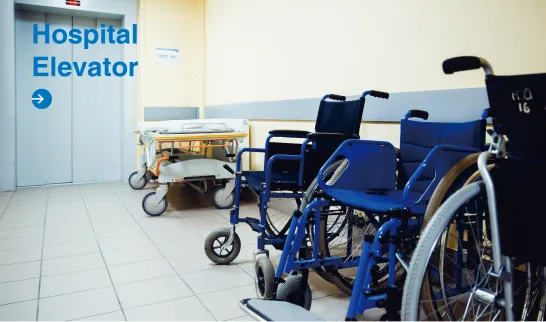
In the heart of Riyadh, a 30-year-old hospital recently faced a critical challenge: its aging elevator system was failing to keep up with the demands of modern healthcare. Patients in wheelchairs waited 15 minutes for a ride, staff struggled to transport medical equipment between floors, and the facility's administrators knew that a full renovation was long overdue. But here's the catch—closing the hospital during construction wasn't an option. Lives depended on uninterrupted care, and the clock was ticking.
This scenario isn't unique. Around the world, healthcare facilities are grappling with the dual pressures of aging infrastructure and growing patient needs. The World Health Organization estimates that global healthcare spending will rise by 5.4% annually through 2030, with a significant portion allocated to upgrading existing facilities. For hospitals, clinics, and care centers, renovation projects are no longer a choice but a necessity. And at the center of these projects? Elevators—the silent workhorses that keep medical operations moving.
Enter modular hospital elevators: a game-changing solution designed to address the unique challenges of healthcare renovations. Unlike traditional elevators, which require extensive construction, lengthy installation timelines, and often disrupt daily operations, modular systems offer flexibility, speed, and adaptability that align perfectly with the needs of busy medical environments. In this article, we'll explore how these innovative elevators are transforming hospital renovation projects, and why partnering with a trusted provider like Coloria— one-stop architectural solution provider and saudi arabia building materials supplier —can make all the difference.
Let's start with the basics. Modular hospital elevators are pre-engineered, pre-assembled elevator systems built off-site in controlled factory environments. Think of them as "building blocks" of elevator components—cabs, shafts, control systems, and safety features—that are manufactured to precise specifications, then transported to the construction site for quick assembly. This off-site construction model is what sets them apart from traditional elevators, which are typically built piece by piece on-site, requiring weeks (or months) of messy, labor-intensive work.
But modular doesn't mean "one-size-fits-all." These systems are highly customizable, designed to fit into tight spaces, adapt to existing building structures, and meet the unique needs of healthcare settings. Need an elevator that can accommodate stretchers, medical carts, and wheelchair users simultaneously? Modular systems can be tailored with wider doorways and reinforced floors. Working with a historic hospital with limited shaft? Compact, shaftless designs are available. And because they're built in factories, quality control is stricter—no more on-site delays due to weather, material shortages, or human error.
To truly understand the impact of modular elevators, let's compare them side-by-side with traditional systems in the context of a hospital renovation. The difference is night and day.
| Factor | Traditional Hospital Elevators | Modular Hospital Elevators |
|---|---|---|
| Installation Time | 3–6 months (requires on-site construction of shafts, cabs, and mechanical rooms) | 4–6 weeks (pre-assembled components bolt together on-site; minimal on-site work) |
| Disruption to Operations | High—requires shutting down floors, rerouting patients, and noisy construction | Low—components delivered and installed in phases; often possible to keep adjacent areas operational |
| Space Requirements | Large—needs dedicated mechanical rooms and deep shaft pits | Compact—shaftless designs and small machine rooms (or none at all) save critical floor space |
| Cost Overrun Risk | High—on-site delays, material price fluctuations, and labor overtime common | Low—fixed factory costs and predictable timelines reduce unexpected expenses |
| Sustainability | Limited—on-site construction generates waste; older models often energy-inefficient | High—factory-built with recycled materials; energy-efficient motors and LED lighting standard |
For hospital administrators, these differences translate to one thing: the ability to upgrade critical infrastructure without putting patient care on hold. Imagine the Riyadh hospital we mentioned earlier—with a modular elevator, their renovation could be completed in weeks, not months, meaning shorter wait times for patients, less stress for staff, and no need to redirect emergency services to other facilities. It's a win-win for everyone involved.
Beyond the speed and reduced disruption, modular hospital elevators offer a host of benefits tailored to the unique needs of medical facilities. Let's dive into the most impactful ones:
Hospitals are often built in phases, with additions and expansions haphazardly added over decades. This means odd angles, uneven floor plans, and limited open space—challenges that traditional elevators struggle to overcome. Modular systems, however, are designed with flexibility in mind. Shaftless models eliminate the need for deep pits and overhead machinery, making them ideal for retrofitting into existing stairwells or small alcoves. Some even come with foldable cabs that can be maneuvered through narrow doorways before expanding into their full size. For older hospitals with constrained layouts, this adaptability is nothing short of revolutionary.
In healthcare, safety isn't just a priority—it's a legal requirement. Modular elevators are built to meet the strictest global standards, including those set by the International Organization for Standardization (ISO) and local regulations like Saudi Arabia's Civil Defense requirements. Features like backup power systems (critical during medical emergencies), non-slip flooring, and antimicrobial cab surfaces (to prevent the spread of infections) are standard. Many models also include smart sensors that detect overcrowding or obstructions, automatically pausing operations to avoid accidents. When every second counts, these features can quite literally save lives.
Today's hospitals aren't just focused on patient care—they're also committed to reducing their environmental footprint. Modular elevators align with this mission through energy-efficient designs: regenerative drives that feed excess energy back into the hospital's grid, LED lighting, and low-power standby modes. What's more, many manufacturers (including those partnered with Coloria) use recycled steel and eco-friendly paints in construction, aligning with global sustainable building solutions trends. For hospitals aiming to meet green building certifications like LEED or Saudi Arabia's ESG standards, modular elevators are a easy way to earn critical points.
Healthcare needs evolve—and so should hospital infrastructure. Modular elevators are designed to be upgraded over time, with components that can be swapped out as technology advances. Need to add smart controls that integrate with the hospital's IoT system? Or increase capacity to accommodate a new wing? Modular systems can be modified without tearing out the entire structure. This future-proofing ensures that today's investment continues to deliver value for years to come.
Choosing the right modular elevator is just one piece of the puzzle. To truly streamline a hospital renovation, you need a partner who can handle more than just elevators—someone who understands the full scope of healthcare construction, from wall materials to wiring, and can deliver it all under one roof. That's where Coloria comes in.
As a one-stop architectural solution provider , Coloria doesn't just sell modular elevators—we deliver complete renovation packages tailored to healthcare settings. Our 14 product lines cover everything a hospital project might need: from fire-resistant building materials like Class A fireproof CPL inorganic boards (critical for patient safety) to hygienic wall panels that resist mold and bacteria. Imagine ordering your elevator, wall materials, flooring, and even lighting from a single supplier—no more coordinating with multiple vendors, juggling delivery schedules, or resolving conflicting product specifications. It's efficiency redefined.
For hospitals in Saudi Arabia and the broader Middle East, local expertise matters. Coloria has operated in the region for decades, with a dedicated in Saudi Arabia that understands the nuances of local regulations, cultural considerations, and supply chain logistics. We know that Saudi's "2030 Vision" prioritizes healthcare infrastructure and—and we're committed to supporting those goals. Our team includes local engineers and project managers who speak the language, know the permitting process, and can navigate the unique challenges of building in the region. When you partner with Coloria, you're not just getting a product—you're getting a team that's invested in your project's success from day one.
In an era of climate consciousness, hospitals are under pressure to reduce their carbon footprint. Coloria's commitment to sustainable building solutions aligns perfectly with this mission. Our modular elevators are built with energy-efficient motors and recycled materials, and our green includes solar panels, bamboo charcoal wall panels, and low-VOC paints—all designed to meet global "" standards. For hospitals aiming to lead in environmental responsibility, we don't just offer products—we offer a pathway to a greener future.
Even the best products need reliable support. Coloria's global service network ensures that whether your hospital is in Riyadh, Dubai, or beyond, you'll have access to 24/7 technical assistance, spare parts delivery, and maintenance training. We stand behind our of "global," because we know that in healthcare, downtime isn't an option. When you choose Coloria, you're choosing peace of mind.
To see how this all comes together, let's look at a recent project in Jeddah, Saudi Arabia. A 400-bed hospital was struggling with an outdated elevator system that couldn't keep up with patient demand. The facility needed to replace three elevators, but closing even one floor would have disrupted critical care services. Coloria stepped in with a modular solution tailored to their needs.
Our team proposed three shaftless modular elevators with compact designs that fit the existing shaft. We coordinated with the hospital to install them in phases: first the emergency elevator (critical for patient transport), then the staff elevator, and finally the visitor elevator. Each installation took just 10 days, with work scheduled during off-peak hours to minimize disruption. To complement the elevators, we supplied Class A fireproof wall panels and antimicrobial flooring for the adjacent corridors, ensuring the entire renovation met the highest safety standards.
Three months later, the elevators were fully operational. Patient wait times dropped from 15 minutes to under 2 minutes, staff productivity increased by 20%, and the hospital avoided costly shutdowns. Best of all, the project came in on time and under budget—proving that modular solutions, paired with a one-stop supplier, can transform even the most challenging renovation projects.
As healthcare continues to evolve, so too will the demand for flexible, efficient renovation solutions. Modular elevators are just the beginning—we're already seeing trends like "smart elevators" that use AI to predict maintenance needs, and "green elevators" that generate more energy than they consume. Coloria is at the forefront of these innovations, investing in R&D to ensure our products remain at the cutting edge.
For hospitals planning renovations in the coming years, the message is clear: modular isn't just a trend—it's the future of healthcare construction. And with a partner like Coloria by your side, you can navigate that future with confidence, knowing you have the flexibility, expertise, and support to turn your vision into reality.
Hospital renovation projects are complex, but they don't have to be stressful. Modular hospital elevators offer a flexible, efficient solution that minimizes disruption and maximizes value—especially when paired with a one-stop supplier like Coloria. Whether you're in Saudi Arabia or beyond, we're here to help you transform your facility into a modern, patient-centered space that meets today's needs and tomorrow's challenges.
Don't let outdated infrastructure hold your hospital back. Embrace the future of healthcare renovation—one modular elevator at a time.
Recommend Products












