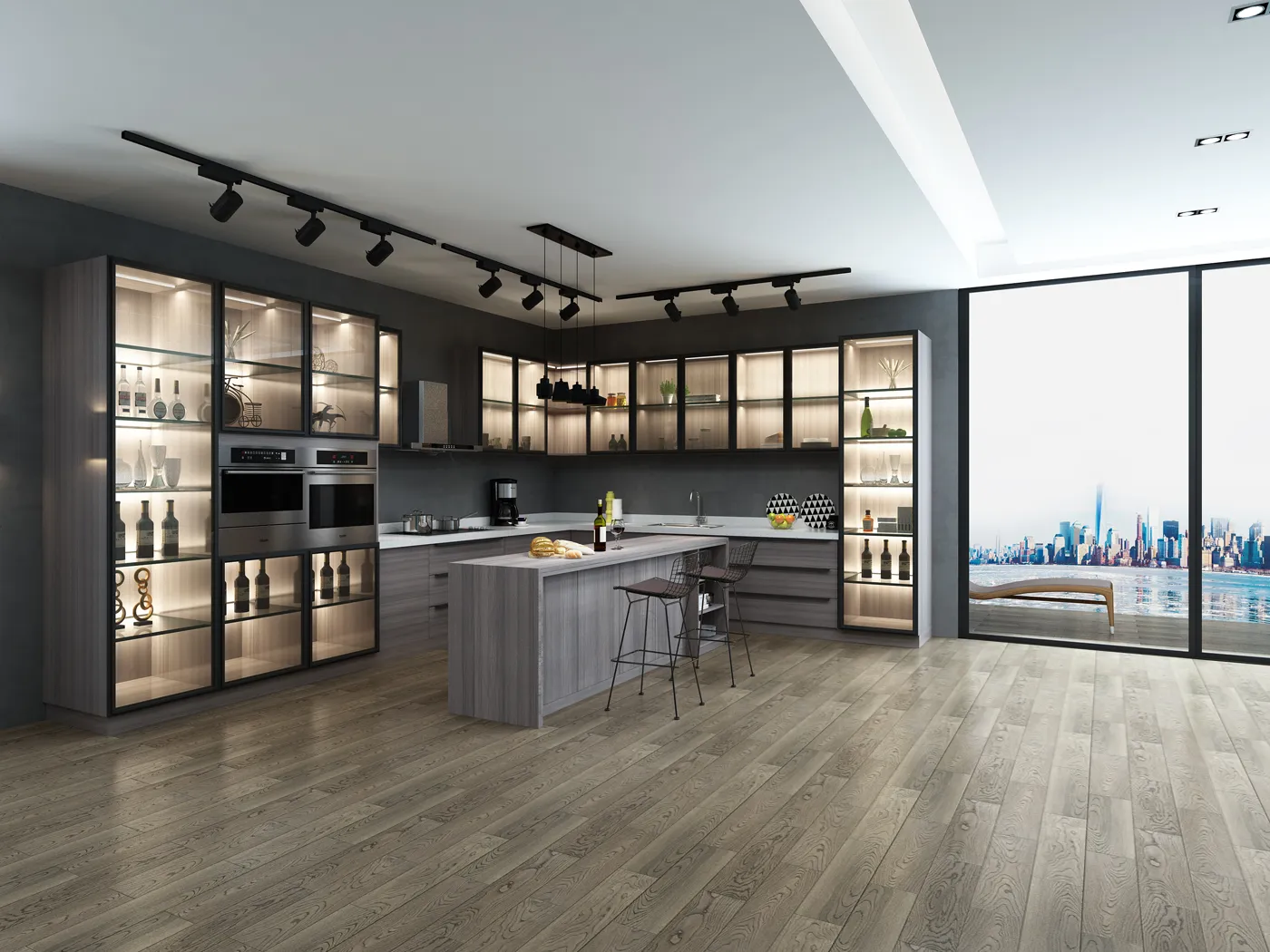
Modern kitchens have evolved far beyond cooking spaces into the social hearts of our homes. The minimalist approach strips away excess to focus on what truly matters - clean lines, functional design, and serene aesthetics. This isn't about stark emptiness but
intentional curation
where every element serves a purpose while contributing to visual harmony.
Redefining Modern in Kitchen Spaces
Today's
modern
kitchen distills centuries of culinary evolution into efficient spaces that respond to how we actually live. It's not just about new technology but a mindset - creating environments that simplify daily routines while elevating our experiences. Minimalism pairs beautifully with modernity because both value authenticity and deliberate choices over clutter.
The Historical Shift
Kitchens transitioned from hidden service areas to proud showpieces over the past century. Early 1900s kitchens prioritized utility with freestanding cabinets. Mid-century brought built-ins and modular concepts. Now we've reached peak refinement – where
concealed functions
meet
intentional design statements
.
Core Minimalist Principles
Form Follows Function
Every element must justify its existence. Pull-out drawers replace deep cabinets where items disappear. Appliance garages keep counters clear. Even handles disappear through integrated grooves or touch-release mechanisms.
Visual Weight Distribution
Negative space gets equal billing with cabinetry. Floating shelves balance solid sections. Monochrome palettes create seamless transitions. Light becomes a design material through strategic placement like under-cabinet LED strips.
Texture & Material Honesty
Natural wood grains aren't hidden behind paint. Concrete counters showcase their mineral variations.
SPC flooring
(Stone Plastic Composite) provides durability with authentic stone visuals. Every material communicates its essence truthfully.
Cabinet Design Innovations
Cabinets anchor minimalist kitchens by establishing visual rhythm and storage efficiency. Current trends include:
Frame-less Construction
Eliminating the front frame creates larger seamless surfaces. Full-overlay doors meet precisely with almost invisible gaps. This approach maximizes storage volume while enhancing the uninterrupted aesthetic.
Integrated Handles
Finger-pull grooves, recessed channels, or magnetic touch-open systems maintain clean lines. For upper cabinets, long horizontal grooves serve as handles while establishing a strong visual horizon.
Material Hybrids
Mixing matte wood lowers with glossy white uppers creates depth without clutter. Textured finishes like wire-brushed oak add tactile interest while maintaining monochromatic unity.
Key Supporting Elements
Minimalist cabinets don't exist in isolation. These elements elevate them from beautiful containers to functional art:
Intelligent Storage Systems
Corner carousels, vertical tray dividers, and hydraulic lift systems transform awkward spaces into accessible storage. Appliance garages with built-in outlets keep counters pristine.
Integrated Technology
Wireless charging stations inside drawers. Touch-activated task lighting. Water taps integrated into backsplash panels. Technology disappears into the architecture.
Strategic Material Selection
Quartz countertops extend seamlessly into backsplashes.
Flooring transitions dissolve thresholds between kitchen and living spaces. Continuous materials create visual flow that expands spatial perception.
Lighting as Design Language
Minimalist kitchens require layered lighting plans that serve different needs while disappearing visually.
Cove lighting uplifts ceilings. Integrated LED strips illuminate work surfaces. Pendant lights become sculptural focal points without demanding attention when unlit.
Color & Texture Strategy
Neutral palettes dominate but with sophisticated variations. Monochromatic schemes might feature five variations of grey. Texture breaks potential monotony - wire-brushed wood contrasts polished concrete. Matte finishes prevent glare while absorbing light softly.
The Human Connection
Ultimately, the best minimalist kitchens become backgrounds for life. Their precision creates calm. Their order reduces cognitive load. Their simplicity welcomes interaction - a kitchen that doesn't shout lets conversation flow freely. As we navigate increasingly complex lives, these pared-down spaces offer sanctuary through intentional design that celebrates space, light, and materials in their purest forms.