


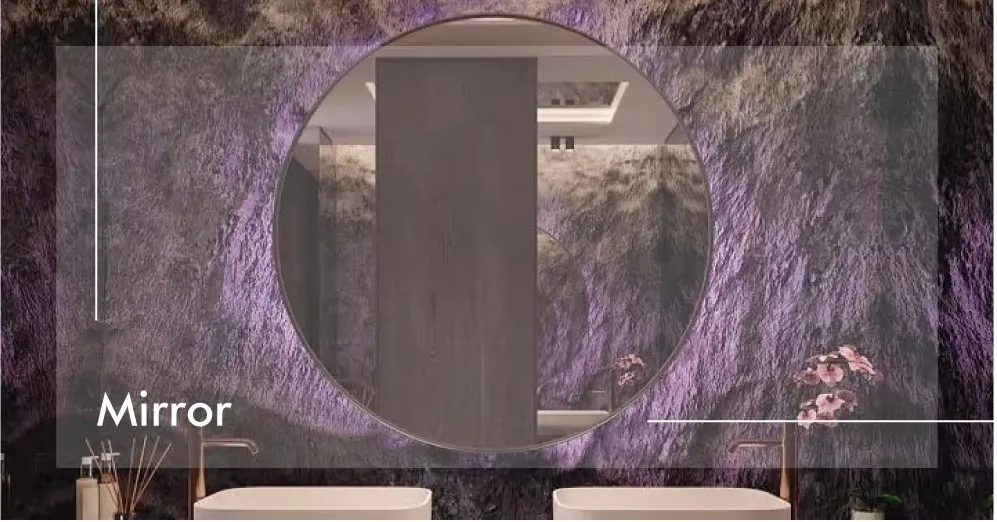
When it comes to transforming spaces, few elements pack the visual punch and practical functionality of mirrors. Whether you're renovating your living room, sprucing up a cramped hallway, or designing a luxury spa-like bathroom, mirrors stand as unsung heroes in interior decoration. Unlike furniture that occupies floor space or art pieces that merely decorate, mirrors create dynamic interactions with light and dimension, fundamentally altering our perception of rooms.
Let me take you beyond the surface reflection – we'll explore how clever mirror placement can double natural light in that dim corner office nook you're working in, discuss installation secrets to avoid those frustrating alignment issues, and even reveal why strategically placed mirrors make visitors linger longer in your boutique or gallery. The magic of mirrors lies in their dual nature: they're both functional objects and artistic statements that elevate ordinary spaces into extraordinary experiences.
Mirror Design: More Than Just a Reflective Surface
Today's mirror designs break free from traditional constraints – think beyond rectangle shapes mounted predictably above vanities. Picture this: an asymmetrical cluster of circular bevelled mirrors creating an artistic focal point in your entryway, or perhaps a full-wall installation of antique-finish panels giving your dining area Venetian palace vibes. Design innovators now treat mirrors as sculptural elements rather than just reflective utilities.
The material revolution deserves special attention. We're moving past basic silvered glass into options like:
- Textured surfaces (like fluted or hammered glass) that scatter light in mesmerizing patterns
- Smart mirrors with embedded LED lighting and touch controls that transform your bathroom mirror into a tech hub
- Antique and smoked finishes that add depth and moodiness rather than stark reflections
- Frameless innovations using advanced sealing techniques for that coveted seamless, float-in-space aesthetic
When designer Lisa Ferguson renovated her Barcelona apartment, she proved how unconventional placements create impact. By mounting a concave mirror opposite her narrow balcony, she created an illusion of tripled outdoor space. "It captures panoramic city views you couldn't otherwise see from that angle," she explains. "Guests linger at that spot endlessly."
The Underappreciated Benefits of Thoughtful Mirror Usage
We've all heard the standard advice – mirrors make small rooms appear larger. But their real superpowers often get overlooked. Consider safety in residential spaces: well-placed mirrors eliminate hazardous blind corners in stairwells and hallways. Or examine retail environments where strategic mirror placements can increase product visibility by 60% according to commercial design studies.
Psychologically, mirrors create surprising effects. Dr. Evelyn Torres' research reveals that spaces with thoughtful mirror installations can reduce workplace stress markers by up to 35%. "The enhanced natural light and perception of spaciousness significantly impact cortisol levels," she notes. Even in restaurants, patrons near well-positioned mirrors report more enjoyable dining experiences – they subconsciously register more activity and ambiance.
The practical advantages go far beyond vanity:
- Energy conservation : Daylight redistribution reduces lighting costs by up to 30% annually
- Visual continuity : Mirrors connect disparate design elements by reflecting key furniture pieces or artworks
- Accentuation mastery : A mirror angled toward your favourite sculpture adds dimensional emphasis no spotlight can match
- Security enhancement : Positioned near entryways, they create natural surveillance points without cameras
Installation Secrets: From Basic Mounting to Architectural Integration
Professional installers share one consistent frustration: homeowners underestimate mirror weight and complexity. That chic oversized floor mirror you ordered likely weighs more than two people can safely handle. Understanding structural requirements isn't glamorous, but prevents dangerous accidents and costly damage. Here's the breakdown professionals wish you knew:
Material Compatibility Matters
Standard drywall anchors fail spectacularly with heavy mirrors. For anything exceeding 15kg:
- Locate studs using advanced stud finders that detect wiring and pipes
- Use specialized toggle bolts or snap toggles that distribute weight across wall cavities
- For masonry walls, opt for heavy-duty shield anchors tested for your mirror's exact weight
The Alignment Toolkit
Avoid those infuriating 1-degree-angle errors with these tools:
| Tool | Purpose | Pro Tip |
|---|---|---|
| Laser level | Perfect horizontal alignment | Choose self-leveling models with magnetic mounts |
| Digital angle gauge | Precise angle measurement | Essential for leaning mirrors with angled supports |
| Suction handles | Safe positioning | Require ultra-clean glass surfaces for maximum grip |
Special Situation Solutions
Bathroom installations deserve special attention due to steam vulnerability. Always select mirrors rated for high-humidity environments, or you'll face silvering deterioration within months. For safety glass requirements, note that building codes typically mandate tempered glass for mirrors larger than 0.9m² or within certain proximity to showers/tubs.
"The common disaster I fix repeatedly," says veteran installer Marcus Bell, "is underestimating climate control needs. That antique-effect finish mirror looks gorgeous in catalogs, but install it in a fluctuating sunroom without UV-resistant sealing, and you'll be replacing it before next season."
When designing bespoke mirrored walls as interior and exterior wall stone alternatives, architectural adhesives must accommodate expansion coefficients – an often overlooked detail causing stress cracks. Professional installations factor in humidity fluctuations and structural settling, particularly in new constructions where buildings naturally shift during the first two years.
Beyond Decor: Mirrors as Transformative Design Elements
Contemporary architects now integrate mirrors as functional building materials rather than decorative afterthoughts. Consider these innovative applications:
Mirrors in Energy-Efficient Design
Passive solar homes increasingly use mirror arrays for thermal regulation. Strategically placed outdoor mirrors direct winter sunlight to thermal mass areas like concrete floors, then flip upward in summer to deflect heat. Modern motorized systems sync with smart home climate controls for seamless efficiency.
Expansive Wall Applications
Forget framed pieces – architects now specify factory-finished mirror panels as entire wall surfaces:
- Seamless installations using French Cleat systems with invisible edge details
- Acoustic mirror panels that combine reflection with sound dampening in open-plan spaces
- Customizable tinting options providing privacy gradients where needed
Spatial Illusion Craft
Skilled designers manipulate perspective with mirrors:
- Perceived elevation technique : Floor-mounted mirrors beneath floating furniture create dramatic levitation effects
- Infinity corners : Two perpendicular mirrors generate endless reflections as seen in high-end retail displays
- Strategic fragmentation : Mirror placements that obscure undesirable views while highlighting architectural elements
When boutique hotel owner Gabriel Chen designed his Kyoto property, he used this latter technique masterfully. "The sightlines led straight to neighbouring buildings," he recalls, "but by placing a 30° tilted mirror near our main corridor's termination point, guests suddenly saw nothing but Zen garden reflections."
Expert Mirror Selection Guide
The mirror market overwhelms with options. These professional considerations will simplify decisions:
Purpose Dictates Priority
| Use Case | Primary Consideration | Material Recommendation |
|---|---|---|
| Primary grooming | Distortion-free accuracy | Premium silvered glass under 3mm thickness |
| Decorative accent | Finish durability | Antique copper or tinted glass sealed against oxidation |
| Commercial installation | Safety compliance | Tempered glass meeting international safety standards |
| High-humidity zones | Moisture resistance | Silver-free mirrors with chemical-resistant backings |
Light Interaction Principles
Where reflection meets natural light:
- North-facing rooms benefit from light-toned frames that amplify limited sunshine
- South-facing spaces pair beautifully with anti-glare etched surfaces to soften harsh light
- Mirrors opposite light sources should be tilted downward 5° to prevent blinding reflections
Consultant Marie Dupont insists proper maintenance preserves mirror integrity: "Use only distilled water and microfiber cloths for cleaning. Abrasive chemicals destroy special coatings, and tap water mineral deposits etch glass permanently."
Mastering mirrors transforms interior design from passive decoration to dynamic environmental sculpture. When we understand how reflections interact with architecture's fixed elements, we gain power to shape human experience within spaces. That ordinary hallway becomes a gallery, the cramped bedroom achieves spacious elegance, and commercial spaces direct movement intuitively – all through precisely angled glass.
Implement these principles with confidence: calculate weight tolerances meticulously, honour light pathways in your placements, and invest in quality materials worthy of becoming permanent architectural features. Done correctly, mirror installations serve functional and aesthetic roles for decades, outperforming trendier decor that quickly becomes outdated. They remain timeless tools in the designer's arsenal precisely because they fundamentally alter our relationship with space itself – reflecting not just images, but design intelligence.










