


Hey there! Let’s talk about something that might not sound glamorous but is absolutely crucial in mining operations: cables and distribution boxes . Imagine working in an environment where every piece of equipment is pushed to its limits, where dust swirls like mini-sandstorms, and water threatens to seep into everything. That’s the daily reality of mining sites. And guess what? Without the right cables and protective gear, everything grinds to a halt.
The Unsung Heroes: Mining Cables
You know how your phone charger dies when you need it most? Now imagine that happening to a massive coal cutter or drill in the middle of a mining operation. Chaotic, right? Mining cables are built to handle the world’s toughest environments—whether you’re tunneling underground or operating heavy machinery in open-pit mines. They’re the unacknowledged lifelines that keep operations running.
Built for Survival
These aren’t your average cables. They laugh in the face of UV radiation, shrug off temperature extremes, and even resist chemicals like oil, salt, and acid. Imagine a cable wrapped in battle armor—that’s what we’re talking about. They’re manufactured to comply with hardcore standards like MT818 , IEC 60754 , and VDE 0295 . No cutting corners here!
Flexibility Is Key
Picture giant equipment constantly on the move—cables need to bend, twist, and dance along without snapping. That’s why mining cables are designed with flexibility at their core. From 0.3/0.5KV light movable cables to heavy-duty 8.7/10KV giants , they’re like gymnasts—strong yet flexible.
Popular Cable Types in Action
| Cable Type | Application | Superpowers |
|---|---|---|
| (N)SHÖU | Low-voltage mining operations | Oil resistance, flexibility, UV protection |
| FG7H1OAR | Medium-voltage underground setups | Fire resistance, mechanical toughness |
| (N)TMCGEWÖU | High-voltage heavy equipment | Submersible design, anti-torsion braiding |
| Type 450 Rubber Cable | Australian mining standards | Heat resistance, dust-proof casing |
Distribution Boxes: Your Dust & Water Bodyguards
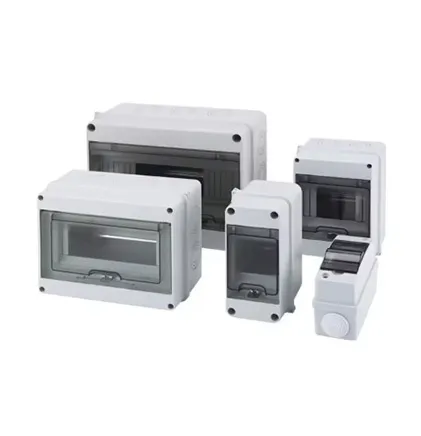
Think of distribution boxes as the fortresses protecting your electrical systems. In mining, where dust particles infiltrate like spies and water lurks around every corner, these boxes are non-negotiable. They’re engineered to IP66 or higher standards—meaning they’re sealed tighter than a submarine hatch.
Dust-Proof Design
Ever tried keeping sand out of your shoes at the beach? Multiply that challenge by 100 in a mine. Dust-proof distribution boxes use silicone gaskets and compression seals to block even micron-sized particles. No dust storms allowed inside!
Water Resistance You Can Trust
Whether it’s groundwater seepage or surprise rain showers, these boxes keep circuits dry. Submersible models like the NTSCGECEWÖU line can handle full immersion—perfect for mines where water pools unexpectedly.
Real-World Challenges & Solutions
Let’s get real for a second. Mining isn’t a controlled lab environment—it’s messy, unpredictable, and harsh. Here’s how resilient cables and distribution boxes save the day:
Coal Mines vs. Water
In South Africa’s deep coal mines, groundwater flooding isn’t just inconvenient—it’s a hazard. Teams switched to submersible cables and distribution boxes rated for continuous underwater use. Downtime? Reduced by 60% in one year.
The Dust Battle in Australian Mines
When the dry season hits Pilbara, dust clouds swallow equipment whole. Standard electrical setups failed weekly until mines deployed fully sealed distribution systems paired with self-cleaning cable jackets. Maintenance costs dropped 40% overnight.
Smart Tech Upgrades
It’s not all brute force—innovation plays a huge role too:
- Self-Monitoring Cables : Like having a nurse inside the cable! Models like (N)3GHSSYCY detect damage before it causes a failure.
- Zero-Halogen Designs : Safer for confined tunnels—they emit no toxic smoke if ignited.
- EMC Screened Cables : These block electromagnetic interference so your sensitive gear won’t go haywire near giant drills.
The Bigger Picture
None of this exists in a vacuum. Efficient mining is tied to the broader ecosystem of resource management and sustainable practices. Choosing the right cables and distribution systems impacts safety and productivity: Less downtime means fewer disruptions to resource extraction and less pressure to compensate with overtime or rushed operations. It’s part of smarter, sustainable mining.
"In the mining industry, every minute of downtime costs thousands. Resilient cables aren’t accessories—they’re insurance."
— Chief Engineer, Eland Cables










