
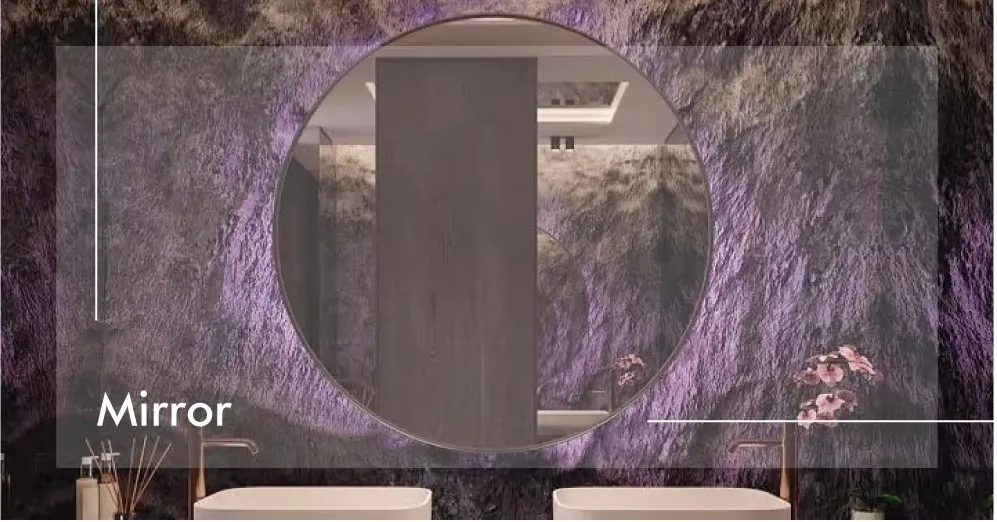
Creating Serene Sanctuaries Through Timeless Design Principles
Imagine stepping into a bathroom that feels less like a utilitarian space and more like a personal sanctuary—a place where every element whispers calm and intention. This is the magic of minimalist design, where frameless mirrors become windows to expanded spaces and hidden storage maintains visual tranquility. It's not just about removing clutter; it's about creating harmony between form and function.
Over years of exploring bathroom designs worldwide, I've noticed how the most breathtaking spaces share common DNA: sleek frameless mirrors that amplify light and space without shouting for attention, and intelligent storage solutions that disappear into the architecture. These elements don't follow trends—they create timeless foundations that elevate daily rituals into mindful moments.
There's something transformative about pairing crisp white walls with an oversized frameless mirror. Like waking up to morning fog lifting off a lake, this combination breathes luminosity into compact spaces. The mirror becomes a subtle magician, stretching dimensions by bouncing natural light into every corner. What struck me most in Japanese-inspired designs was how this pairing created meditative atmospheres—perfect for starting or ending the day with clarity.
Natural wood grain introduced warmth into minimalist bathrooms like a comforting embrace. Reclaimed teak vanities against frameless mirrors created beautiful tension—organic imperfections contrasting with sleek perfection. Scandinavian designs perfected this balance, demonstrating how wood tones influence mirror reflections to cast honeyed glows rather than sterile brightness.
But here's the unsung hero: hidden storage within those wooden elements. Drawers with whisper-close mechanisms beneath floating vanities, or recessed niches behind mirrored medicine cabinets maintain the uncluttered aesthetic while storing essentials. This duality represents minimalist philosophy—beauty serving purpose without announcing itself.
Brutalist influences transformed when softened by frameless reflections. Concrete basins acquired unexpected elegance when mirrored surfaces doubled their sculptural forms. What fascinated me in Berlin lofts was how matte black fixtures punctuated these compositions—functional art pieces framing reflections.
The common misconception? Minimalism requires sterile white palettes. Exceptional bathrooms disprove this through sophisticated gray layering—charcoal floor tiles, dove wall tones, and misty quartz counters creating depth. Frameless mirrors in these spaces act as unifiers, stitching elements together through reflection.
New York apartments showcased brilliant spatial tricks: floor-to-ceiling mirrors behind freestanding tubs dissolved boundaries, while integrated lighting cast atmospheric glows rather than clinical brightness. The storage revelation? Vanity bases with push-latch cabinets holding everything from towels to cleaning supplies—completely invisible yet instantly accessible.
Like watercolor washes, blush pinks and seafoam greens transformed bathrooms into serene escapes. These soft palettes found perfect partners in oversized frameless mirrors—doubling their soothing impact. Milanese designs demonstrated how this combination benefits small spaces most, where light reflection counters potential visual heaviness.
Hidden storage manifests as recessed wall niches beside mirrors—lined with matching tile to camouflage presence—and innovative under-vanity drawers with custom dividers. These solutions maintain the airy aesthetic while accommodating practical needs.
When hexagonal tiles met circular mirrors, something magical happened—mathematical poetry. Geometric bathrooms reveal minimalism's playful side, using shape rather than ornamentation for visual interest. The secret lies in restraint: one bold pattern balanced by unbroken mirror plains.
Through Turkish hammam influences, I discovered how steam-resistant mirrors integrate with tiled walls seamlessly—edges disappearing into grout lines. Storage becomes architectural: bench seats with lift-up lids doubling as towel storage, or slim vertical cabinets disguised as wall extensions.
Minimalism fails when storage becomes afterthought. Truly exceptional designs weave storage into the structure itself—mirror-front cabinets appearing as simple reflective surfaces until opened. The evolution I've observed:
Contemporary solutions include toe-kick drawers beneath floating vanities, recessed shelves within shower niches, and magnetic panels holding metal toiletry containers—all maintaining the serene, uncluttered aesthetic minimalism requires.
The true power of minimalist bathroom design lies in its emotional resonance—how clean lines and thoughtful reflections create mental space as much as physical. Frameless mirrors become windows to tranquility while hidden storage preserves visual calm. As these 20+ approaches demonstrate, whether embracing industrial concrete or warm wood tones, the principles remain consistent: intentionality in every element and reverence for emptiness as a design feature.
What begins as a functional space transforms through these designs into a sanctuary—proving that sometimes, less doesn't just suggest more, it creates something profoundly more beautiful.
Recommend Products












