
In the heart of the Middle East, where sun-scorched deserts meet bustling cities, water isn't just a resource—it's the lifeblood of communities, economies, and progress. With some of the world's lowest rainfall rates and highest evaporation levels, the region has long grappled with water scarcity. Countries like Saudi Arabia, the UAE, and Qatar rely heavily on desalination plants, underground aquifers, and complex distribution networks to meet the needs of growing populations and thriving industries. But here's the thing: even the most advanced desalination technology or massive reservoir means little if the pipes carrying that precious water are unreliable.
Water infrastructure in the Middle East faces unique challenges. Extreme temperatures—soaring above 50°C in summer—test the durability of materials. High salinity in coastal areas, from both seawater and mineral-rich groundwater, accelerates corrosion. And with projects ranging from sprawling urban developments to remote agricultural zones, the piping systems must be versatile enough to handle diverse environments. In short, building and maintaining water networks here isn't just about moving water—it's about building resilience in the face of nature's toughest conditions.
This is where the choice of piping material becomes critical. For decades, projects often leaned on traditional options like steel or concrete, but time has shown their limitations in this region. Steel rusts quickly in salty air; concrete can crack under thermal stress; both are heavy and costly to install. Today, a new standard is emerging, and it's reshaping how the Middle East approaches water infrastructure: PVC-U SCH40 pressure piping systems. Let's dive into why this material is becoming the go-to choice for engineers, contractors, and governments across the region.
If water infrastructure were a body, the piping would be the veins and arteries. It carries water from desalination plants to treatment facilities, from reservoirs to homes, and from distribution centers to factories. A single leak, corrosion issue, or structural failure can disrupt supply for thousands, waste millions of gallons of water, and trigger costly repairs. In a region where every drop counts, the reliability of these "veins" is non-negotiable.
Consider this: A typical municipal water network in the Middle East spans hundreds of kilometers, with pipes buried underground, exposed to desert heat, or running alongside coastal areas. They must withstand constant pressure—from pumping stations pushing water uphill to high-rise buildings demanding consistent flow. They must resist the abrasive minerals in groundwater and the corrosive effects of salt. And they must do all this while keeping installation and maintenance costs manageable, especially in countries where infrastructure budgets are stretched thin by ambitious development goals.
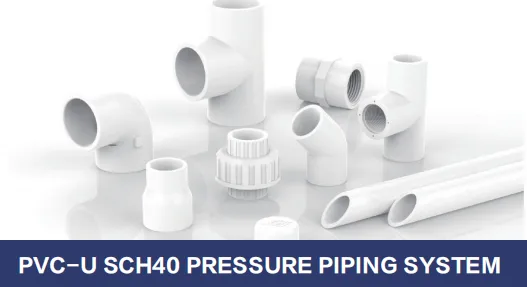
For years, the industry struggled to find a material that checked all these boxes. Steel pipes, while strong, required frequent coating and maintenance to prevent rust—a costly and time-consuming process in the Middle East's harsh climate. Concrete pipes, though durable, are heavy and rigid, making them difficult to transport and install in remote areas. Then came PVC-U (unplasticized polyvinyl chloride) piping, and with it, a new era of efficiency. Among its variants, the PVC-U SCH40 pressure piping system has emerged as a standout, offering a balance of strength, durability, and practicality that's hard to match.
First, let's break down the jargon. PVC-U is a rigid, unplasticized form of PVC, known for its strength and chemical resistance. The "SCH40" refers to the pipe's schedule, a standard that defines its wall thickness and pressure rating. SCH40 pipes are designed to handle moderate to high pressure, making them ideal for water distribution, irrigation, and industrial applications. Unlike flexible PVC, PVC-U SCH40 is stiff and robust, yet surprisingly lightweight compared to metal or concrete alternatives.
But what makes it so well-suited for the Middle East? Let's start with the basics: corrosion resistance. PVC-U is inherently resistant to saltwater, acids, and alkalis—common in the region's groundwater and coastal environments. Unlike steel, it won't rust or degrade when exposed to moisture, and unlike concrete, it won't leach minerals into the water supply. This resistance translates to longer lifespans; PVC-U SCH40 pipes can last 50 years or more with minimal maintenance, a critical factor for projects aiming to future-proof infrastructure.
1. Lightweight and Easy to Install : In a region where labor and transportation costs can soar, the weight of piping matters. PVC-U SCH40 pipes are significantly lighter than steel or concrete, reducing the need for heavy machinery during installation. This is a game-changer for remote projects, like agricultural irrigation systems in Oman or residential developments in Saudi Arabia's rural areas, where access to large equipment is limited. Lighter pipes also mean faster installation times—contractors can lay more meters per day, cutting project timelines and labor expenses.
2. Thermal Stability in Extreme Heat : Summer temperatures in the Middle East don't just discomfort humans—they test materials to their limits. PVC-U SCH40 is designed to withstand a wide temperature range, from -10°C to 60°C, making it suitable for both underground and above-ground installations. Unlike some plastics that soften in heat, PVC-U maintains its shape and pressure rating even on the hottest days, ensuring consistent water flow when demand is highest.
3. Cost-Effective Over the Long Term : While the upfront cost of PVC-U SCH40 may be slightly higher than low-grade plastics, it's far more affordable than steel or concrete. But the real savings come later. With no need for anti-corrosion coatings, frequent repairs, or replacement, the total cost of ownership plummets. A study by the Middle East Construction Association found that PVC-U piping systems reduced lifecycle costs by up to 40% compared to steel in coastal water projects—a figure that resonates with budget-conscious governments and developers.
4. Smooth Interior for Uninterrupted Flow : The inside of a PVC-U SCH40 pipe is incredibly smooth, which might not sound like a big deal until you consider water flow. Rough surfaces (like those in concrete or corroded steel pipes) create friction, slowing down water and requiring more energy to pump. Smooth PVC-U interiors reduce friction loss, meaning pumping stations can operate more efficiently, cutting energy costs. In a region where energy is a major expense—especially for desalination plants—this efficiency adds up quickly.
5. Compatibility with Modern Fittings : A pipe is only as good as its connections, which is why working with a reputable pipes fittings supplier is essential. PVC-U SCH40 systems are compatible with a wide range of fittings—elbows, tees, valves, and couplings—designed to create leak-proof joints. Many suppliers now offer solvent-welded or threaded fittings that are easy to install and resistant to pressure, ensuring a seamless system from start to finish.
To truly understand the impact of PVC-U SCH40, let's compare it to other common piping materials used in Middle East water projects. The table below breaks down key factors like cost, durability, and suitability for regional conditions:
| Material | Initial Cost | Installation Time | Corrosion Resistance | Durability (Lifespan) | Suitability for High Salinity | Energy Efficiency (Flow Rate) |
|---|---|---|---|---|---|---|
| PVC-U SCH40 | Moderate | Fast (1-2 days/100m) | Excellent | 50+ years | Highly Suitable | High (smooth interior) |
| Steel | High | Slow (3-5 days/100m) | Poor (requires coatings) | 20-30 years (with maintenance) | Low (prone to rust) | Medium (rough interior over time) |
| Concrete | High | Very Slow (5-7 days/100m) | Moderate (susceptible to mineral buildup) | 40-50 years | Moderate | Low (rough interior) |
| UPVC (Standard Grade) | Low | Fast | Excellent | 30-40 years | Highly Suitable | High |
The table tells a clear story: PVC-U SCH40 balances cost, speed, and durability better than traditional materials. While standard UPVC is cheaper, its lower pressure rating makes it unsuitable for high-demand projects like municipal water distribution. Steel and concrete, meanwhile, struggle with corrosion and installation time—two critical pain points in the Middle East. For projects that need to deliver reliable water quickly and affordably, PVC-U SCH40 is the standout choice.
Numbers and specs tell part of the story, but real-world examples show how PVC-U SCH40 is transforming water projects on the ground. Let's look at three recent projects where this piping system made a tangible difference.
In 2023, Jeddah's North Jeddah Desalination Plant—a key supplier for the city's 4.5 million residents—underwent a $200 million expansion to increase capacity by 50%. The project required laying 30 kilometers of pipeline to connect the expanded plant to the existing distribution network. The contractor, a leading Saudi construction firm, initially considered steel piping but switched to PVC-U SCH40 after consulting with a local PVC-U SCH40 pressure piping system supplier.
Why the switch? The supplier highlighted PVC-U's corrosion resistance (critical for the plant's saltwater intake pipes) and faster installation time. With steel, the project would have taken 12 weeks; with PVC-U SCH40, it was completed in 8 weeks, saving $1.2 million in labor costs. Two years later, inspections show zero leaks or corrosion, and the plant reports a 15% reduction in pumping energy use due to the smooth pipe interiors.
Dubai South, a massive urban development project spanning 145 square kilometers, needed a water distribution system for its first phase: 10,000 residential units. The developer prioritized sustainability and cost-efficiency, so they turned to a PVC-U SCH40 pressure piping system supplier for solutions. The supplier provided not just pipes but a full package: custom-fitted pipes, corrosion-resistant fittings, and on-site technical support to ensure compatibility with the development's unique layout.
The result? The system was installed 30% faster than planned, and the developer estimates saving $3 million in material and labor costs compared to a concrete pipe alternative. Today, residents enjoy consistent water pressure, even during peak hours, and the developer has since specified PVC-U SCH40 for Phase 2 of the project.
Al Ain, known as the "Garden City" of the UAE, relies on irrigation to keep its farms and green spaces thriving in the desert. In 2022, the local government launched a $50 million project to upgrade 50 kilometers of aging irrigation pipes, many of which were leaking or corroded. After evaluating options, they chose PVC-U SCH40 for its durability in sandy soil and resistance to the region's mineral-rich groundwater.
A local upvc pipe supplier partnered with the government to deliver the project, providing pipes pre-cut to length and fittings designed for quick assembly. Farmers reported a 20% reduction in water waste within the first year, and the government estimates the new system will pay for itself in 5 years through water and maintenance savings.
While PVC-U SCH40 is a strong material on its own, its success in Middle East projects hinges on the supplier behind it. A great supplier does more than deliver pipes—they deliver peace of mind. Let's break down what sets a top-tier PVC-U SCH40 pressure piping system supplier apart in this region.
1. Local Expertise, Global Standards : The best suppliers understand the Middle East's unique challenges. They know how to source materials that can withstand 50°C heat and salty air, and they're familiar with local regulations, like Saudi Arabia's SASO standards or the UAE's ESMA requirements. For example, a supplier operating in Riyadh will have a better grasp of the city's soil conditions than an international supplier without a local presence, ensuring pipes are tested for the specific environments they'll face.
2. Comprehensive Solutions, Not Just Products : A project isn't just about pipes—it's about ensuring every component works together. Leading suppliers offer end-to-end solutions: custom pipe sizing, fittings tailored to project needs, and even software tools to help engineers design efficient layouts. In the Dubai South project, for instance, the supplier used 3D modeling to optimize pipe routes, reducing material waste by 20%.
3. Quality Assurance at Every Step : In a region where infrastructure failures have high stakes, quality can't be compromised. Reputable suppliers conduct rigorous testing: pressure tests, impact resistance tests, and chemical compatibility checks. They also provide certification—like ISO 9001 or ASTM D1785 compliance—to verify that their PVC-U SCH40 meets global standards. This level of transparency is why contractors in Qatar and Kuwait often partner with suppliers who offer third-party lab reports.
4. On-Time Delivery, Even in Remote Areas : The Middle East's infrastructure projects aren't always in major cities. A reliable supplier has a network of warehouses and delivery partners to ensure pipes reach remote sites—like oil fields in Oman or agricultural zones in Bahrain—on schedule. During the Al Ain irrigation project, the supplier used temperature-controlled trucks to protect pipes from heat damage during transport, a detail that prevented warping and ensured a smooth installation.
The Middle East's water needs won't stay static. As populations grow, cities expand, and climate change intensifies heatwaves, infrastructure must evolve. PVC-U SCH40 suppliers are already innovating to meet these future challenges. One emerging trend is the development of "smart pipes"—PVC-U SCH40 pipes embedded with sensors that monitor pressure, flow rate, and even early signs of wear. These sensors send real-time data to engineers, allowing for predictive maintenance and reducing the risk of catastrophic failures.
Another innovation is recycled PVC-U. As sustainability becomes a priority for governments (the UAE, for example, aims to reach net-zero by 2050), suppliers are developing pipes made from 30-50% recycled materials without compromising strength or durability. Early tests show these recycled pipes perform as well as virgin PVC-U SCH40, making them a greener choice for projects like Dubai's Expo 2020 sustainability pavilion.
Finally, suppliers are focusing on UV resistance. While PVC-U is already stable in sunlight, new formulations with enhanced UV inhibitors are extending lifespans for above-ground installations, like water storage tank connections or outdoor irrigation systems. This is particularly valuable for projects in sun-drenched regions like Kuwait or Yemen.
Water infrastructure in the Middle East is more than a construction project—it's a commitment to ensuring generations to come have access to clean, reliable water. In this mission, PVC-U SCH40 pressure piping systems have emerged as a quiet hero, offering the durability, efficiency, and cost-effectiveness needed to overcome the region's toughest challenges. From desalination plants in Jeddah to residential developments in Dubai, this material is proving that sometimes, the most impactful innovations are the ones that keep the "veins" of our cities strong.
But none of this happens in a vacuum. Behind every successful project is a partnership: between engineers, contractors, governments, and, crucially, a trusted PVC-U SCH40 pressure piping system supplier. These suppliers don't just sell pipes—they provide the expertise, solutions, and reliability that turn blueprints into resilient, life-sustaining infrastructure.
As the Middle East continues to grow and adapt, one thing is clear: the future of water infrastructure will rely on materials and partners that can keep up with the region's ambition. PVC-U SCH40, with its proven track record and ongoing innovations, is ready to meet that challenge. And for those building tomorrow's water networks, the message is simple: choose a piping system that's built to last—and a supplier that's committed to your success.
Recommend Products












