
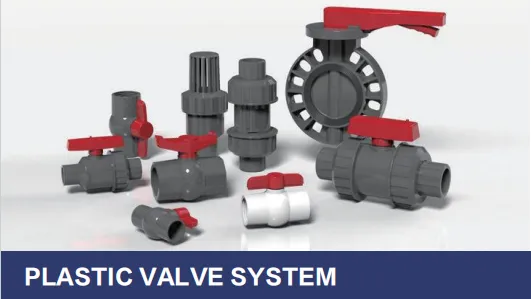
Saudi Vision 2030 isn't just a plan—it's a promise. A promise to transform a nation, diversify an economy, and build communities that thrive long after the oil wells quiet down. At its core lies a massive infrastructure boom: new cities rising from the desert, hospitals equipped with cutting-edge technology, schools designed to inspire the next generation, and commercial hubs that rival global metropolises. But behind every groundbreaking ceremony, every architectural rendering, and every "project completed" headline, there's a silent hero: the building materials that turn blueprints into reality. And among these, plastic valve system solutions have emerged as unsung champions, quietly powering the infrastructure that will define Saudi Arabia's future.
Let's dive into why these systems matter—not just as products, but as critical enablers of Vision 2030's most ambitious goals. From the bustling construction sites of NEOM to the expanding medical districts of Riyadh, from the schools in Jeddah to the residential complexes in Dammam, plastic valve systems are proving indispensable. But first, let's set the stage: what exactly is driving this demand, and why now?
Saudi Vision 2030, launched in 2016, is a blueprint for progress that spans decades. At its heart is a simple yet powerful idea: reduce reliance on oil by investing in sectors like tourism, healthcare, education, and construction. The numbers tell the story: over $500 billion is earmarked for infrastructure projects alone, with a focus on creating 1.5 million new jobs and building 500,000 new homes by 2030. Cities like NEOM (a $500 billion futuristic metropolis), the Red Sea Project (a luxury tourism hub), and Qiddiya (an entertainment city) are no longer just concepts—they're active construction zones, each demanding millions of tons of building materials, from foundation to finishing touches.
But it's not just about grand megaprojects. Vision 2030 also prioritizes "quality of life" initiatives: upgrading existing hospitals to meet international standards, building state-of-the-art schools in underserved regions, and expanding water and sanitation networks to reach every community. These projects share a common need: reliable, durable, and cost-effective building solutions that can withstand Saudi Arabia's harsh climate—scorching summers, occasional sandstorms, and the unique demands of a rapidly urbanizing population.
Enter the world of piping and valve systems. Often overlooked, these components are the circulatory system of any building: they carry water, manage waste, distribute gas, and ensure that critical facilities like hospitals and schools function without interruption. In a country where a single infrastructure failure can disrupt thousands of lives, the choice of materials here isn't just technical—it's strategic.
Imagine walking into a newly built hospital. You notice the sleek design, the advanced medical equipment, the comfortable patient rooms. What you don't see is the network of pipes and valves behind the walls, under the floors, and above the ceilings that make it all work. These systems deliver clean water to operating rooms, remove waste from patient suites, and ensure that heating and cooling systems run efficiently. A single leak, a corroded valve, or a cracked pipe could shut down a ward—or worse, compromise patient safety.
The same goes for schools: children need safe drinking water, restrooms that function properly, and classrooms that stay cool in summer. For commercial buildings like malls or office towers, downtime due to plumbing issues means lost revenue and frustrated tenants. In short, piping and valve systems are the unsung heroes of functional, safe, and sustainable construction. And in Saudi Arabia, where the stakes are high and the scale is massive, the pressure to get these systems right is even greater.
Traditionally, construction in the Middle East relied heavily on metal piping—steel, copper, and iron. While durable, these materials come with significant drawbacks: they're prone to corrosion in Saudi Arabia's salty, humid coastal areas (like Jeddah or Dammam), they're heavy and expensive to transport, and installation requires specialized labor, driving up project timelines. As Vision 2030 accelerates construction schedules, these challenges have become deal-breakers. Enter plastic valve systems and their accompanying piping solutions.
Plastic valve systems—including PVC, UPVC, PPR, and PE variants—have revolutionized the construction industry globally, and for good reason. But in Saudi Arabia, their benefits align almost perfectly with the demands of Vision 2030. Let's break down why they've become the material of choice for forward-thinking developers and contractors.
Saudi Arabia's climate is unforgiving. Coastal regions like the Eastern Province have high humidity and salt in the air, which eats away at metal pipes over time. Inland areas face extreme temperature swings—from 50°C (122°F) in summer to near-freezing in winter—causing metal to expand and contract, leading to cracks and leaks. Plastic valve systems, by contrast, are inherently corrosion-resistant. Materials like UPVC (unplasticized polyvinyl chloride) and PPR (polypropylene random copolymer) don't rust, corrode, or degrade when exposed to salt, moisture, or temperature fluctuations. This means fewer replacements, lower maintenance costs, and longer lifespans—critical for projects designed to serve communities for decades.
Consider a PVC DWV pipe supplier working on a residential complex in Riyadh. DWV (Drain-Waste-Vent) pipes carry wastewater and sewage, making them highly susceptible to corrosion from chemicals and bacteria. A plastic DWV system can last 50+ years with minimal upkeep, compared to metal pipes that might need replacement in 15–20 years. For a developer building 1,000 homes, that's a difference of millions of riyals in long-term costs.
Vision 2030 projects are ambitious, but they're also budget-conscious. With billions of dollars allocated across thousands of projects, cost efficiency is non-negotiable. Plastic valve systems deliver here on multiple fronts: they're lighter than metal, reducing transportation costs; they're easier to install, cutting labor time by up to 30%; and they require fewer specialized tools, lowering on-site expenses.
Take PPR pipe and fitting supplier solutions, for example. PPR pipes are heat-resistant, making them ideal for hot water systems in homes and hotels. They're also joined using heat fusion, a process that creates a seamless, leak-proof bond—no need for expensive soldering or threading like with metal pipes. A study by the Saudi Construction Authority found that switching to PPR systems reduced plumbing installation costs by 25% on average for mid-rise residential buildings, a saving that adds up quickly when scaling to thousands of units.
Even upfront material costs favor plastic. UPVC pipes, a staple in water supply and drainage systems, are typically 40–50% cheaper than galvanized steel pipes. For a project like NEOM, which requires over 10,000 kilometers of piping, that's a saving of billions of riyals—funds that can be redirected to other critical areas like renewable energy or community amenities.
Vision 2030 isn't just about economic diversification—it's also about sustainability. Saudi Arabia has committed to reducing its carbon footprint by 50% by 2030, with a focus on green building practices. Plastic valve systems contribute to this goal in two key ways: they're energy-efficient to produce, and they're recyclable.
Manufacturing plastic pipes requires less energy than metal pipes—up to 70% less for UPVC compared to steel, according to the World Plastic Pipes Council. Additionally, plastic systems have smooth inner walls that reduce water flow resistance, meaning pumps and water heaters use less energy to maintain pressure. For a city like NEOM, which aims to be 100% powered by renewable energy, every kilowatt saved matters.
Recyclability is another plus. Many plastic valve systems are made from virgin materials, but post-consumer recycling programs are growing in the region. A leading plastic valve system supplier in Saudi Arabia, for instance, now offers take-back programs for old pipes, which are then recycled into new construction materials. This aligns with Vision 2030's target of diverting 50% of waste from landfills by 2030—a small step, but one that adds up across thousands of projects.
Saudi Arabia has some of the strictest building codes in the Middle East, and for good reason. The country's climate and the scale of its projects demand materials that meet international standards for safety, durability, and performance. Plastic valve systems, when sourced from reputable suppliers, are designed to comply with these regulations.
Consider class a fireproof cpl inorganic board for hospital and school supplier solutions, which are critical for healthcare and education projects. These boards are fire-resistant, moisture-proof, and ideal for high-traffic areas. When paired with fire-rated plastic valve systems (which prevent the spread of flames through piping penetrations), they create a safety net that meets Saudi Civil Defense requirements. For a hospital, this isn't just compliance—it's a lifeline. A single fire incident in a medical facility can have catastrophic consequences, making fire safety non-negotiable.
Similarly, upvc pipe supplier products must adhere to Saudi Standards (SASO) for water quality, ensuring that pipes don't leach harmful chemicals into drinking water. This is especially important for schools, where children are more vulnerable to contaminants. By choosing certified plastic valve systems, developers can avoid costly delays due to code violations and ensure that their projects are approved on time.
| Feature | Traditional Metal Systems (Steel/Copper) | Plastic Valve Systems (PVC/PPR/UPVC) | Advantage for Vision 2030 |
|---|---|---|---|
| Corrosion Resistance | Prone to rust in humid/salty environments; requires regular coating | Inherently corrosion-resistant; no coating needed | Longer lifespan reduces maintenance costs for large-scale projects |
| Installation Time | Slow; requires soldering, threading, or welding | Fast; heat fusion or push-fit connections | Accelerates project timelines, critical for meeting Vision 2030 deadlines |
| Cost (Material + Labor) | Higher; expensive materials and specialized labor | 30–40% lower; lightweight and easy to install | Frees up budget for other development priorities |
| Climate Adaptability | Prone to cracking in temperature extremes | UV-stabilized and heat-resistant variants available | Withstands Saudi Arabia's harsh summers and sandstorms |
| Sustainability | High energy use in production; limited recyclability | Low carbon footprint; recyclable materials | Aligns with Vision 2030's green building targets |
| Compliance | Requires additional testing for corrosion and safety | Pre-certified to SASO and international standards | Reduces approval delays for projects |
Numbers and comparisons tell part of the story, but real-world examples bring it to life. Let's look at three ongoing Vision 2030 projects where plastic valve systems are making a tangible difference:
King Salman Medical City is one of Saudi Arabia's largest healthcare complexes, serving over 2 million patients annually. As part of Vision 2030's healthcare upgrade, the city is expanding to add 1,000 new beds, a children's hospital, and a research center. The project's plumbing contractor faced a critical challenge: ensuring that water supply and waste systems could handle the increased load while meeting strict infection control standards.
The solution? A combination of PPR pipe and fitting supplier systems for hot water distribution and PVC DWV pipe supplier solutions for waste management. PPR's smooth inner surface prevents bacterial buildup, a key requirement for hospital plumbing, while PVC DWV pipes' corrosion resistance ensures long-term reliability. The result: installation was completed 25% ahead of schedule, and the system has operated leak-free since the first phase opened in 2024. "We chose plastic systems for their durability and compliance with international healthcare standards," said the project's lead engineer. "For a hospital, there's no room for compromise on safety."
Vision 2030 aims to build 2,000 new schools by 2030, with a focus on sustainability and student well-being. The Riyadh Schools Modernization Program, which is upgrading 500 existing schools, turned to upvc pipe supplier solutions for water supply and plastic valve system supplier products for irrigation systems (many schools are adding green spaces and gardens).
UPVC pipes were chosen for their affordability and ease of installation—critical for a program spanning 500 schools across the city. The lightweight pipes could be transported to even remote school sites with minimal logistical challenges, and installation was handled by local labor with basic training, creating jobs in the process. "We saved over 30% on plumbing costs compared to using metal pipes," said a spokesperson for the Riyadh Education Authority. "That money went straight into classroom technology and teacher training—investments that directly benefit students."
NEOM's The Line is a 170-kilometer-long city designed to house 9 million people, with zero cars and 100% renewable energy. Its residential buildings require efficient, space-saving plumbing systems that align with the project's sustainability goals. Here, PPR pipe and fitting supplier solutions and plastic valve system supplier products are being used for both potable water and greywater recycling systems (which reuse wastewater for irrigation).
PPR's heat resistance makes it ideal for NEOM's solar-heated water systems, while plastic valves' precision control helps manage water flow in the city's closed-loop recycling network. "Sustainability isn't just a buzzword here—it's engineering," said a NEOM construction manager. "Plastic systems help us reduce our carbon footprint while ensuring that every drop of water is used efficiently. For a city built in the desert, that's everything."
As Vision 2030 enters its second decade, the demand for plastic valve systems and related building materials will only grow. But with growth comes challenges: ensuring a steady supply of high-quality products, training local workers to install these systems, and innovating to meet evolving needs (like smarter, IoT-connected valves for water conservation).
Reputable suppliers are already rising to the occasion. Many plastic valve system supplier companies are investing in local manufacturing facilities, reducing import dependencies and creating jobs. Others are partnering with Saudi universities to develop climate-specific solutions, like UV-resistant UPVC pipes for coastal projects or heat-stabilized PPR for desert regions. These efforts not only support Vision 2030's "local content" goals but also ensure that Saudi Arabia becomes a hub for building material innovation in the Middle East.
Looking ahead, the integration of plastic valve systems with smart technology will be a game-changer. Imagine valves that automatically detect leaks and shut off water flow, or pipes with sensors that monitor pressure and send alerts before failures occur. These "smart" systems could reduce water waste by 20–30% in commercial buildings, aligning with Saudi Arabia's goal to become water-secure by 2030.
For developers, contractors, and suppliers, the message is clear: plastic valve systems aren't just a trend—they're a strategic investment in Saudi Arabia's future. They're the materials that will keep hospitals running, schools thriving, and cities growing, one pipe, one valve, one project at a time.
Saudi Vision 2030 is more than a plan for economic diversification; it's a vision of a modern, sustainable, and prosperous Saudi Arabia. At its core are the buildings, cities, and communities that will shape the nation for generations. And at the core of those buildings are the piping and valve systems that make them functional, safe, and efficient.
Plastic valve systems—from PVC DWV pipe supplier solutions to PPR pipe and fitting supplier products—have emerged as critical partners in this journey. They offer the durability to withstand Saudi Arabia's climate, the cost-effectiveness to stretch project budgets, and the sustainability to align with green goals. They're not just materials; they're enablers of progress.
As Vision 2030 moves forward, the choice of building materials will only grow more important. Developers, contractors, and policymakers must continue to prioritize solutions that deliver long-term value, safety, and sustainability. For plastic valve systems, the future is bright—and so is Saudi Arabia's.
In the end, it's the little things—the pipes behind the walls, the valves under the floors—that will help build a nation. And in Saudi Arabia's case, those little things are about to make a very big difference.
Recommend Products












