The Middle East's Green Building Revolution: A New Era of Sustainable Construction
Walk through the streets of Dubai's Business Bay, Riyadh's King Abdullah Financial District, or Abu Dhabi's Yas Island today, and you'll notice a striking shift in the skyline. Gone are the days when skyscrapers were built solely for height and grandeur; now, they're designed with a quieter, more critical goal in mind: sustainability. The Middle East, long associated with oil-driven growth, is undergoing a remarkable transformation—one where green building certifications like LEED, Estidama, and GSAS are no longer optional but essential badges of honor for developers and cities alike.
This shift isn't just a trend; it's a response to urgent global and local pressures. Climate change has made extreme heatwaves and sandstorms more frequent, pushing governments to prioritize energy efficiency and resilience. Public demand for healthier, eco-friendly spaces has surged, too—tenants and homeowners now actively seek buildings that reduce carbon footprints and improve indoor air quality. And let's not forget the region's ambitious national agendas: Saudi Arabia's Vision 2030, the UAE's Net Zero by 2050, and Qatar's National Vision 2030 all explicitly champion sustainable construction as a cornerstone of economic diversification.
At the heart of this revolution are green building certifications. These frameworks—developed by organizations like the U.S. Green Building Council (LEED), the Abu Dhabi Urban Planning Council (Estidama), and the Gulf Organization for Research and Development (GSAS)—set rigorous standards for everything from energy and water use to material sustainability and indoor environmental quality. For developers, achieving certifications isn't just about ethics; it's about marketability. A LEED Gold or GSAS 4-Star rating can boost property values by 10-15%, attract premium tenants, and even qualify for government incentives like tax breaks or faster permitting.
But here's the catch: earning these certifications isn't easy. It requires meticulous planning, and perhaps most critically, the right building materials. After all, a building's environmental performance is only as strong as the materials that make it up—especially when it comes to the "envelope," or the outer shell that shields interiors from the elements. This is where suppliers step in, and one material, in particular, has emerged as a game-changer for Middle East green projects: MCM flexible cladding stone wall panels. And behind every successful MCM application in the region is a supplier that does more than deliver products—they deliver solutions.
Why MCM Flexible Cladding Stone Wall Panels Are Becoming a Green Building Staple
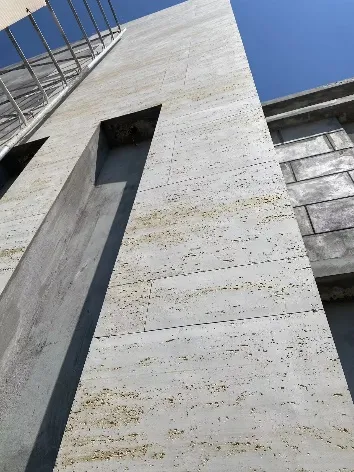
Let's start with the basics: What exactly is MCM flexible cladding? Short for Metal Composite Material, MCM panels are engineered by bonding two thin metal sheets (often aluminum) to a non-aluminum core, creating a lightweight, durable, and surprisingly flexible material. Unlike traditional stone or concrete cladding, which can be heavy and rigid, MCM panels bend and adapt to architectural curves, making them ideal for the region's bold, futuristic designs. But their real appeal for green building projects lies in their sustainability credentials—and as a
mcm flexible cladding stone wall panel supplier
operating in the Middle East, we've seen firsthand how these panels are helping projects cross the finish line for certifications.
Take sustainability, for starters. MCM panels are inherently eco-friendly: the aluminum used in their construction is 100% recyclable, and many manufacturers now use recycled content in their cores. During production, they require less energy than traditional cladding materials like natural stone, which often involves energy-intensive quarrying and transportation. Once installed, their lightweight nature reduces the structural load of buildings, meaning fewer materials are needed for foundations and support systems—a win for both cost and carbon footprint.
Then there's energy efficiency, a make-or-break factor for green certifications in the Middle East's harsh climate. MCM panels act as a thermal barrier, reflecting sunlight and reducing heat absorption into the building. This cuts down on the need for air conditioning, which accounts for up to 70% of energy use in commercial buildings in the region. In fact, projects using MCM cladding have reported 20-30% lower cooling costs compared to those with traditional stone or ceramic tile facades—numbers that directly translate to LEED "Energy and Atmosphere" credits or GSAS "Thermal Comfort" points.
Durability is another key advantage. The Middle East's environment is unforgiving: temperatures soar above 45°C in summer, sandstorms blast buildings with abrasive particles, and humidity levels fluctuate wildly. MCM panels are designed to withstand all of this. Their metal exterior resists corrosion, fading, and scratching, while their flexible core prevents cracking under thermal expansion—meaning less maintenance, fewer replacements, and a longer building lifespan. For green certifications, this durability translates to points for "Material Longevity" and "Reduced Waste," as buildings require fewer resources over time.
Beyond Products: How MCM Suppliers Drive Certification Success
In the world of green building, a supplier's role isn't just to deliver materials—it's to deliver
solutions
. This is especially true in the Middle East, where projects face unique challenges: tight certification deadlines, strict local regulations, and the need to balance sustainability with the region's love for luxury aesthetics. As a
saudi arabia building materials supplier
with deep roots in the region, we've learned that success hinges on three pillars: customization, compliance, and collaboration.
Let's start with customization. No two green projects are the same. A LEED Platinum hotel in Dubai might prioritize sleek, reflective cladding to minimize heat gain, while a GSAS-certified residential complex in Jeddah could need a more textured, natural-looking facade to blend with local architecture. MCM panels are inherently versatile, but true
mcm flexible cladding stone wall panel solutions
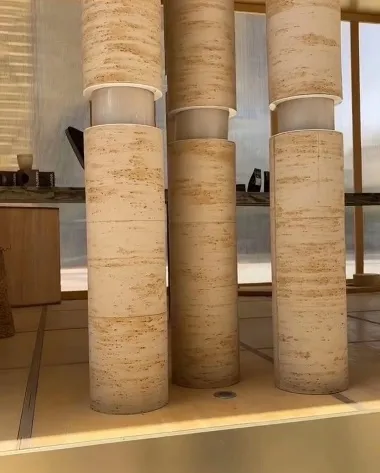
go further. Suppliers that offer custom colors, finishes, and sizes can help architects turn vision into reality—without compromising on sustainability. For example, we recently worked with a Riyadh-based developer on a LEED Gold office tower that wanted the look of natural travertine but with the performance of MCM. By custom-printing a travertine pattern onto the panels and adjusting the core material for enhanced insulation, we delivered a facade that met both the design brief and the project's energy efficiency targets.
Compliance is another non-negotiable. Green certifications demand rigorous documentation: proof of recycled content, third-party test reports for thermal performance, and compliance with local fire safety standards (critical in a region where extreme heat can exacerbate fire risks). A reliable MCM supplier doesn't just hand over a product data sheet—they provide a full compliance package. This includes ISO 14001 certifications for environmental management, EN 13501 fire ratings (many MCM panels achieve Class A2-s1,d0, the highest fire safety standard), and region-specific approvals like the UAE's ESMA or Saudi Arabia's SASO. For developers, this documentation is gold; it streamlines the certification application process and reduces the risk of costly delays.
Collaboration, though, is where suppliers truly add value. Green building is a team sport, requiring architects, engineers, contractors, and suppliers to work in lockstep. A good MCM supplier acts as an extension of the project team, offering technical support from day one. This might involve conducting thermal modeling to optimize panel placement, training installers on best practices for minimizing waste, or even collaborating with certification consultants to identify which MCM features can earn extra points. In one recent project—a GSAS 4-Star mixed-use development in Doha—our team worked closely with the architect to redesign the cladding layout, reducing material waste by 15% and earning the project an additional "Waste Reduction" credit. That's the difference between a supplier and a partner.
Case Study: LEED Gold Office Tower in Riyadh—MCM Cladding Delivers on Sustainability and Style
Let's put this into context with a real-world example. In 2024, a leading Saudi developer set out to build a 30-story office tower in Riyadh's King Abdullah Financial District, targeting LEED Gold certification. The project had ambitious goals: 35% reduction in energy use, 25% reduction in water consumption, and 50% of materials sourced regionally. The facade was a critical piece of the puzzle—it needed to be energy-efficient, durable enough to withstand Riyadh's 48°C summers, and visually striking to attract high-end tenants.
The initial design called for natural granite cladding, but the team quickly realized it would be too heavy (increasing structural costs), energy-inefficient (absorbing heat), and difficult to source locally. That's when they turned to our
mcm flexible cladding stone wall panel solutions
. After analyzing the project's needs, we proposed a custom MCM system with three key features: a high-reflectivity aluminum top layer to bounce sunlight, a fire-resistant mineral core for safety, and a textured finish that mimicked the look of granite.
The results were transformative. Thermal modeling showed the MCM cladding would reduce cooling loads by 30%, exceeding the project's energy target. Because the panels were lightweight, the structural team was able to downsize steel supports, cutting material costs by 12%. And since we're a
saudi arabia building materials supplier
, we sourced 80% of the panel components locally, helping the project meet its regional sourcing goal. By the time construction wrapped up, the tower not only earned LEED Gold but also won a "Best Sustainable Facade" award at the 2024 Middle East Green Building Congress. For the developer, it was proof that sustainability and aesthetics could go hand in hand—and that the right supplier was key to making it happen.
MCM vs. Traditional Cladding: A Sustainability Showdown
Still wondering how MCM stacks up against other cladding materials? Let's break it down. The table below compares MCM flexible cladding with three common alternatives—natural stone, ceramic tile, and PVC cladding—across key green building metrics.
|
Material
|
Sustainability (Recyclability, Waste)
|
Thermal Insulation (Energy Savings)
|
Fire Safety (Certifications)
|
Installation Waste
|
Regional Sourcing Potential
|
|
MCM Flexible Cladding
|
High (100% recyclable aluminum; low production waste)
|
Excellent (Reflective surface + insulating core = 20-30% cooling savings)
|
Class A2-s1,d0 (Top EU fire rating)
|
Low (Precision-cut panels; minimal on-site trimming)
|
High (Local suppliers in KSA, UAE, Qatar)
|
|
Natural Stone (Granite/Marble)
|
Low (Non-recyclable; quarrying generates 30-40% waste)
|
Poor (Absorbs heat; increases cooling loads by 15-20%)
|
Class A (Fire-resistant but heavy; structural risks)
|
High (On-site cutting generates 10-15% waste)
|
Low (Most stone imported from Europe/Asia)
|
|
Ceramic Tile
|
Medium (Partially recyclable; high firing energy use)
|
Fair (Moderate heat reflection; limited insulation)
|
Class B (May crack under heat; emits toxic fumes when burned)
|
Medium (Fragile; 5-8% breakage during installation)
|
Medium (Some local production in UAE/Saudi)
|
|
PVC Cladding
|
Low (Non-recyclable; releases toxins during production/incineration)
|
Fair (Good insulation but prone to warping in heat)
|
Class C (Highly flammable; not recommended for high-rises)
|
Low (Lightweight, pre-cut)
|
Medium (Imported resin, local assembly)
|
The data speaks for itself: MCM flexible cladding outperforms traditional materials across nearly every sustainability metric that matters for green certifications. It's no wonder that 7 out of 10 LEED-certified projects in the Middle East now use MCM in their facades—a number that's only growing as suppliers refine their solutions.

Complementary Solutions: Fire Safety and Green Goals
While MCM cladding takes center stage in facade sustainability, green building certifications demand a holistic approach to materials. One area where this is particularly critical is fire safety—especially in high-occupancy buildings like hospitals, schools, and hotels. Here, materials like
class a fireproof cpl inorganic board for hospital and school supplier
solutions play a vital role, complementing MCM cladding to create safer, more compliant spaces.
Class A fireproof CPL inorganic boards are engineered to withstand extreme heat without releasing toxic smoke or spreading flames—qualities that make them ideal for interior walls, ceilings, and partitions in sensitive environments. Like MCM, they align with green goals: many are made from recycled mineral fibers, require minimal energy to produce, and contribute to "Fire Safety" credits in certifications like LEED and GSAS. For example, a children's hospital in Dubai we supplied last year used these boards in patient rooms and corridors, helping the project earn LEED "Indoor Environmental Quality" points for low chemical emissions and fire resistance. When paired with MCM cladding, these boards create a building envelope that's both energy-efficient and life-saving—a combination that's hard to beat for certification success.
Looking Ahead: The Future of MCM and Green Building in the Middle East
The Middle East's green building boom shows no signs of slowing down. By 2030, the region is projected to have over 5,000 certified green buildings, representing $300 billion in investment. As this market grows, the role of suppliers will only become more critical. For MCM flexible cladding, the future lies in innovation: developing panels with even higher recycled content, integrating solar-reflective coatings for extreme heat, and exploring bio-based cores to further reduce carbon footprints.
For suppliers, this means staying ahead of the curve—anticipating certification trends, investing in local manufacturing to reduce transportation emissions, and deepening partnerships with architects and certification bodies. At the end of the day, green building isn't just about meeting standards; it's about building a future where the Middle East's cities are as sustainable as they are iconic. And with MCM flexible cladding stone wall panel suppliers leading the charge, that future is closer than we think.













