
Step outside in Riyadh at noon in July, and the air hits you like an open oven door—temperatures soar past 45°C (113°F), the sun blazes unforgivingly, and even the wind feels like it's been through a furnace. Now imagine the pipes running behind the walls of homes, hospitals, and shopping malls in that heat. They don't just carry water; they battle extreme temperatures, sudden shifts from scorching days to surprisingly cool nights, mineral-heavy water that eats away at metal, and the constant stress of supporting entire buildings' plumbing needs. For contractors, engineers, and homeowners across the Middle East, choosing the right piping system isn't just a matter of construction—it's about survival in one of the harshest climates on earth. That's where the expertise of a dedicated pex pipe and fitting supplier comes into play, offering solutions that don't just resist the elements, but thrive in them.
The Middle East's climate isn't just "hot"—it's a relentless test of materials. In Dubai, summer temperatures regularly climb above 40°C, while in Doha, humidity can spike to 70% even in the driest months. Coastal cities like Jeddah deal with salt-laden air that corrodes metal faster than in landlocked areas, and in Riyadh, the desert nights can drop to 15°C, creating brutal day-night temperature swings. Add to that water sources often rich in calcium and magnesium (the culprits behind limescale), and you've got a perfect storm for plumbing failures.
Walk into any older home in Kuwait or Bahrain, and you might hear horror stories from homeowners: copper pipes that sprung leaks after five years due to corrosion, UPVC pipes that cracked when the hot sun baked the walls, or PPR joints that loosened after repeated temperature expansion. For contractors, these issues mean callbacks, costly repairs, and damaged reputations. "We once had a project in Abu Dhabi where the first floor's plumbing failed three months after handover," recalls a senior engineer at a leading construction firm. "The UPVC pipes had become brittle in the heat, and the joints couldn't handle the pressure from the building's water system. We had to tear up marble floors and redo the entire line—it was a nightmare."
The problem isn't just about durability, either. In a region where water conservation is critical, a single leaking pipe can waste thousands of liters annually. Hospitals and schools, which rely on consistent water flow for sanitation and safety, can't afford interruptions. Even commercial spaces like malls, with their complex HVAC and sprinkler systems, need piping that can handle both hot and cold water without compromising efficiency. Traditional materials, it turns out, were never designed for this kind of pressure.
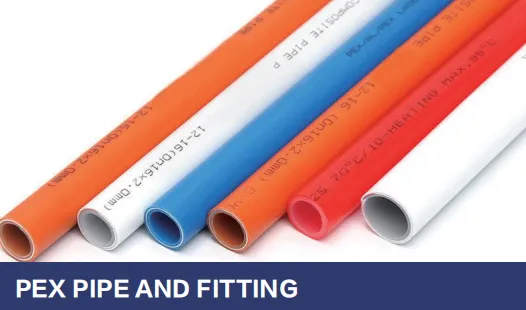
Enter PEX—cross-linked polyethylene—a material that's quietly revolutionizing plumbing in the Middle East. Unlike rigid copper or brittle UPVC, PEX is flexible, resilient, and built to handle the region's extreme conditions. But what exactly makes it so different? Let's start with the basics: PEX pipes are made by chemically bonding polyethylene molecules into a cross-linked structure, creating a material that's both strong and elastic. It's like the difference between a stiff metal ruler and a bendable plastic one—PEX can flex without breaking, even under stress.
For pex pipe and fitting suppliers operating in the Middle East, this flexibility is a selling point that hits close to home. "In Dubai, where buildings are often constructed with concrete slabs and tight wall cavities, rigid pipes are a headache to install," explains a technical consultant at a major PEX supplier. "PEX bends around corners, fits into narrow spaces, and reduces the need for elbows and joints. That means faster installation, fewer connection points (which are often weak spots), and less labor time. For a contractor working on a high-rise with 50 floors, that translates to significant cost savings."
But flexibility is just the start. PEX pipes excel in temperature resistance—a critical factor in a region where water in rooftop tanks can reach 60°C (140°F) on a hot day. Most PEX pipes can handle temperatures from -40°C to 95°C (-40°F to 203°F), making them suitable for both hot water systems (like showers and radiators) and cold water lines. Unlike copper, which expands and contracts dramatically with temperature changes (leading to noisy "water hammer" sounds and loose joints), PEX has minimal thermal expansion. This stability is why engineers in Riyadh are increasingly specifying PEX for underfloor heating systems—no more cracked tiles or uneven heat distribution.
Then there's corrosion resistance. The Middle East's groundwater and municipal water supplies are often high in minerals like calcium and magnesium, which can corrode metal pipes over time. PEX, being non-metallic, is immune to rust and scale buildup. "We tested PEX pipes in a lab simulating Saudi Arabia's water conditions," says a materials scientist at a local testing facility. "After two years of continuous exposure to hard water, the PEX samples showed zero corrosion or blockages. Copper pipes under the same conditions developed significant scale buildup, reducing water flow by 30%." For homeowners, this means fewer clogs, lower maintenance costs, and longer system lifespans—often 50 years or more, compared to 20-30 years for copper or UPVC.
Not all PEX pipes are created equal, and the best pex pipe and fitting suppliers know that Middle East projects demand customized solutions. It's not enough to import generic PEX from overseas; suppliers must adapt their products to local conditions. For example, some regions in Oman or Yemen experience occasional freezing temperatures in mountainous areas. Suppliers here offer PEX-AL-PEX (aluminum-layered PEX) pipes, which combine the flexibility of PEX with the strength of aluminum to prevent bursting in cold weather.
Fittings are another area where expertise matters. Traditional compression fittings can leak under high pressure, a risk in tall buildings where water pressure increases with height. Reputable suppliers offer brass crimp fittings or push-fit systems designed to handle pressures up to 16 bar (232 psi)—well above the typical 3-5 bar in most Middle Eastern buildings. "We once supplied a hotel in Doha with push-fit PEX fittings," says a sales manager at a PEX company. "Their plumbers were skeptical at first—they were used to soldering copper. But after installing 500 fittings in a day with zero leaks, they were converts. The fittings lock into place with a simple push, no torches or flux required—perfect for fast-paced projects."
Local testing is also a hallmark of expert suppliers. In Saudi Arabia, for instance, building codes require materials to meet SASO (Saudi Standards, Metrology, and Quality Organization) certifications. A reliable PEX supplier will have their products tested in accredited local labs to ensure compliance with standards like SASO 1642 (for plastic pipes) and ASTM F876 (for PEX tubing). This isn't just about paperwork—it's about giving contractors peace of mind that the pipes won't fail during inspections or after handover.
| Material | Temperature Resistance | Flexibility | Corrosion Resistance | Installation Time (per 10m) | Expected Lifespan in Middle East |
|---|---|---|---|---|---|
| PEX (Cross-linked Polyethylene) | -40°C to 95°C | High (bends up to 90° without elbows) | Excellent (resistant to scale and rust) | 15-20 minutes | 50+ years |
| Copper | -20°C to 120°C | Low (requires elbows for bends) | Poor (susceptible to corrosion in hard water) | 40-50 minutes (including soldering) | 20-30 years |
| UPVC | 0°C to 60°C | Very Low (brittle, prone to cracking) | Good (but weakens in UV light/heat) | 30-35 minutes (gluing joints) | 15-25 years |
| PPR (Polypropylene Random Copolymer) | 0°C to 80°C | Moderate (less flexible than PEX) | Good (but joints may loosen in temperature swings) | 25-30 minutes (heat fusion) | 25-35 years |
Case Study 1: Residential Complex in Dubai
A 20-story residential building in Dubai's Jumeirah district was facing repeated plumbing issues with its original copper pipes. Homeowners complained of low water pressure, noisy pipes, and frequent leaks—especially in summer. The developer, frustrated with rising repair costs, decided to switch to PEX for the remaining 10 floors. The results were striking: installation time dropped by 40%, water pressure stabilized, and after two years, there have been zero leaks. "The PEX pipes handled the summer heat and hard water without a problem," says the project manager. "Homeowners no longer call us about noisy pipes at night, and our maintenance team has never been busier—with other tasks, not pipe repairs."
Case Study 2: Hospital in Riyadh
A new children's hospital in Riyadh required a plumbing system that could handle both hot water for sterilization and cold water for patient care, with zero risk of contamination. The hospital's engineers chose PEX-AL-PEX pipes for their ability to resist bacterial growth (PEX is non-porous, preventing mold buildup) and handle temperature fluctuations. During the first summer, when the hospital's water system reached 55°C, the PEX pipes maintained consistent flow and pressure. "In healthcare, reliability is everything," says the hospital's facilities director. "We can't afford interruptions to water supply, and PEX has given us that peace of mind."
Case Study 3: School in Kuwait
A school in Kuwait needed to upgrade its plumbing system after a series of UPVC pipe failures during heatwaves. The school's maintenance team was tired of replacing cracked pipes and dealing with water damage to classrooms. They opted for PEX pipes with insulated sleeves to further protect against temperature extremes. Today, even on days when outdoor temperatures hit 48°C, the pipes remain stable. "We used to have at least one pipe failure per month," says the school's facilities manager. "In the two years since installing PEX, we've had none. The kids no longer have to miss classes due to water leaks—it's been a game-changer."
Choosing PEX is just the first step—equally important is partnering with a supplier who understands the Middle East's unique needs. A great pex pipe and fitting supplier doesn't just sell products; they offer end-to-end support, from design to installation to after-sales service. "We had a project in Bahrain where the contractor was new to PEX," says a technical support specialist. "Our team visited the site, trained their plumbers on crimping techniques, and even helped them design the pipe layout to minimize joints. Six months later, they called to say the system was performing better than expected— that's the kind of partnership we pride ourselves on."
Local inventory is another key factor. In a region where construction timelines are tight, waiting weeks for pipes to ship from Europe or Asia can derail a project. Expert suppliers maintain warehouses in major hubs like Dubai, Jeddah, and Doha, ensuring quick delivery of common sizes and fittings. This agility was critical during the 2023 Dubai Expo, where several last-minute plumbing changes required rapid access to PEX materials. "We delivered 500 meters of PEX pipe and 200 fittings to a Expo pavilion in 24 hours," recalls a logistics manager. "The contractor was stunned—they'd been told by another supplier it would take a week. That's the advantage of being local."
Sustainability is also becoming a priority in the Middle East, and PEX suppliers are stepping up. PEX pipes require less energy to produce than copper, and their long lifespan reduces the need for replacements—lowering overall carbon footprints. Some suppliers even offer recycled PEX options, aligning with the UAE's goal of net-zero carbon by 2050. "We had a client in Abu Dhabi who wanted their hotel to be LEED-certified," says a sustainability consultant at a PEX company. "By using PEX pipes, they reduced their construction waste by 30% and qualified for LEED points—plus, the energy savings from efficient water flow will pay off for years."
In the Middle East, building materials aren't just about construction—they're about adapting to a changing climate. With temperatures projected to rise by 2-4°C by 2050, according to the World Bank, the region needs solutions that can handle even hotter, more unpredictable conditions. PEX pipes, with their heat resistance, flexibility, and durability, are emerging as a critical tool in this fight.
For homeowners, PEX means lower utility bills (due to better insulation and water pressure), fewer repairs, and peace of mind. For contractors, it means faster installations, happier clients, and a competitive edge in a crowded market. For engineers, it means designing systems that meet strict codes and stand the test of time. And for the planet, it means more sustainable construction practices that reduce waste and energy use.
So the next time you're walking through a newly built home in Riyadh, a hospital in Doha, or a school in Kuwait, take a moment to appreciate the invisible network of PEX pipes working behind the walls. They might not be as glamorous as marble floors or glass facades, but they're the unsung heroes keeping the Middle East's buildings running smoothly—even when the sun is at its fiercest. And behind every reliable PEX system is a supplier who knows that in this region, expertise isn't just about selling pipes—it's about understanding the climate, the people, and the unique challenges of building in a land of extremes.
Recommend Products












