
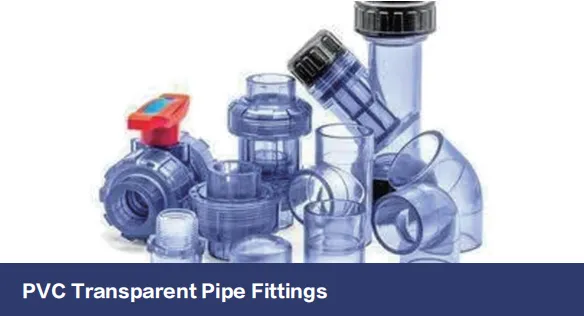
Have you ever wondered why some medical-grade plastics get that special certification while others don't? Or why hospital equipment has that distinct look and feel? In medical settings, every component matters – especially things like transparent PVC pipe fittings that carry fluids where visibility and purity are life-critical. That's where USP Class VI testing comes into play.
Imagine being responsible for medical devices used in patient care. You wouldn't gamble with materials that might leach chemicals into IV fluids or react with medications. USP Class VI is your guarantee that these materials won't behave badly inside the human body. Today, we're peeling back the layers on this vital certification standard.
Bottom line first: USP Class VI is the highest biocompatibility standard for materials in medical and pharmaceutical applications. When you see it on transparent PVC pipe fittings, it means they've survived rigorous testing proving they won't cause tissue irritation, toxicity, or biological reactions when used inside or around the human body.
Think about the difference between a garden hose and a blood transfusion line. Both carry fluids through tubes, but their material requirements are worlds apart. In medical applications, PVC pipe fittings need to be:
These requirements become absolutely critical when you're dealing with sensitive applications like dialysis, drug manufacturing, or neonatal care. That's why organizations like the United States Pharmacopeia (USP) developed classification systems to prevent toxic substances from entering medical environments.
How substances affect living cells
Allergic reactions
Tissue irritation levels
Long-term body interactions
Material testing for USP Class VI isn't a single test – it's a gauntlet that transparent PVC pipe fittings must survive:
You might wonder why PVC pipe fittings in hospitals are transparent rather than opaque. The reasons go beyond just aesthetics:
But transparency introduces challenges too. Additives that make PVC flexible and clear must themselves meet USP Class VI standards - they can't migrate into fluids or impact biocompatibility.
| Characteristic | Regular PVC | USP Class VI PVC |
|---|---|---|
| Chemical Stabilizers | Lead or cadmium-based | Medical-grade calcium-zinc |
| Plasticizers | General-purpose phthalates | Non-phthalate DEHP alternatives |
| Surface Smoothness | Microscopic imperfections acceptable | Ultra-smooth to prevent bacterial adhesion |
| Extraction Testing | Not performed | Simulated body fluid exposure |
Real-world application: During a hospital renovation project, contractors must understand that installing medical-grade PVC piping systems requires different standards than standard plumbing. This also applies to surrounding structures like medical fire wall boards which must meet equally rigorous fire resistance and chemical stability requirements while maintaining cleanability.
Regular PVC might look similar to USP Class VI PVC transparent pipe fittings, but the differences run deep:
These manufacturing differences are why medical-grade PVC costs more than standard resin, but that premium buys proven safety and compliance.
The certification doesn't stop at the factory door. Proper handling matters for preserving the integrity of PVC fittings:
These transparent fittings form literal lifelines in medical settings. Their clarity symbolizes the transparency we expect in healthcare - where material integrity equals patient safety.
Recommend Products












