
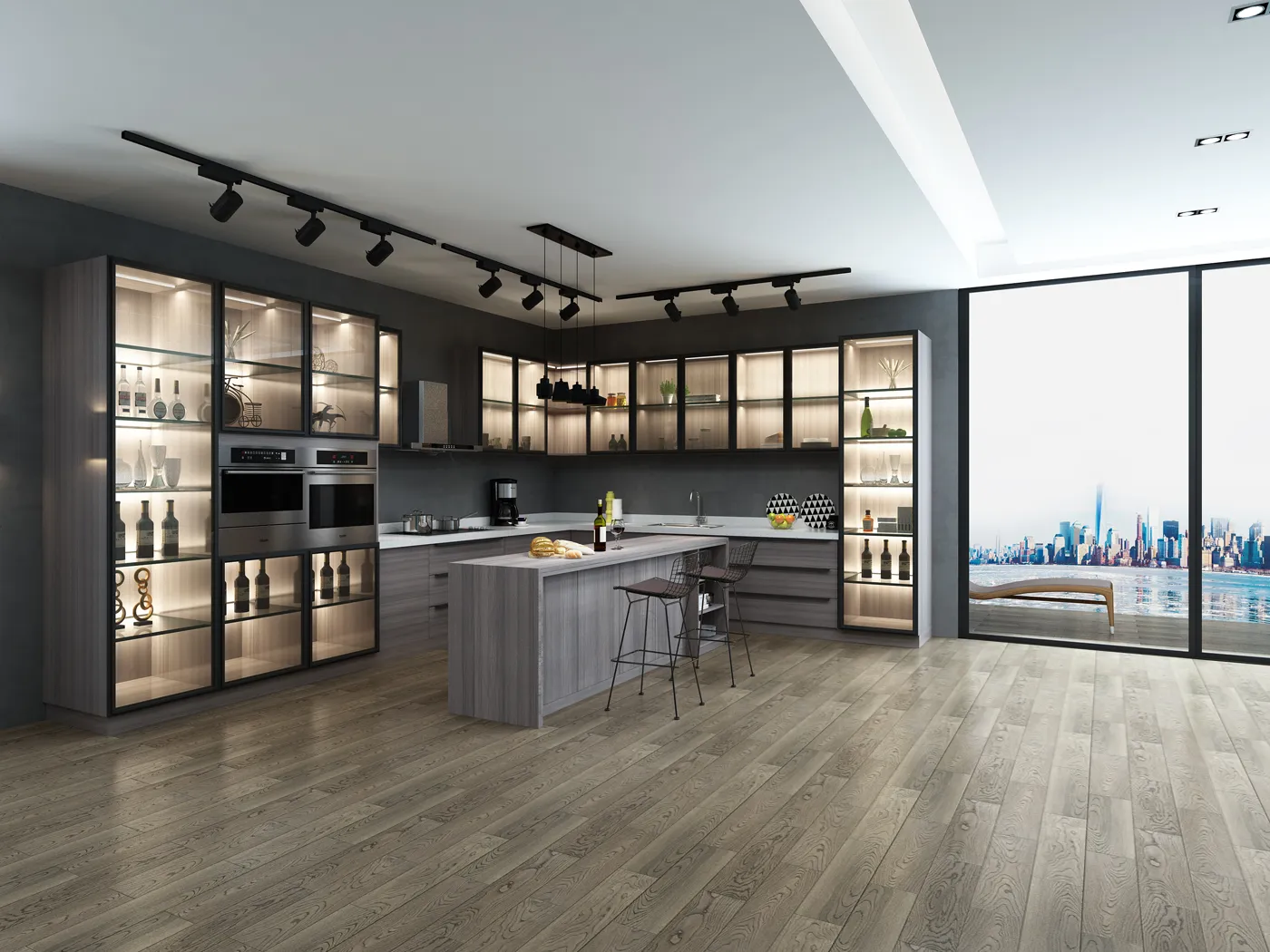
You're standing in your dream kitchen, admiring those beautiful cabinet doors you picked out last year. But wait—what's that? A slight warping along the bottom edge? Maybe some discoloration near the sink? If your cabinets are made of standard MDF, you might be starting a frustrating battle against moisture damage. But what if I told you there's a way to enjoy all the benefits of MDF without the headaches? That's where advanced moisture resistance technologies come in.
I've been studying engineered wood products for years, and today I want to walk you through the game-changing innovations that are revolutionizing kitchen cabinetry. We'll cut through the industry jargon and give you straight talk about what really works. From hydrophobic treatments to core material breakthroughs, you'll discover exactly how modern manufacturers are solving MDF's biggest weakness: its vulnerability to water.
At its core, MDF—or Medium-Density Fiberboard—is like the ultimate recycling project. Imagine taking all those wood shavings and sawdust from lumber mills that would normally go to waste. Now blend them together with resin and wax, then compress them under intense heat and pressure. What you get is a remarkably uniform panel that's smoother than solid wood and more consistent than plywood.
That smooth surface isn't just for show—it's what makes MDF a dream to paint. Unlike knotty pine or grainy oak, MDF gives you that flawless, mirror-like finish without endless sanding. And because it has no natural grain pattern, it won't warp or twist like solid wood often does. That's why cabinet makers love it for creating those crisp, clean Shaker-style doors that dominate modern kitchens.
Pro Tip: When shopping for MDF cabinets, lift a sample panel. The weight tells you a lot—higher density boards (closer to 800-1000 kg/m³) handle moisture better than lightweight versions. That density translates to durability.
Here's the problem: kitchens are essentially moisture battlegrounds. Between the steam from your pasta pot, splashes from the sink, and humidity from the dishwasher, your cabinets face a daily assault. Standard MDF soaks up water like a sponge—literally. Those wood fibers expand when wet, causing that familiar warping and swelling.
I've seen too many homeowners discover too late that even minor leaks can spell disaster. A small drip from an ice maker line? That could mean swollen cabinet bottoms within weeks. And forget about spills—a forgotten wet rag left on a cabinet door can leave permanent damage.
This isn't just about looks. Compromised cabinets mean compromised storage. Warped doors don't close properly, swollen frames bind drawers, and damaged surfaces become dirt magnets in your food prep areas.
Now, here's where things get exciting. Manufacturers have developed ingenious ways to make MDF laugh in the face of moisture. Let's demystify how these technologies actually work.
Think of this like waterproofing fabric for your cabinets. Standard MDF uses urea-formaldehyde resin—great for bonding but terrible for water resistance. Moisture-resistant MDF replaces this with specialized hydrophobic resins that actively repel water.
How does it work in practice? These resins form a protective barrier around every wood particle in the board. It's like each fiber gets its own microscopic raincoat. Water droplets bead up instead of soaking in—you've probably seen this effect on high-tech hiking gear.
What you need to know: Not all hydrophobic treatments are created equal. Look for products labeled "MR MDF" (Moisture Resistant) which typically use melamine-based resins. The best manufacturers include additional wax formulations that create an even stronger moisture barrier.
While surface treatments help, the real magic happens in the board's core. Advanced manufacturers embed what are essentially moisture inhibitors throughout the entire panel.
One breakthrough method involves encapsulating water-repelling chemicals into the wood fibers before compression. This creates a comprehensive moisture barrier throughout the panel, not just on the surface. Even if you cut or drill into the board—say, for hinge installation—the inner material maintains its resistance.
Integral additives represent another leap forward. These aren't just surface coatings—they're materials mixed directly into the MDF slurry before pressing. Industrial-grade paraffin wax and specialized polymer blends create permanent moisture protection that won't wear off with cleaning.
What if your cabinet finish could actively repel moisture instead of just sitting there? That's exactly what high-performance sealants do.
Top-tier manufacturers now use catalyzed conversion varnishes that form an impenetrable plastic-like seal. Unlike old-school lacquers, these chemically bond with the MDF to create moisture-proof barriers. Some premium lines even incorporate nano-ceramic particles that add structural reinforcement to the finish.
But the most exciting innovation might be the edge-sealing technology. Since cut edges are MDF's most vulnerable spots, advanced manufacturers apply specialized sealants during production that penetrate deep into these exposed areas. Some use moisture-cured urethane edge sealers that react with humidity to form permanent bonds stronger than the wood itself.
| Technology | Protection Level | Typical Applications | Cost Premium |
|---|---|---|---|
| Standard MDF | Low - swells with minor exposure | Dry areas only | Base price |
| MR MDF (Moisture Resistant) | Medium - resists incidental splashes | Residential kitchens | 10-20% more |
| HMR MDF (High Moisture Resistance) | High - withstands prolonged dampness | Bathrooms, laundry rooms | 20-35% more |
| Commercial-Grade Waterproof MDF | Extreme - survives wet environments | Restaurants, labs | 50-100% more |
All these technologies sound impressive, but how do they actually perform in your kitchen? Let's look at some real-world scenarios:
The Splash Zone Test: I watched lab technicians simulate decades of sink splashes on various MDF types. Standard MDF began swelling within hours. MR MDF lasted several days before showing damage. But the truly waterproof MDF with core treatments remained completely unchanged even after weeks of constant moisture exposure.
The Steam Challenge: Behind range hoods and above dishwashers, cabinets face constant steam. Standard MDF panels warped dramatically under steam exposure. Advanced HMR panels showed only minimal surface changes that disappeared after drying—your cabinets would bounce right back after wiping them down.
With all these options, how do you pick the right MDF for your kitchen? Follow these expert tips:
Many moisture-resistant boards come with a green tint—not for decoration, but as a visual indicator of enhanced protection. But beware—not all green boards are created equal!
True high-performance HMR boards use a distinctive color pigment throughout the entire panel. If you cut into it and see a different color inside, you're looking at surface-treated imposter products. Always ask for a cross-section sample before purchasing.
The best moisture-resistant MDF can still be compromised by poor installation. I always tell homeowners to insist on two critical steps:
While high-resistance MDF costs more upfront, it pays dividends in humid climates or steamy kitchens. If you're near the ocean? Have young kids making water messes? Cook intensively? Splurging on HMR or waterproof grades makes financial sense.
Consider this: Replacing moisture-damaged cabinets could cost 2-3 times more than the premium for upgraded MDF upfront. That makes moisture-resistant technology one of the smartest investments in your kitchen.
Even with top-tier moisture resistance, some care extends your cabinets' lifespan dramatically:
Here's where most homeowners go wrong: They either baby their cabinets with damp cloth wiping (ineffective against grease), or go nuclear with excessive water (dangerous even for moisture-resistant MDF). The golden rule? Damp—not wet—cleaning.
Find a pH-neutral cleaner specifically formulated for sealed wood surfaces. Spray it directly on a microfiber cloth, not the cabinet. Then wipe in gentle circular motions. Buff immediately with a dry cloth. This keeps surfaces spotless without threatening the sealants.
While splash protection gets all the attention, ambient humidity causes the majority of long-term damage. This silent attacker works gradually:
Even with precautions, accidents happen. Here's your damage control protocol:
Immediate standing water? Lift what you can with towels, then place portable fans to circulate air overnight. For swollen edges, apply even pressure while drying—clamp wax paper between the damage and your clamping boards.
Notice white moisture marks? This indicates water penetrated the finish. Lightly buff with automobile polishing compound applied with microabrasive pads. Then immediately reseal with matching finish products from your cabinet manufacturer.
Manufacturers continue pushing moisture resistance boundaries. Here's what to expect in next-generation MDF:
Imagine a minor scratch resealing itself! Polymer technologies borrowed from the medical industry enable tiny fissures to "heal" through molecular migration. Early prototypes regenerate surface integrity at room temperature—perfect for busy kitchens.
Sustainability meets performance in new bio-resins derived from plant oils and recycled materials. These not only resist moisture better than petrochemical options but reduce off-gassing too. Bonus: They'll degrade more responsibly at end-of-life.
The most exciting development? Intelligent moisture management systems that actively wick away humidity through microscopic channels in the MDF core. Think of it as built-in climate control for your cabinet interiors.
Q: Can I install moisture-resistant MDF cabinets in my bathroom?
Absolutely! High-grade HMR performs excellently in high-humidity environments. Pay extra attention to sealing edges around plumbing access points.
Q: Is moisture-resistant MDF safe for food preparation areas?
When properly sealed with FDA-approved coatings, it's perfectly safe. Look for Greenguard or FDA compliance certifications from manufacturers.
Q: How long do moisture-resistant cabinets really last?
With proper care and installation, quality HMR MDF cabinets easily last 15-20 years. Premium waterproof versions can exceed 25 years in residential settings.
Q: Can I reface existing cabinets with moisture-resistant MDF?
Yes! It's an excellent way to upgrade protection. Just ensure you address moisture issues behind existing cabinets first.
Q: Are moisture-resistant MDF cabinets harder to paint or refinish?
They actually accept finishes better than standard MDF thanks to their tighter surface structure. Always use adhesion-promoting primers for best results.
The days of swollen cabinet bottoms and warped doors are over—if you harness the right technologies. By understanding what makes premium moisture-resistant MDF truly different from standard versions, you can confidently invest in cabinets that look beautiful year after year.
Remember that in moist environments like kitchens, the true cost lies not in the initial premium for waterproof MDF, but in the constant repairs and replacements of inferior materials. The technologies we've explored—from core fortification to edge sealing systems—represent the smart frontier in kitchen cabinetry.
With proper selection and maintenance, your MDF kitchen can deliver the perfect balance: the affordability and workability cabinetmakers love, paired with the water-resistance modern homes demand. That's the sweet spot where durability meets design—and where stress-filled kitchen repairs become a thing of the past.
Recommend Products












