
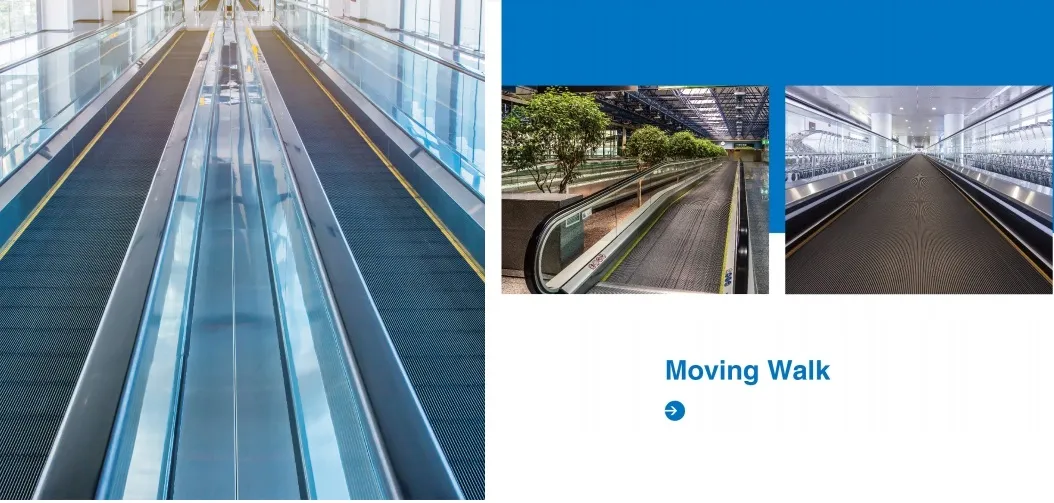
You know that moment when you're rushing through an airport with heavy bags, and suddenly you see that magical moving pathway? That's not just a convenience feature – it's a masterpiece of engineering! Today, we're exploring how modern moving walkways conquer steep slopes to keep us moving effortlessly.
Modern moving walkways are like silent workhorses. They transform exhausting treks into smooth journeys, especially when designed for challenging inclines.
Ever dragged luggage up a ramp? Moving walkways solve this elegantly. Their climbing ability isn't just about steeper angles – it's about effortless connectivity . At subway transfers or hilly convention centers, a high-grade walkway is what stands between frustration and flow.
It's not just motors doing heavy lifting. The real magic happens in:
| Feature | High-Capacity Models | Standard Models |
|---|---|---|
| Maximum Incline | 12 degrees (≈20% grade) | 6 degrees (≈10% grade) |
| Max Vertical Rise | Up to 9 meters | 3-5 meters |
| Speed Options | 0.75 m/s (fast mode) | 0.5 m/s standard |
| Weight Capacity | 4000 kg+ (shared load) | 2000 kg |
| Special Features | All-weather seals, heated steps | Basic weatherproofing |
Real-world example: Chicago O'Hare's Terminal 5 uses high-incline walkways to connect parking structures, eliminating shuttle buses. The 9-meter vertical climb would exhaust travelers otherwise.
Here's where efficiency shines. The key considerations:
These features are crucial as many modern architectural endeavors prioritize both form and function in commercial projects.
Pro tip: In shopping centers, synchronize walkway speeds with pedestrian flow studies. Too fast creates bottlenecks, too slow defeats the purpose.
This is where engineering meets the elements:
Singapore's Gardens by the Bay uses weather-hardened walkways on elevated forest trails. Their secret? Sealed gearboxes preventing humidity damage in the tropical climate.
Remember when installing walkways meant massive construction pits? Modern pitless designs change everything:
The impact? A Tokyo train station added walkways during nightly operational windows without disrupting service.
The "muscle" behind steep slopes has evolved dramatically:
| Drive Type | Climbing Ability | Energy Use | Maintenance Needs |
|---|---|---|---|
| Traditional Gearbox | ️ Up to 8° slopes | High | Frequent lubrication |
| Direct Drive | ️ Up to 12° slopes | ️ A+++ rating | ️ Minimal (sealed units) |
| Linear Motor | ⚠️ Testing phase | ️ Ultra-efficient | ️ Almost none |
The shift to direct-drive technology cut energy consumption in Munich Airport's walkways by 62% while increasing reliability.
How do modern walkways "know" when to speed up? They're smarter than you think:
Steeper slopes demand ingenious safety features:
Hidden safety hero: Yellow tactile strips along edges aren't just visual – they create detectable vibrations for the visually impaired signaling approach to junctions.
The next decade will transform how we climb through cities:
Already in testing: Seoul prototype walkways that harvest kinetic energy from footsteps to supplement power.
Match the technology to YOUR needs:
The Copenhagen Metro chose high-capacity walkways instead of escalators for baggage-heavy transfers, saving €12M in elevator infrastructure.
Modern climbing walkways do more than move people – they reshape urban landscapes. By conquering 12° inclines, they stitch together spaces previously separated by topography.
As architects design ever-more vertical cities, and society ages, these engineered slopes become vital social infrastructure. The real metric isn't degrees of slope – it's accessibility unlocked. Whether connecting airport terminals or creating barrier-free city districts, moving walkways represent democratized mobility.
So next time you glide up one of these slopes, remember: You're riding decades of mechanical innovation designed not just for convenience, but for connection.
Recommend Products












