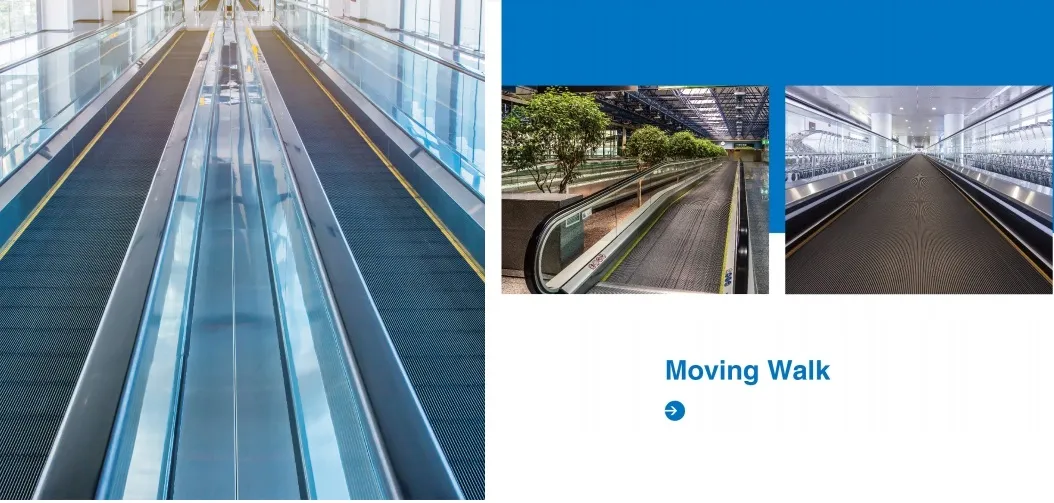
Picture this: You're rushing through an airport, late for a flight. Your suitcase wheels clatter rhythmically against the moving walkway as you grab the handrail for balance. That everyday moment hides some incredible engineering secrets. The materials beneath your feet and in your grip? They've undergone a quiet revolution that makes modern travel safer, smoother, and more sustainable.
Industry Insight: A single airport moving walkway handles over 15 million passenger journeys during its lifespan. Every 1kg reduction in material weight translates to 300kg less CO2 emissions over 10 years of operation.
The Evolution of Mobility Surfaces
Moving walkways aren't just airport accessories anymore. They're popping up everywhere – shopping malls, transit hubs, even hospitals. This explosion in applications demands materials that perform better than traditional steel and rubber composites. The game-changing shift? Next-generation aluminium alloys and composite structures that deliver three critical upgrades:
Weight Matters More Than You Think
Let's talk about why shedding pounds matters so much. Traditional steel-based walkways are like heavyweight boxers – strong but cumbersome. Installation requires structural reinforcements beneath them, driving construction costs up by 30-40%. Maintenance becomes a logistical nightmare too. Just replacing a single panel? That might mean shutting down sections and hiring cranes.
Modern aluminium alloys flip this script completely. They achieve comparable strength at
just 45% the weight of steel
. But here's the clever part: The weight savings go beyond just the pedals. Support structures slim down, motors shrink, and energy consumption tumbles. An average airport sees 22% lower electricity costs after converting to aluminium-based systems. That’s real operational savings that pile up year after year.
When Strong Isn't Strong Enough
Strength requirements for moving surfaces keep climbing. Pedals must handle luggage impacts, spilled liquids, extreme temperatures, and relentless vibration – all while maintaining perfect alignment to prevent trip hazards. Older materials often developed stress fractures at connection points within 5-7 years.
The breakthrough? Hybrid composite cores wrapped in aluminium sheathing. These "sandwich panels" distribute impact forces like memory foam while maintaining rigid surface integrity. Specialised anodising creates surfaces that laugh off coffee spills, salt spray, and UV degradation. The results speak for themselves:
-
Scratch resistance improves by 400% vs. standard aluminium
-
Fatigue life increases to 15+ years before refurbishment
-
Tolerance for temperature swings (-40°C to 80°C)
The Unsung Hero: Handrail Revolution
Handrails used to be afterthoughts – simple rubber belts stretched over steel rollers. Today, they're precision-engineered safety systems where material science meets ergonomic design. The evolution addresses three critical pain points:
"Modern handrails must feel intuitive to grasp while providing precise synchronisation with pedal movement. The material must compress slightly for grip comfort yet remain torsionally rigid to prevent lag – a complex balancing act only recently achieved through polymer innovation." – Transportation Infrastructure Engineer
New thermoplastic composites solve challenges engineers struggled with for decades. Silicone-infused surfaces create consistent friction whether hands are sweaty or gloved. Embedded LED strips? They’re now laminated within the material itself rather than added externally. This integration prevents water intrusion that previously caused 78% of handrail lighting failures.
Innovation in Action: Real-World Applications
Terminal Transformations
London Heathrow's Terminal 5 upgrade provides a perfect case study. Their new moving walkways use extruded aluminium pedals with hollow-core construction and grip-enhancing surface textures. Each 2-meter section weighs just 28kg – light enough for two technicians to handle manually. Crucially, the modular design allows overnight replacement without disrupting operations.
Smart Surfaces Emerge
Singapore's Changi Airport takes materials further with "responsive" walkways. Their specially coated aluminium panels feature:
-
Pressure-sensitive lighting that activates underfoot
-
Micro-porous surfaces that wick away rainwater
-
Embedded sensors detecting maintenance needs
The handrails? They contain antimicrobial silver ions throughout the polymer matrix – a feature born from pandemic-era hygiene concerns. This isn't just about durability anymore; it's about creating interactive transit experiences.
Sustainability: The Quiet Benefit
Behind the engineering lies an environmental story few passengers notice. Modern walkway materials are champions of circular design:
Recyclability Metrics: Current aluminium-based systems contain 73-88% recycled content. At end-of-life, >95% of materials can be recovered for reuse without downgrading quality – something impossible with traditional rubber-steel composites.
The manufacturing process transformed too. Traditional production consumed massive energy melting steel alloys at 1500°C. Modern aluminium extrusion works at 500°C, cutting energy inputs by over 60%. When combined with lightweight shipping advantages, the carbon footprint of new walkways drops by as much as 53% over their lifespan.
Manufacturing innovation doesn't stop at materials. Consider how
pipe fittings
used in walkway support frames evolved from bulky weldments to precision snap-together joints. This small change exemplifies how entire assembly philosophies shifted toward modular, tool-free installation.
What Comes Next?
The material evolution continues accelerating:
-
Self-healing polymers that automatically fill surface scratches
-
Phase-change materials absorbing vibration energy
-
Transparent aluminium composites for glass-like aesthetics
-
Energy-harvesting surfaces converting footfalls into power
These advancements will increasingly blur lines between functional infrastructure and architectural art. Tomorrow's moving walkways won't just transport people – they'll educate, illuminate, and even generate their own operating power.
"The biggest shift is in design philosophy. We're no longer asking 'How strong?' but 'How intelligent?' Material innovations create systems that actively maintain themselves and communicate their condition – that's transformative for maintenance planning." – Smart Infrastructure Developer
Beyond Transportation: Expanding Applications
The innovations reshaping moving walkways create ripple effects across industries:
-
Healthcare: Low-vibration aluminium platforms for sensitive equipment transport
-
Manufacturing: Antimicrobial handrail materials repurposed for cleanrooms
-
Retail: Responsive flooring detecting customer movement patterns
-
Accessibility: Tactile composites for vision-impaired navigation
Each adaptation proves a powerful truth: When materials solve fundamental engineering challenges elegantly, applications multiply far beyond the original intention.
So next time you step onto a moving walkway, pause and appreciate what's underfoot. That unassuming surface represents decades of quiet material revolution – engineering that makes journeys smoother, facilities more sustainable, and infrastructure smarter. The continuing evolution promises to make mobility systems even more efficient, resilient, and integrated into our built environment. Truly, a small step for engineering, a giant leap for daily convenience.