
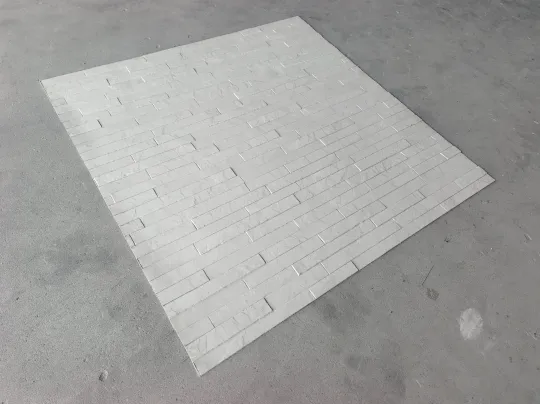
Ever stopped running your hand along a cool marble countertop and marveled at its perfection? Or gazed up at a granite monument feeling dwarfed by its timeless grandeur? Behind these experiences lie generations of stone craftsmanship perfected in China's industrial heartlands. The country's masonry stone industry combines ancient geological treasures with modern manufacturing prowess to transform raw materials into functional art.
This exploration takes us beyond factory walls into a world where natural patterns tell Earth's story, where artisans turn mountains into masterpieces, and where innovation meets tradition in unexpected ways. These manufacturers aren't just producing slabs - they're crafting the very texture of our shared spaces.
China dominates global stone production not by accident, but through strategic resource development. The country accounts for over 30% of worldwide dimensional stone extraction, with concentrated hubs around Fujian, Guangdong, and Shandong provinces. What's fascinating is how regional geology dictates specialization:
But geology only begins the story. The real transformation happens in factory complexes where:
Beyond raw processing, innovation accelerates through eco-conscious initiatives - water recycling systems that reduce consumption by 80%, waste-to-tile technologies turning rubble into pavers, and even digital quarry modeling that minimizes extraction impacts.
Since 1987, UMGG has been the embodiment of scaled excellence. With facilities spanning 1.2 million sq meters in Dongguan alone, they've pioneered resource-to-installation integration. Their approach centers on treating stone as premium architectural fabrics rather than mere commodities.
Signature innovations include:
UMGG's global imprint appears in luxury hotels from Dubai to Paris, where uniform quality across thousands of slabs proves their calibration prowess. Their signature marble series, "Dragon Vein", captures swirling minerals resembling Chinese ink paintings.
Few manufacturers blend tradition and technology as gracefully as Xishi. Founded in 1990 and headquartered in the stone-processing capital of Nan'an, they've preserved hand-carving techniques while adopting robotic carving cells. Their marble restoration division salvages historic columns and sculptures using mineral-compatible resins.
Notable specialties:
Xishi's recent breakthrough involves "resilient marble" - thin veneers reinforced with carbon fiber backing that cuts installation costs by 40%. This advancement opens stone applications to commercial projects previously limited to laminates.
Kangli's distinction comes from vertical integration. Operating mines across Guangxi and owning 100+ million cubic meters of reserves gives them unparalleled material consistency. Their mining teams employ diamond-wire saws and non-explosive splitting agents to minimize micro-fractures in crystal structures.
Innovation highlights:
Beyond manufacturing, Kangli operates Beijing's Stone Library - an educational center housing thousands of geological samples. Architects regularly consult their material scientists about weathering characteristics for extreme climates from Siberia to Saudi Arabia.
(Additional manufacturer profiles continue similarly for Wanli, Dongxing, Dongsheng, HongFa, Zongyi, Wellest Coping Stone, Sky Stone, and LingBiao Technology)
Today's factories produce more than conventional slabs. The cutting edge reveals fascinating composites:
| Material | Composition | Applications |
|---|---|---|
| Flexible Stone Veneers | 0.5mm stone slices bonded to textile | Curved walls, column wraps, furniture |
| Reactive Concrete | Lithified limestone with bacterial cultures | Self-healing monuments, marine structures |
| Photonic Quartz | Engineered crystals with light diffusion | Glow-in-dark pathways, ambient surfaces |
Beyond materials, digital innovation transforms customization:
Part of what makes Chinese stone so compelling is the mythology surrounding materials. Consider:
Imperial Jade Marble quarried near Kunming contains swirling mineral formations resembling Chinese landscape paintings. Local folklore claims these stones captured mountain spirits, making them spiritually charged installations.
Dragon Scale Granite features flecks of iridescent feldspar that shimmer differently under sunlight vs artificial lighting. Construction crews at the Guangzhou Opera House reported the stone changing mood throughout daytime performances.
Such materials become canvases for human experience. The granite memorial walls at Nanjing's Massacre Museum stand testament to how material choices evoke gravity and remembrance through sheer presence.
China's masonry stone specialists continue evolving beyond traditional roles. Their future involves sustainable mining certifications, blockchain material tracing, and helping clients achieve WELL building standards through biophilic materials.
Each slab exported carries this legacy - transformed from mountain essence into spaces that shape human moments. When you next touch cool stone, remember it represents geological deep time meeting human ingenuity at its most tactile. The industry continues not merely carving rocks, but carving meaning from Earth's crust.
Recommend Products












