
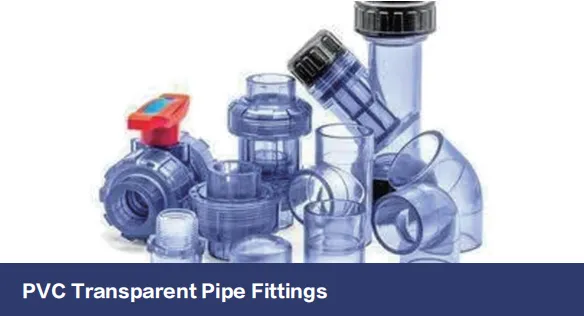
Imagine standing at the edge of an aquaculture facility, where crystal-clear pipes snake through saltwater tanks carrying life-giving water to fragile marine species. These transparent veins are more than just plumbing—they're lifelines that demand near-perfection. It's heartbreaking when corrosion sets in, clouding the view and threatening entire ecosystems. That's where choosing the right PVC transparent pipe fittings becomes not just an engineering decision, but an emotional commitment to marine life.
Let me take you through a journey where science meets the sea, where durability dances with transparency, and where understanding salt spray corrosion transforms from a technical challenge to an act of stewardship for our oceans.
You'd be amazed how relentless ocean environments are. That misty salt spray you enjoy breathing at the beach? It's a silent destroyer, creeping into microscopic weaknesses in materials. For marine aquaculture facilities, this isn't just about rust—it's about visibility. When transparent pipes fog up with corrosion, operators lose the critical ability to visually monitor water flow, spot blockages, or see developing problems.
Think about a hatchery nurturing baby oysters. Those fragile creatures depend on consistent flow rates visible through pipe walls. A corroded section isn't just maintenance headache—it could mean losing a generation of shellfish. That’s the emotional weight these choices carry.
Salt corrosion isn't one enemy—it's three:
Working in aquaculture feels like nurturing liquid gardens. Those clear pipes are our windows to this underwater world. When we can see the water flowing—its bubble patterns, its color changes, its debris flow—we connect intimately with the life inside.
Picture trying to spot a developing algae bloom behind fogged acrylic. By the time instruments detect it, damage is often done. With transparent PVC, an alert aquaculturist might spot that first tinge of green and save entire tanks. That visual connection transforms cold monitoring into heartfelt caretaking.
Norway Salmon Farm Turnaround: After switching to salt-resistant transparent PVC, operators reduced mortality rates by 22%. Why? Because they could finally see developing parasite clusters on internal pipe walls before infestations spread. That's visual monitoring saving lives.
| Feature | Standard PVC | Corrosion-Resistant CPVC |
|---|---|---|
| Salt Spray Survival | 1-2 years before clouding | 10+ years clarity |
| Chlorine Content | 57% | 63-67% (corrosion barrier) |
| Temperature Tolerance | 140°F max | 200°F stable |
| Flex Memory | Degrades faster | Returns to shape 300% longer |
| Visual Maintenance | Requires frequent cleaning | Self-shedding salt deposits |
Superior salt-resistant PVC starts life differently. Manufacturers micro-engineer polymer chains during chlorination, creating tighter cross-linking that salt ions can't penetrate. Imagine microscopic armor plating—that's what separates aquaculture-grade PVC from standard hardware store products.
They also incorporate UV-stabilizers directly into the polymer matrix rather than surface coatings. This prevents that heartbreaking moment when clear pipes turn yellowish after just one season of coastal sun.
When the University of Miami tested various fittings in their wave simulation lab, the results spoke volumes:
After 6 months of simulated ocean exposure, specially formulated CPVC maintained 92% light transmission. Competitors' "marine-grade" acrylics averaged just 68%—essentially turning observation pipes into frosted glass.
But numbers don't capture everything. Talk to aquaculturists who've switched, and you'll hear relief in their voices. Less surprise maintenance. Fewer system shutdowns. Reduced anxiety about unexpected failures during storm seasons.
It's not just what but how you install. Through hard lessons, marine engineers have developed installation techniques that turn good pipes into invincible systems:
Proper integration with your water supply and drainage system is particularly critical—improper connections become corrosion breeding grounds where salt concentrates.
Here's what often gets missed: transparent pipes do more than convey water—they convey confidence. When caretakers see everything flowing smoothly, it transforms their relationship with their aquatic charges. There's profound satisfaction in watching larvae swim through perfectly clear tubing, knowing your material choices protect their journey.
One Hawaiian shrimp farmer told me through tears how seeing his first clear-water harvest through uncorroded pipes felt: "After two failed seasons with fogged acrylic, seeing my shrimp thriving in crystal-clear flow… it's why I stay in this business."
The sea demands respect, but rewards it with abundance. When we choose materials that withstand salt's fury while maintaining visual clarity, we're not just building systems—we're building relationships with the ocean.
Material science continues advancing. Next-generation PVC composites now incorporate nano-ceramic particles that actually repel salt deposition. Imagine pipes that stay clearer longer in saltwater than in freshwater—that future is being wave-tested now.
But innovation means nothing without connection. As we develop smarter materials, we must remember that aquaculture is ultimately about nurturing life. Those transparent pipes represent our commitment to see clearly—literally and metaphorically—the ecosystems we steward.
In marine environments, the difference between success and failure often flows through PVC fittings. Choose transparency. Choose resilience. Choose to see tomorrow's ocean thriving clearly.
Recommend Products












