
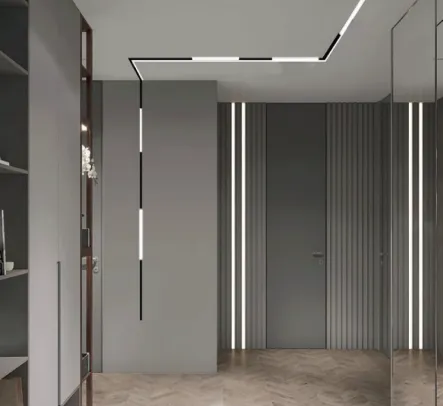
You know that feeling when you walk into a room and the lighting just feels… off? Maybe your kitchen has awkward shadows, or your office lighting feels like a hospital. That’s where magnetic track lights come in – these aren't your grandma’s chandeliers. I’ve seen firsthand how swapping traditional fixtures for magnetic tracks transforms spaces. Take my client’s bakery last month: we ditched bulky pendants for slim LED tracks, and suddenly those croissants looked like they belonged in a Parisian window.
Modern magnetic track systems look like something out of sci-fi movie. The track itself? Think sleek aluminum profiles with hidden conductive rails. But the real star is the magnetic coupling mechanism – strong neodymium magnets let you snap lights into place like LEGO bricks. Designers love this because it turns lighting into a dynamic art form.
| Design Feature | Traditional Lighting | Magnetic Track System |
|---|---|---|
| Flexibility | Fixed positions | Lights slide anywhere along track |
| Aesthetic | Often bulky hardware | Slim, minimalist profiles |
| Light Types | 1-2 options per fixture | Mix spotlights, pendants, even LED lights |
Why does this matter in real life? Picture remodeling your living room. With conventional fixtures, moving a light means rewiring drywall. Magnetic tracks? Slide that spotlight three feet left when you buy the new sofa. And with the rise of architectural lighting solutions , these systems integrate seamlessly into coves or ceilings.
I’ll never forget Sarah’s boutique renovation. She wanted adjustable gallery lighting without hiring an electrician weekly. Magnetic tracks solved her three biggest headaches:
For business owners, this is revolutionary. Stores can redirect spotlights to new merchandise zones overnight. Restaurants dim booths for romance while keeping kitchen prep areas bright. And in homes? Finally – lighting fixtures that keep up with your decor ADD.
Here’s the dirty secret electricians don’t want you to know: basic track installs take under two hours. Last summer, I helped my neighbor install hers while dinner cooked. It’s legitimately DIY-friendly with the right prep.
Map where shadows fall at different times. Use painter’s tape to mock track paths on ceilings before drilling.
Most systems use a single junction box. Pro tip: install near existing fixtures to avoid rewiring walls.
Use laser level! Screw tracks into ceiling joists, not just drywall. Floating tracks need support brackets.
This is the fun part – snap on residential and commercial building materials compatible lights. Twist to lock position.
Biggest lesson from my gallery installation? Measure twice, drill once. And always buy extra connectors – tracks always end up longer than planned.
Not all spaces benefit equally. Here’s where I’ve seen game-changing impacts:
Forget static displays. Department stores now have "light choreographers" shifting magnetic spots daily. One shoe chain saw 15% sales bump after making sneakers "pop" with adjustable beams.
Homeowners combine magnetic tracks with under-cabinet LEDs. Task lighting over islands that actually reaches the counter? Revolutionary. Especially with energy-efficient commercial lighting tech trickling down.
Painters can reposition true-color LEDs as daylight shifts. Magnetic tracks eliminate "I need five more fixtures" headaches during gallery prep.
We’ve moved beyond rigid lighting grids. Today’s magnetic systems give designers and homeowners unprecedented control – without sparking renovation nightmares. Think less "permanent installation," more "lighting playlist" for your space.
Next time you curse that dark corner in your shop or kitchen, remember: magnetic tracks turn lighting from a static chore into dynamic creativity. Your space deserves that kind of magic.
Recommend Products












