
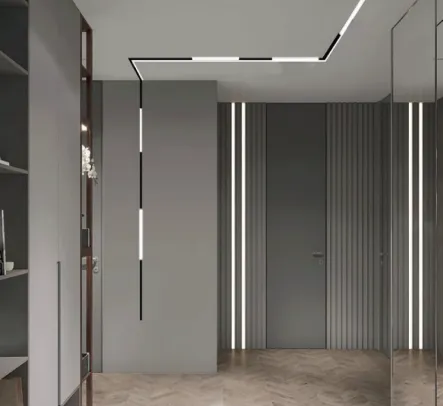
When strolling through a modern shopping mall, relaxing in a boutique hotel, or working in an efficient office space, there's a good chance the ambient lighting creating that perfect atmosphere came from Chinese manufacturers. At the heart of many contemporary lighting designs, you'll find magnetic track lighting systems – sleek, flexible solutions revolutionizing how we light up our world. China's manufacturing hubs are buzzing with factories producing these adaptable systems that blend function and artistry.
Chinese factories didn't just stumble into lighting; they've built ecosystems. Picture clusters of specialized workshops – one molds precision aluminum tracks, another produces energy-efficient LED lights , while a third develops advanced magnetic connectors. This specialization creates unbeatable efficiency. For instance, Zhongshan's "Lighting Capital" houses hundreds of suppliers within a 30-mile radius, enabling factories to source components within hours. This agility lets manufacturers test new concepts rapidly – maybe a track that curves unexpectedly or fixtures with museum-grade color accuracy.
| Strength | Impact | Global Advantage |
|---|---|---|
| Integrated Supply Chains | Reduced component costs by 20-40% | Faster time-to-market (weeks vs. months) |
| Customization Capabilities | Support bespoke lengths/colors/finishes | Attracts high-end commercial lighting projects |
| Smart Lighting Integration | Seamless app/touch controls | Leading IoT-enabled architectural solutions |
| Scalable Production | Ship 10 or 10,000 units efficiently | Caters equally to boutique designers and hotel chains |
The "snap" when attaching a magnetic fixture isn't just satisfying – it's engineering brilliance. Manufacturers use rare-earth magnets that hold up to 15kg yet release smoothly. Behind the scenes, integrated architectural lighting solutions now include:
Notably, factories are moving beyond basic fixtures. Walk through any Shenzhen trade fair, and you'll see track systems with embedded speakers, emergency backup lighting, and even air quality sensors – transforming simple tracks into intelligent building spines.
Why are architects specifying these systems globally? Flexibility meets function:
A Seoul department store uses track systems from a Dongguan factory. Why? When displays change weekly, staff effortlessly swap pendants to spotlight new collections. The lighting fixtures become part of the visual merchandising.
A Berlin tech startup installed a Ningbo-made system. As teams reorganize workstations, lighting reconfigures instantly without costly electrician visits. The hidden benefit? Reduced demolition waste during office updates.
Shanghai Natural History Museum's exhibits use specialized magnetic tracks with 97 CRI (Color Rendering Index) LED modules from a Zhuhai factory. Curators adjust lighting angles seasonally without risking priceless artifacts.
Not all factories operate alike. Key manufacturing hubs have distinct personalities:
Factories near Shenzhen leverage electronics expertise. Expect cutting-edge features like Bluetooth mesh controls. They often partner with tech giants on smart home integrations.
Ningbo workshops excel in small-batch premium orders. Found a designer brass finish online? They'll match it within days. Ideal for boutique hotel projects.
Suzhou facilities dominate European exports. They prioritize certifications like CE, ENEC, and UKCA. Their strength? Making complex compliance feel effortless.
The most progressive factories blend these strengths. A Zhongshan-based China lighting manufacturer might offer German-engineered optics in customizable finishes with app controls – representing China's integrated approach.
Forward-thinking factories aren't just manufacturing lights; they're reducing environmental shadows:
One Hangzhou manufacturer now plants two trees for every 100 fixtures sold – tracking reforestation via blockchain. It’s this blend of tech and responsibility that positions China at the forefront of sustainable commercial lighting production.
As we look toward 2025, factories are piloting technologies that sound like sci-fi:
During a recent Shanghai factory tour, we witnessed tracks adjusting brightness based on occupant heart-rate signals (via wearable tech). Another prototype changed color temperature matching natural circadian rhythms. This isn't just lighting; it's environmental harmonization.
The magnetic track lighting landscape is more dynamic than ever. Chinese manufacturers have shifted from being low-cost alternatives to innovation leaders, creating systems that solve real architectural challenges. Their integrated approach – blending materials science, electronics, and design – results in products that disappear beautifully into spaces while fundamentally transforming them. For designers specifying these systems, it’s not just about choosing lighting fixtures ; it’s about selecting adaptable environments. And somewhere in China’s humming factories, that next transformative idea is being prototyped right now.
Recommend Products












