


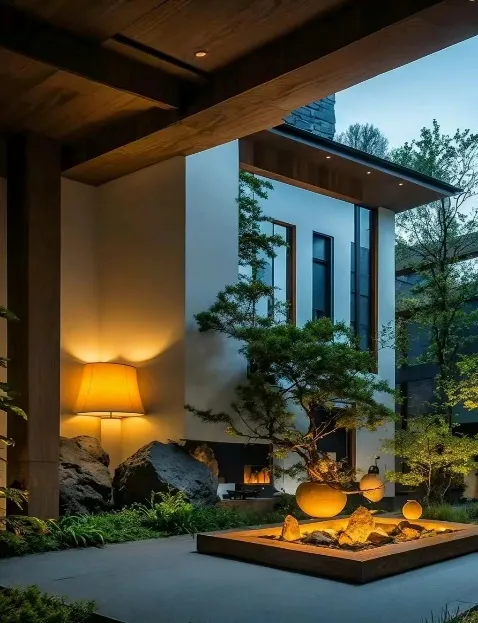
Choosing outdoor lighting isn't just about fixtures and lumens anymore. It's about finding partners who understand how illumination shapes human experience in urban plazas, historical sites, and natural environments. The difference between generic lighting and exceptional architectural lighting solutions often lies in the supplier's approach to three fundamental pillars: engineering philosophy, proven performance, and technical qualifications.
The Engineering Mindset Behind Great Lighting
Outdoor lighting projects live at the intersection of art and physics. Suppliers who treat lighting as technical implementation rather than spatial storytelling inevitably create disconnected experiences. Notice how industry leaders approach engineering:
Example: Botanical Garden Transformation
A recent botanical garden project required delicate balance - illuminating pathways without disrupting nocturnal ecosystems. The engineering solution involved:
- Precision 2700K temperature lighting to minimize blue spectrum
- Asymmetrical optics preventing light spill into planting beds
- IoT-enabled dimming responding to moonlight levels
Beyond technical specs, engineers spent nights on-site observing animal behavior before finalizing designs - demonstrating that context awareness separates functional lighting from transformative illumination.
Qualifications That Actually Matter
Certificates on walls matter less than demonstrated competencies. When evaluating suppliers, prioritize these tangible qualifications:
Suppliers with dedicated labs can simulate real-world conditions before installation. Ask for photometric reports showing exactly how fixtures perform across different mounting heights and angles - not just generic manufacturer data.
Demand full transparency into material origins. One architectural lighting partner recently traced every aluminum batch back to certified sustainable smelters, including recycled content documentation for each fixture.
Fixtures promising 50,000+ hour lifespans should prove it through accelerated aging tests. Top suppliers expose products to salt spray chambers, UV radiation simulators, and thermal shock testing that replicates decade-long weathering in months.
Urban Plaza Revival Case Study
A neglected downtown plaza became a vibrant community hub through lighting engineering focused on:
- Vertical illumination emphasizing architectural textures
- Programmable RGBW for seasonal event flexibility
- Glare-free pedestrian-scale lighting
The project succeeded because engineers collaborated with anthropologists to understand how lighting patterns influence social interaction. Visitor dwell time increased 300% after dark.
Beyond Products: Partners Versus Vendors
The most valuable suppliers embed lighting designers within project teams from schematic design onward. One museum lighting project involved:
- Co-developing conservation-grade UV filtration with curators
- Prototyping custom fixtures for irregular exhibit spaces
- Training maintenance staff in color tuning protocols
Practical Evaluation Framework
When comparing potential suppliers, conduct structured assessments:
- Case Study Deep Dive - Request 3 projects similar to yours in scale and complexity. Ask for "lessons learned" documentation showing design iterations.
- Factory Access - Insist on virtual or physical production facility tours. Observe quality control processes and ask about failure rate tracking.
- Technical Dialogue - Present your challenging installation scenario and evaluate how their engineers problem-solve in real-time.
Future-Proofing Considerations
Leading lighting partners now incorporate:
- Adaptive controls integrating with smart city ecosystems
- Circular design principles for end-of-life reclamation
- Dark sky compliant optics reducing light pollution
- Modular components enabling technology upgrades without full fixture replacement
One waterfront development project achieved 40% energy savings through predictive dimming algorithms that adjusted lighting based on pedestrian density patterns detected by LiDAR sensors.
Concluding Thoughts
Evaluating outdoor lighting suppliers ultimately comes down to one question: Do they illuminate spaces or experiences? The difference manifests in how they approach engineering challenges beyond specifications, demonstrate qualifications through measurable performance, and ultimately elevate lighting from utilitarian necessity to emotional catalyst.
The best partners become invisible - their engineering thinking evident not in visible fixtures but in how people linger in illuminated spaces, how architectural textures emerge dramatically at twilight, and how lighting subtly guides journeys through nighttime landscapes. That's the true measure of exceptional outdoor lighting solutions.










