
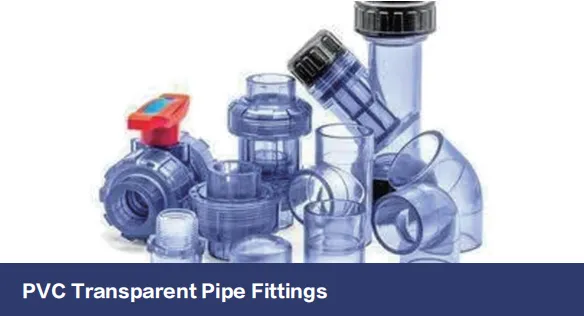
You know what keeps city planners awake at night? The ghosts of infrastructure decisions past. That pipeline chosen 30 years ago? Its leaks or corrosion failures are today's budget crisis. This isn't just about pipes – it's about the legacy we leave for our water systems. And more cities are discovering PVC transparent fittings don't just solve engineering challenges; they reshape economic equations for decades.
Consider Detroit's aging iron pipes: They're not leaking water; they're hemorrhaging taxpayer dollars with every emergency repair. Traditional cost analysis? It's like judging a car by its sticker price while ignoring maintenance. The real game-changer? Life cycle assessment (LCA) forces us to confront operational realities:
Arizona water districts learned this the hard way. Their 1970s concrete pipe network? Replacement costs now dwarf the original budget. Meanwhile, Tucson's PVC installations are humming along at 90% flow efficiency after 50 years. That's not luck – it's material science paying compound interest.
Why do engineers get excited about transparent fittings? It’s like X-ray vision for water systems. Imagine spotting debris accumulation before it becomes a blockage or identifying corrosion patterns instantly. Chicago's water treatment upgrade proves the point:
Maintenance crews used to spend Fridays dismantling joints for inspection. With transparent PVC fittings:
"It's like having a stethoscope on your infrastructure," said lead engineer Maria Gutierrez. "We caught a sediment issue others would've missed until pumps failed."
When assessing materials for water supply and drainage systems , transparency offers more than diagnostic advantages. Laboratory tests show PVC's hydraulic smoothness stays 99% consistent over decades – no mineral build-up, no friction loss surprises. That predictability turns budget forecasting from gambling into science.
Picture Houston's underground environment: acidic soil, electrical currents from transit systems, and thermal shifts. It's the Thunderdome for pipe materials. While metallic pipes corrode unpredictably:
Average lifespan: 50 years
Annual corrosion rate: 0.15mm
Failure mode: Sudden ruptures
Average lifespan: 100+ years
Corrosion rate: Zero
Failure mode: Gradual wear
Portland's utility department documented the financial aftermath: Every iron pipe replacement costs 3x the initial install after adjusting for inflation and service disruptions. Their switch to PVC transparent systems slashed long-term liabilities by 60%.
Let's debunk a myth: Sustainability isn't just about recyclability. Oregon State's environmental study revealed PVC's hidden eco-advantages:
Seattle's SoundWater project showcased these benefits in practice. By choosing PVC transparent fittings with integrated leak sensors, they reduced water loss below 5% – saving 300 million gallons annually. That's ecological stewardship with immediate financial rewards.
Switching materials sounds risky for municipal engineers. Albuquerque's phased approach built confidence:
| Phase | Duration | Key Milestones |
|---|---|---|
| Validation | 6 months | Laboratory testing, pilot installation with transparent fittings |
| Integration | 2 years | Hybrid systems (joint replacements only), technician training |
| Full Deployment | 5 years | All new installations with transparent fittings, retrofit priority zones |
Their secret weapon? Showing field crews the buildup inside legacy pipes using clear sections. As one foreman put it: "Seeing trumps specs every time." After year three, maintenance savings financed the entire transition.
Boston's smart water grid hints at the next evolution. Their transparent PVC fittings aren't passive components; they're data portals with:
The ROI? A projected 15% reduction in treatment costs through optimized chemical dosing. It turns out that when you can see inside pipes, you don't just maintain infrastructure – you upgrade its intelligence for free.
Choosing pipe materials based on upfront costs is like buying cheap boots. Spend $50 now, replace them annually forever. Or invest $150 upfront and walk dry for decades. PVC transparent fittings flip infrastructure economics through:
Zero corrosion = zero surprise failures
Visual inspection trumps diagnostic guesswork
100-year lifespan spreads costs across generations
The numbers don't lie. When Miami-Dade County calculated the 50-year cost per foot including repairs and energy? PVC came in at $28.50 vs $107 for ductile iron. That's not just savings – it's generational responsibility made manifest.
Recommend Products












