
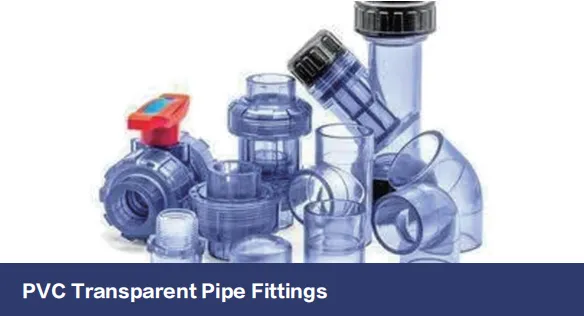
Ever wonder why that PVC pipe fitting traveling halfway around the world costs more in shipping than manufacturing? You're not alone. For businesses moving transparent PVC fittings across borders, freight expenses can drain profits faster than a leaking pipe. But here's the good news - smart logistics strategies can transform these costs from budget busters to competitive advantages.
Transporting clear PVC fittings isn't like shipping standard goods. These products demand special handling - they're sensitive to temperature changes, prone to scratching, and bulky without being particularly heavy. One manufacturer shared how a single container of fittings got held up in customs for three weeks simply because documentation described them as "plastic tubes" instead of "precision-engineered polymer connectors." That tiny wording difference cost $18,000 in demurrage fees and lost customers. It's these invisible logistics sinkholes that determine whether your fittings business floats or sinks.
Industry data reveals transport accounts for 22-35% of total landed costs for PVC fittings
What really stings is realizing most freight waste is preventable. Like seeing your carefully packed fittings bouncing around loose in a container because someone used the wrong dunnage. Or discovering your shipments consistently get hit with inspection delays at certain ports because your paperwork format doesn't match local preferences.
Most shippers fill containers - smart shippers engineer the fill. For transparent fittings, we've seen clever companies create custom hexagonal packaging that nests fittings together like honeycomb. This isn't just about saving space - one company reduced their container needs by 40%, which meant shifting from weekly to bi-weekly shipments while maintaining volume. The savings? $120,000 annually just on ocean freight.
Traditional routes aren't always optimal. One European fittings manufacturer switched from direct China-EU shipments to a China-Middle East-EU triangular route. By offloading partial shipments in Dubai and reloading with Middle Eastern-bound goods, they transformed deadhead miles into revenue-generating legs. The pivot cut their per-unit freight costs by 17% while expanding their market reach.
Paperwork delays cause 30% of shipment holds for PVC products. Simple blockchain solutions can slash customs clearance from days to hours. One company integrated automated documentation systems that pre-populate forms 72 hours before port arrival, reducing their customs incidents from monthly to twice yearly.
The real revolution comes from technologies making logistics smarter:
One manufacturer shared how implementing just moisture sensors saved $80,000 annually by preventing entire container rejections due to fogged fittings. The ROI came in 5 months.
Your forwarder choice makes or breaks cost efficiency. For PVC fittings specifically, prioritize partners with:
Polymer shipping expertise - not all plastics ship alike
Specialized equipment like air-ride trucks and humidity-controlled containers
Existing relationships at key ports for faster clearance
Regional warehousing for strategic inventory staging
Remember that color coding systems for fitting identification we see in effective supply chains? That level of specialization matters throughout your logistics chain.
The future points toward hyper-optimization: 3D printing hubs near major markets could eliminate ocean freight for custom orders. Autonomous ships promise 24/7 sailing without crew costs. Carbon-negative shipping options might soon give PVC suppliers an environmental edge.
The winners will be those viewing logistics not as a cost center, but as a strategic differentiator. Because in the transparent pipe fittings business, visibility shouldn't stop at the product itself - it must extend throughout your entire supply chain.
Recommend Products












