
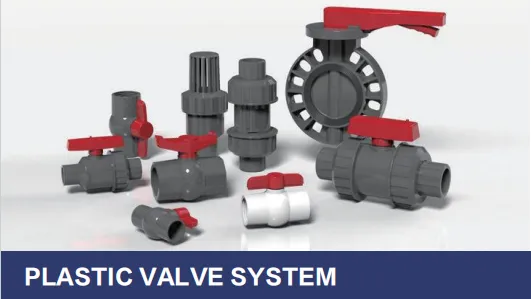
Choosing the right supplier for your building materials is like picking a partner for a long journey. It's not just about the products—though quality matters deeply—it's about reliability, communication, and shared understanding of what success looks like for your project. When it comes to something as critical as plastic valve systems, upvc pipes, or ppr fittings, the stakes get even higher. A delayed shipment, a miscommunication about specifications, or a product that doesn't meet local safety standards can throw off timelines, blow budgets, and even compromise the integrity of the entire build. So, how do you decide between a local plastic valve system supplier you can visit in person and an international giant with a catalog that seems to stretch across continents? Let's break it down.
There's a reason why many project managers start their search close to home. Local suppliers aren't just businesses—they're part of the community. They speak the same language, understand the quirks of local regulations, and can often get you what you need before the end of the week. Let's dive into the specific advantages that make local suppliers a strong contender.
Imagine you're rushing to finish a hospital wing, and a last-minute inspection reveals you need additional class A fireproof CPL inorganic boards—stat. A local supplier might have those boards in stock, or at worst, can have them delivered within 48 hours. International suppliers, on the other hand, might need weeks to ship, clear customs, and transport to your site. For tight deadlines, local suppliers are often the difference between staying on track and scrambling to explain delays to clients. This agility isn't just about delivery times, either. If you need a small batch of replacement parts for a plastic valve system that failed during installation, a local supplier can often drop them off the same day, saving you from costly downtime.
Building codes aren't just guidelines—they're legal requirements, and they vary wildly from one region to the next. A local plastic valve system supplier doesn't just sell products; they sell compliance. They know which certifications are mandatory for hospitals versus schools, which materials meet fire safety standards, and how to navigate the paperwork that comes with large-scale projects. This insider knowledge is invaluable. For example, if you're working on a school renovation in a region with strict environmental regulations, a local supplier might automatically recommend bamboo charcoal board wall panels not just for their durability, but because they're locally certified as low-VOC. An international supplier, unfamiliar with these nuances, might suggest a similar product that meets global standards but falls short of the specific local requirements, leaving you to redo the research and possibly reorder materials.
In the building industry, relationships matter. Local suppliers thrive on repeat business, which means they're invested in your success beyond the initial sale. Need help troubleshooting a tricky installation with upvc pipes? They might send a technician to your site to walk you through it. Unsure if a particular ppr pipe and fitting is compatible with your existing system? They'll take the time to review your blueprints and make personalized recommendations. This level of support is hard to replicate with international suppliers, who often rely on email chains and time zone-hopping calls. When you're standing on a construction site at 7 a.m. staring at a shipment of mismatched parts, a local supplier's willingness to pick up the phone and solve the problem feels less like customer service and more like a partnership.
Of course, local suppliers aren't without their limitations. For one, their product ranges can be narrow. A small local supplier might specialize in plastic valve systems and basic upvc pipes but lack the variety of materials you need for a complex project—like high-end porcelain slab tiles for walls or specialized pex pipe fittings. This can force you to work with multiple suppliers, complicating logistics and increasing the risk of miscommunication. Cost is another factor. Local suppliers often have higher overheads than international counterparts, especially in regions with limited manufacturing capacity. This can translate to higher per-unit prices, which adds up quickly on large projects. Finally, scalability can be an issue. If your project grows unexpectedly—say, a client decides to expand a commercial building mid-construction—a local supplier might not have the inventory to meet the sudden demand, leaving you to wait while they restock or turn to an international supplier anyway, negating the earlier benefits of speed.
For large-scale projects or those requiring specialized materials, international suppliers often enter the conversation. They bring to the table a breadth of products, cutting-edge technology, and economies of scale that local suppliers can't always match. Let's explore why many project managers look beyond their borders.
International suppliers operate on a global stage, which means their catalogs are often vast and varied. Need a specific type of plastic valve system designed for high-pressure industrial use? They've got it. Looking for unique decorative profiles or rare stone solutions to make a commercial space stand out? Chances are, they can source them. This variety is a game-changer for projects that demand customization or specialized materials. For example, if you're designing a luxury hotel with a mix of traditional and modern elements, an international supplier might offer everything from Swiss stone countertops to cloud stone wall panels, all under one roof. This streamlines the procurement process, reducing the number of suppliers you need to manage and the risk of delays caused by coordinating multiple shipments.
International suppliers often benefit from economies of scale. Manufacturing in bulk, especially in regions with lower labor and production costs, allows them to offer competitive pricing on large orders. If you're building a housing complex that requires hundreds of upvc pipes, ppr fittings, and plastic valve systems, an international supplier might undercut local prices significantly, saving you tens of thousands of dollars. This cost advantage can be especially pronounced for specialized products. For example, class A fireproof CPL inorganic boards, which are essential for hospitals and schools, might be 30% cheaper when ordered in bulk from an international supplier with dedicated manufacturing facilities for fire-resistant materials.
The building materials industry is constantly evolving, with new technologies improving durability, sustainability, and efficiency. International suppliers, particularly those based in regions with a strong focus on R&D, are often at the forefront of these innovations. They might offer plastic valve systems with smart monitoring capabilities, pex pipes designed for better heat retention, or eco-friendly alternatives like recycled-content upvc pipes. For projects that prioritize cutting-edge design or sustainability, this access to new technology can be a selling point. Imagine being able to market a commercial building as "equipped with next-generation plastic valve systems that reduce water waste by 20%"—that's a competitive edge that starts with choosing the right supplier.
For all their advantages, international suppliers come with their own set of hurdles. Lead times are often the biggest pain point. Shipping materials across oceans, navigating customs, and coordinating land transport can take weeks—even months—longer than working with a local supplier. This uncertainty can be stressful, especially if your project has tight deadlines. There's also the risk of delays beyond anyone's control: port strikes, weather disruptions, or sudden changes in import regulations can all throw off timelines. Communication can be another barrier. Even with translation tools, nuances in technical specifications or project requirements can get lost in translation. A simple miscommunication about the pressure rating of a plastic valve system could lead to receiving products that are unsafe for your project, requiring costly returns and reorders.
Doing business internationally means navigating different time zones, work cultures, and business practices. What feels like a reasonable request for a rush order to you might be viewed as unrealistic to a supplier in a different region with different norms around production schedules. Payment terms can also be a sticking point. International suppliers often require larger deposits or letters of credit, tying up cash flow that could be used elsewhere in the project. Then there's the issue of after-sales support. If a shipment of ppr pipe and fittings arrives damaged, or a plastic valve system fails shortly after installation, getting a replacement or technical support from an international supplier can be a lengthy process involving emails, photos, and negotiations across time zones. In contrast, a local supplier might just send a replacement the next day.
| Factor | Local Plastic Valve System Suppliers | International Plastic Valve System Suppliers |
|---|---|---|
| Lead Time | Short (days to weeks); ideal for urgent or small-scale needs. | Long (weeks to months); better suited for planned, large-scale projects. |
| Product Range | Limited; often focused on core products (e.g., plastic valves, basic pipes). | Extensive; includes specialized materials, global trends, and custom options. |
| Pricing | Higher per unit; better for small orders or when speed trumps cost. | Lower per unit for bulk orders; economies of scale drive savings. |
| Compliance Support | Expert in local regulations; handles paperwork and certifications. | Knowledgeable about global standards but may need guidance on local specifics. |
| Communication | Direct, in-person or same-time-zone; easy to resolve issues quickly. | Often remote, via email/phone; potential for delays due to time zones. |
| After-Sales Support | Hands-on; on-site visits, quick replacements, and personalized troubleshooting. | Limited; relies on remote support and may require shipping products back. |
| Scalability | Challenging for very large orders; may struggle with sudden demand spikes. | Highly scalable; equipped to handle bulk orders and growing project needs. |
There's no one-size-fits-all answer to the local vs. international debate. The right choice depends on the specifics of your project. Here are a few key questions to ask yourself:
Small to medium-sized projects with tight timelines often benefit from local suppliers. A renovation of a local school, for example, might require a mix of basic materials—like pvc dwv pipes and standard plastic valve systems—and quick turnaround. A local supplier can deliver these efficiently and provide on-site support if issues arise. For large-scale projects, like a new commercial complex or a housing development, international suppliers may be a better fit. Their ability to provide a wide range of materials (from flooring solutions to specialized wall panels) in bulk can save time and money, even with longer lead times.
If your project demands unique or specialized materials—say, custom-designed terrazzo tiles for a high-end hotel lobby or class A fireproof CPL inorganic boards for a hospital—international suppliers often have the resources to deliver. Local suppliers, limited by their product ranges, may struggle to meet these specific needs. However, if customization isn't a priority and you're working with standard materials, a local supplier might offer better value through personalized service.
If you're up against a hard deadline, local suppliers are usually the safer bet. Their ability to deliver materials quickly and resolve issues on the fly can mean the difference between opening on schedule and facing penalties for delays. If you have a longer timeline—say, a project that's still in the planning phase with a start date six months out—international suppliers give you the luxury of shopping around for the best products and pricing, even with longer shipping times.
Budget is often the deciding factor. For small orders, local suppliers may be more cost-effective when you factor in shipping and import fees from international suppliers. For large orders, the reverse is true: international suppliers' bulk pricing can offset shipping costs and leave you with significant savings. It's also worth considering hidden costs, like the time and resources spent managing multiple local suppliers versus the convenience of a single international supplier.
Let's put this into context with a real example. A local hospital needed to renovate its emergency department, a project with a strict 12-week deadline. The materials required included class A fireproof CPL inorganic boards (for safety), ppr pipe and fittings (for plumbing upgrades), and basic plastic valve systems. The project manager initially considered an international supplier offering competitive pricing on bulk orders. However, after crunching the numbers, they realized the 8-week lead time for shipping would leave just 4 weeks for installation—far too tight for a complex renovation. Instead, they chose a local plastic valve system supplier who could deliver the ppr fittings and fireproof boards within 2 weeks. The local supplier also provided on-site support during installation, helping resolve a minor issue with pipe sizing that would have delayed the project further. The renovation finished on time, and the hospital avoided costly downtime in its emergency department.
In contrast, a developer building a 40-story luxury tower with unique architectural features needed a mix of high-end materials: Swiss stone countertops, cloud stone wall panels, and specialized plastic valve systems designed for energy efficiency. Local suppliers couldn't source the rare stones or the advanced valve technology, so the developer turned to an international supplier. They planned ahead, placing orders 6 months before construction began to account for shipping times. The international supplier not only provided the specialized materials but also coordinated with local contractors to ensure compliance with regional building codes. While the lead time was longer, the developer saved significantly on bulk pricing and was able to market the tower's unique design elements as a selling point, justifying the upfront planning.
At the end of the day, choosing between local and international suppliers isn't an either-or decision—it's about balance. Many successful projects use a hybrid approach: local suppliers for urgent, small-scale needs and international suppliers for specialized or bulk materials. The key is to evaluate your project's unique requirements—timeline, budget, customization needs, and compliance—and let those guide your choice. Whether you're working with a local plastic valve system supplier who knows your name or an international giant with a catalog spanning the globe, the best supplier is the one who understands your goals and works with you to achieve them. After all, in the building industry, success isn't just about the materials you use—it's about the partnerships you build along the way.
Recommend Products












