
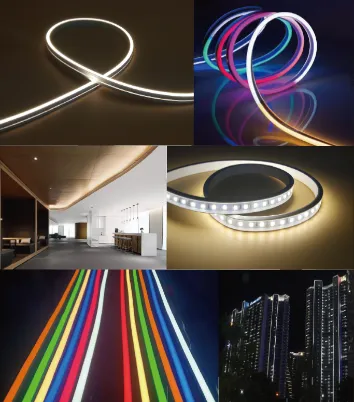
You've decided to transform your space with LED strip lights - great choice! These versatile lighting solutions have revolutionized how we illuminate our homes, businesses, and creative projects. But navigating the technical specifications can feel overwhelming. Don't worry - I'm here to help you demystify three critical factors: voltage, density, and CRI. By the end of this guide, you'll confidently select the perfect LED strip lights for your needs.
Think of LED strip lights as tiny digital paintbrushes that let you design with light. Whether you're creating a cozy bedroom atmosphere, highlighting architectural features, or establishing mood lighting in a restaurant, understanding these technical aspects ensures your lighting vision comes to life just the way you imagined.
Voltage essentially represents the electrical "pressure" driving energy to your LED strip lights. Unlike incandescent bulbs that simply burn brighter with more voltage, LEDs operate within specific voltage ranges, making your choice critically important for performance and safety.
Most residential LED strips operate at either 12V or 24V. Imagine voltage like water pressure in pipes - higher pressure (24V) can travel farther without losing strength. This fundamental difference creates practical implications:
Practical Tip: For installations requiring more than 16 feet (5 meters) of continuous lighting, 24V systems maintain brightness much better than 12V options over longer runs.
| Feature | 12V Systems | 24V Systems |
|---|---|---|
| Maximum Run Length | 10-16 ft (3-5m) | 20-32 ft (6-10m) |
| Voltage drop | Noticeable after 10ft | Minimal until 20ft+ |
| Power Supply Size | Smaller, less expensive | Larger, more powerful |
| Safety | Very safe for DIY | Safe, but needs proper wiring |
Remember that moment when you installed holiday lights and noticed they dimmed toward the end of the strand? That's voltage drop in action! With 24V systems, you get substantially more flexibility in installation length before this effect becomes noticeable. I once advised a café owner who wanted continuous lighting around a 25-foot bar - 24V strips saved her from having multiple power connection points and maintained perfect brightness throughout.
Low voltage systems bring peace of mind for residential applications, especially in kitchens and bathrooms where moisture might be present. The human body typically doesn't feel currents below 50V, making these systems inherently safer than line voltage options.
LED density refers to how many individual LEDs populate each foot or meter of your strip. Think of it as pixel density on your phone screen - higher density creates smoother visuals with less noticeable individual points of light.
Density choices typically range from 30 LEDs/meter to 240 LEDs/meter. Common densities include:
Practical Tip: For backlighting TVs or monitors, higher densities (120+) eliminate distracting hotspots. For general under-cabinet lighting, 60 LEDs/m often provides the perfect balance of brightness and value.
Real Scenario: When my client David wanted kitchen lighting that "disappeared" into the architecture until needed, we used 120 LEDs/m strips inside aluminum channels with frosted covers. The transformation was magical - no visible individual LEDs, just a beautiful continuous glow above his countertops.
Higher density doesn't always mean higher brightness - a common misconception! Brightness is determined by both LED count and the power rating per LED. Two factors work together:
I compare this to rainfall - whether you get many small raindrops or fewer large ones, both determine how wet the ground becomes. Similarly, check the lumens per meter specification regardless of LED count.
Color Rendering Index (CRI) measures how accurately a light source reveals colors compared to natural sunlight. It's the difference between making your decor sing or turning your vibrant artwork into a muddy disappointment.
Traditional LEDs often suffered from poor CRI ratings (around 70-80), causing colors to appear washed out or unnatural. This is especially noticeable in:
Practical Tip: For spaces where color accuracy matters, never accept less than 90 CRI. Professional photography studios typically require 95+ CRI for true color rendering that captures vibrant, natural tones.
| CRI Rating | Visual Effect | Recommended Use |
|---|---|---|
| <80 | Colors appear dull and unnatural | Utility spaces only |
| 80-89 | Average color representation | General residential lighting |
| 90-95 | Excellent color vibrancy | Kitchens, retail, galleries |
| 95+ | Natural daylight-equivalent | Professional applications |
Real Scenario: A boutique owner once complained that her clothing displays "never showed true colors" under LED lighting. Switching to 95 CRI strips made her vibrant fabrics appear as intended - resulting in a 20% sales increase she attributed directly to better color presentation.
Don't confuse CRI with color temperature! A common mix-up:
You can have both a warm 2700K light with excellent 95 CRI or a cool 5000K light with poor 70 CRI. They measure completely different qualities of light.
Choosing LED strip lights becomes remarkably simple when you consider your specific needs:
Design Formula:
Voltage
= Determine your required run length and safety needs
Density
= Match to your application (accent vs. primary lighting)
CRI
= select based on color criticality of your space
Remember that wonderful feeling when you find the perfect lighting? It transforms spaces and moods. Professional architectural lighting solutions implement these principles daily to create breathtaking environments. The difference between ordinary and extraordinary lighting often comes down to these three factors.
Choosing LED strip lights shouldn't feel like solving complex physics problems. By understanding these three pillars - voltage, density, and CRI - you reclaim control over your lighting design. Think back to that LED-lit restaurant or store display that made you pause in appreciation. Great lighting doesn't just illuminate; it communicates, enhances, and transforms.
Your space deserves lighting that matches your vision. Whether creating a warm retreat, an energizing workspace, or a show-stopping display, the right combination of these technical elements makes all the difference. Trust your instincts - you know what feels right in your space. Now you have the knowledge to make it happen.
LED lights represent more than just energy-efficient illumination; they're digital paintbrushes for your architectural canvas. Embrace their potential, understand these critical specifications, and most importantly - create spaces that feel genuinely yours.
Recommend Products












