
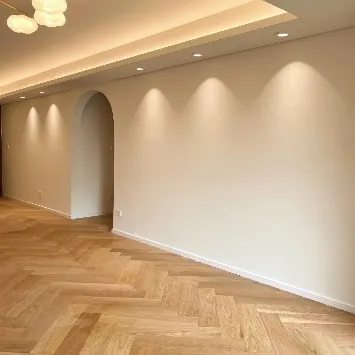
Picture this: You're renovating your home or designing a new commercial space. You stand in the lighting aisle completely overwhelmed by choices. LED or halogen? The decision impacts not just aesthetics but your electricity bill, maintenance schedule, and even the planet's health. Let's break down these two lighting giants like friends at a café – without the confusing jargon.
Light-emitting diodes (LEDs) have staged a quiet revolution since those little red indicator lights on 1960s electronics. Remember when Hewlett-Packard debuted the first LED display? Today, they're transforming how we illuminate spaces. Meanwhile, halogen spotlights – essentially upgraded incandescent bulbs – are the "vintage vinyl" of lighting: warm and familiar, but increasingly outdated in our eco-conscious world.
LEDs work like microscopic lighting ninjas. Forget glowing hot filaments. These semiconductors create light through electroluminescence – a fancy term meaning they emit photons when electrons get excited jumping between materials. Most LEDs use III-V group compounds like gallium arsenide. Change the recipe slightly (add some aluminum or indium phosphide), and voilà – you get different colors!
Halogen bulbs? They're incandescent bulbs wearing a tech upgrade. Inside their quartz capsule, halogen gas plays defense: when tungsten evaporates from the white-hot filament, the gas creates a chemical loop that redeposits it back. This trick lets them burn brighter and last longer than old-school bulbs. But at their core? They're still heating metal until it glows – like a tiny contained campfire.
| Feature | LED Spotlights | Halogen Spotlights |
|---|---|---|
| Brightness Efficiency | 80-100+ lumens per watt | 16-24 lumens per watt |
| Energy Consumption | Uses 85% less electricity | Energy hog – 50W for same light |
| Heat Emission | Stay cool to the touch | Can hit 200°C – fire hazard |
| Lifespan | 25,000-50,000 hours | 2,000-5,000 hours |
Consider track lighting in a 50sqm kitchen. With 10 halogen spots at 50W each, you're burning 500W per hour. Switch to 6W LEDs with similar brightness? That plummets to 60W. Over 5 hours nightly:
Halogens cost ≈ $220/year vs LEDs at ≈ $26/year. That latte money adds up! Plus, you'll replace halogens 10-15 times during one LED's lifespan.
LEDs win the color flexibility trophy. Want moody amber for a restaurant? Crisp daylight for a dentist office? LEDs offer adjustable color temperatures (2700K-6500K). Halogens? They're stuck at one cozy 2800K-3000K glow.
Architectural lighting solutions increasingly demand precision beam angles and dynamic scenes. For museums highlighting artwork or retail displays, LEDs deliver razor-sharp 10°-45° beams without color distortion. Halogen beams? They often have fuzzy edges with infrared-heavy light that fades fabrics over time.
Many homeowners get tripped up here. Standard halogen dimmers often cause LEDs to flicker like a haunted house. Why? LEDs need so little power they get confused. The fix? Smart "ELV" or "MLV" dimmers. Pro tip: Check compatibility specs before buying!
Halogens need breathing room. Shoved into airtight recessed cans? Their self-destructive chemical cycle fails, cutting lifespan in half. LEDs thrive in enclosed fixtures – they actually prefer cooler environments.
Let's talk carbon guilt. Manufacturing LEDs involves rare metals like gallium – but they pay back their eco-debt within months. A study comparing spotlights found:
Modern integrated wall panels and energy-efficient designs naturally pair with LEDs to reduce a building's total energy footprint.
LEDs aren't perfect for every scenario. Pros still pick halogens for:
Dimmable Warmth: High-end restaurants may layer halogens for that "candlelit" warmth LEDs struggle to replicate perfectly at 100% dim.
Extreme Cold: LEDs can dim in sub-zero freezers. Halogens laugh at Arctic temperatures.
For 95% of homes and businesses, LED spotlights are a no-brainer. Yes, you'll pay $15-$40 upfront vs $2-$8 for halogen. But between electricity savings, 5-25x longer lifespan, and cool-to-touch safety? LEDs pay for themselves repeatedly.
The exceptions? Specialized warmth requirements and extreme environments. Otherwise, halogen spotlights are becoming what incandescents were 20 years ago – nostalgic but inefficient relics. LED technology keeps evolving too. Today's chip-on-board (COB) LEDs squeeze intense light from tiny surfaces.
Choosing LED isn't just cutting costs. It's choosing precision lighting control, sustainability, and design freedom for tomorrow's architectural lighting solutions.
Recommend Products












