


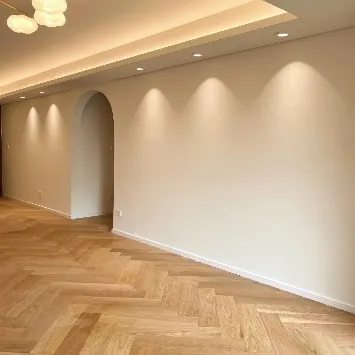
Smart lighting solutions for businesses looking to cut energy costs while enhancing illumination quality
You walk into a store with beautiful merchandise displays, but half the lighting is spilling onto empty walls and ceiling. Or you manage an office building where lights shine brightly in unoccupied areas. If you've seen these scenarios, you've witnessed energy dollars literally going to waste. The good news? LED directional lighting offers a smarter approach to illumination that can solve these problems while delivering substantial energy savings.
In the world of commercial lighting, directional LED spotlights have become game-changers. Unlike traditional flood lighting that scatters illumination everywhere, directional LED spotlights focus light precisely where it's needed. This targeted approach not only creates better visual environments but fundamentally transforms how businesses manage their energy consumption and lighting budgets.
Throughout this comprehensive guide, we'll explore how directional LED technology provides practical solutions to light waste, why businesses are rapidly adopting these solutions, and how you can implement energy-saving strategies that simultaneously enhance your space and cut operational costs. We'll translate technical information into plain language, share real-world applications, and provide actionable insights to help you transition effectively.
What Makes Directional LED Lighting Different?
Traditional lighting solutions function much like pouring water from a bucket – illumination spreads in all directions indiscriminately. Directional LED spotlights, on the other hand, work more like a garden hose with a precision nozzle, allowing you to aim exactly where the "water" (or light) should go.
This precision comes from the fundamental design of LEDs combined with specialized lenses and reflectors. The diodes themselves emit light directionally, unlike incandescent or fluorescent bulbs that radiate in all directions. Then, optical engineers design beam patterns that create controlled light distribution, minimizing spill light that doesn't serve any useful purpose.
Key Distinction: While traditional lighting might require 100 watts to adequately illuminate a product display with significant wasted light, directional LEDs could achieve better visual results with just 15-20 watts because every lumen gets directed efficiently to the target area.
The beam angle is the crucial specification that determines how focused the lighting will be. Typical directional LED spotlights offer beam angles ranging from narrow spotlights (10°-25°) for highlighting specific objects to wider flood options (26°-60°) for area illumination. Understanding these differences is key to deploying them effectively in commercial settings.
The Business Case for Directional LED Spotlights
Energy Efficiency & Cost Savings
LED spotlights convert electricity to light with remarkable efficiency. Traditional bulbs waste about 80% of energy as heat, but directional LEDs convert most energy into usable light. Studies show commercial spaces can reduce lighting energy use by 50-70% with well-planned directional LED installations. The cumulative savings often provide ROI periods under 3 years.
Reduced Maintenance & Longer Lifespan
Where incandescent bulbs last about 2,000 hours and fluorescents around 10,000 hours, quality LEDs provide 50,000 hours or more of service. In commercial environments with high ceilings or challenging access, the reduced replacement frequency means significant savings on maintenance staff time and equipment. Fewer disruptions mean more consistent lighting environments.
Precision Lighting Control
Directional LEDs allow commercial spaces to emphasize what matters – merchandise displays in retail, artwork in galleries, work surfaces in offices. By eliminating light spill into unproductive areas, businesses create more engaging environments while reducing glare and visual clutter. The focused lighting also significantly reduces light trespass into adjacent areas.
Lower Heat Output
LEDs generate minimal heat compared to traditional lighting. This translates to reduced air conditioning loads in commercial spaces – an often overlooked savings. Reduced heat output also minimizes damage to sensitive merchandise like artwork, fabrics, or certain food products. Fewer heat issues create safer working conditions and extend product lifespans.
Environmental Benefits
Beyond lower energy consumption, directional LEDs contain no mercury or hazardous materials. Businesses reducing their energy demands also contribute to lower carbon footprints. The combined energy savings across multiple facilities can have substantial positive environmental impact when multiplied across entire commercial sectors.
Optimizing Directional Lighting in Commercial Spaces
Key Design Considerations
Designing an effective directional lighting system requires thoughtful consideration of several factors:
Beam Angles: Tailor your approach to different zones within a commercial space. Narrow 15° beams work perfectly for accenting specific products or architectural details in retail. A 25°-30° beam creates effective task lighting over counters or workstations. Wider 40°-60° solutions provide pleasant ambient illumination without the scattered waste of traditional downlights.
Brightness Selection: Don't equate higher wattage with better lighting. Instead, measure actual illumination needs in lumens. Well-designed directional lighting can achieve ideal task illumination with significantly lower lumen output than traditional lighting systems because the light gets directed efficiently.
Color Temperature Strategy: Use warmer tones (2700K-3500K) in hospitality settings and lounge areas to create welcoming environments. In spaces where alertness matters – like workshops, laboratories, or retail point-of-sale areas – cooler temperatures (4000K-5000K) improve visual acuity and concentration. Manufacturers now offer tunable options that shift throughout the day.
User Behavior & System Optimization
Research in lighting efficiency reveals fascinating strategies that enhance directional LED benefits:
Subtle Dimming: People rarely notice 20% reductions in lighting levels when implemented gradually. Buildings can integrate slow, automatic dimming that captures savings without impacting occupant experience. Studies show this works particularly well in spaces with daylight integration.
Control Interface Design: People use lighting controls more effectively when they're intuitive and conveniently located. Co-locating shading and lighting controls increases the likelihood users will optimize both systems together. Simple interfaces with clear feedback also reduce frustration while promoting energy-efficient use.
Smart Defaults: Setting initial lighting levels slightly below typical preferences tends to reduce consumption while maintaining satisfaction. Likewise, automated scene settings that turn lights off and open shades at appropriate times can capture substantial savings with minimal user intervention.
Daylight Integration Strategies
Directional LEDs achieve their maximum potential when working with natural light:
By dimming or switching off LEDs near windows as daylight increases, businesses can achieve up to 60% additional savings beyond the basic LED benefits. Advanced systems measure the combined lighting effect at work surfaces rather than simply reading ambient light levels. Positioning directional LEDs perpendicular to windows helps maintain consistent illumination throughout the day.
Directional LED Spotlights in Action: Sector-Specific Applications
| Commercial Sector | Application | Benefits Realized |
|---|---|---|
| Retail Environments | Product display highlighting, checkout counter task lighting, changing room illumination | Enhanced merchandise presentation (sales lift 5-15%), reduced ceiling spill light, flexible accentuation of seasonal displays |
| Hospitality & Dining | Table accent lighting, bar counter task lighting, architectural feature highlighting | Atmosphere control by zone, elimination of glare on polished surfaces, reduced kitchen heat loads |
| Office Spaces | Task lighting over desks, whiteboard illumination, meeting room focus lighting | Reduced monitor glare, localized illumination without overhead glare, ability to adapt lighting to different meeting needs |
| Museums & Galleries | Artwork accentuation, exhibit case lighting, directional pathway illumination | Reduced UV/IR damage to artifacts, elimination of spill light into adjacent exhibits, precise framing of displayed pieces |
| Warehouses & Industrial | Aisle lighting, work station task lighting, loading dock illumination | High bay lighting with less glare, energy savings from task-focused illumination, improved safety through reduced shadows |
Real-World Example: A national retail chain implemented directional LEDs across 350 locations. By focusing light only on merchandise and customer areas while eliminating lighting in storage and above displays, they reduced each store's lighting electricity consumption by 64%. Maintenance calls decreased by over 80% due to the longer lifespan. Combined savings totaled approximately $7,800 annually per location.
Transitioning to Directional LED Lighting: Practical Steps
Implementing an effective directional lighting solution requires a strategic approach:
1. Comprehensive Lighting Audit: Document existing fixtures, locations, hours of operation, and usage patterns. Identify areas where lights are currently wasted on walls, ceilings, or unoccupied spaces. Measure illumination levels at critical tasks using a light meter.
2. Needs-Based Design: Create distinct lighting zones with specific goals – task illumination, accent lighting, ambient comfort. select beam angles appropriate for each application rather than defaulting to a single solution.
3. System Integration Planning: Combine directional LEDs with occupancy sensors in low-traffic areas. Incorporate daylight harvesting systems that automatically adjust output in perimeter zones. select controls appropriate for your operational patterns and staff capabilities.
4. User-Centric Adjustments: When setting initial lighting levels, use slightly lower than average "anchor points" to encourage energy-saving preferences. Position controls where users will notice them when needed.
5. Staff Engagement: Include employees in the transition. Brief them on system capabilities and how to optimize settings. Display simple graphics showing proper adjustment techniques and benefits.
Implementation Tip: Always allow adequate time for adjustment. After switching to directional LEDs, occupants typically need 1-2 weeks to adapt to the quality of focused lighting, after which satisfaction increases significantly over traditional illumination.
The Future of Commercial Lighting
Directional LED technology continues to advance rapidly, bringing even greater efficiency and functionality:
Adaptive Beam Control: Emerging systems can automatically adjust beam angles based on sensor input, narrowing focus on occupied workstations during work hours while widening for cleaning crews.
Integrated Sensing Systems: Next-generation LED fixtures incorporate occupancy, daylight, and temperature sensors that communicate through wireless protocols like DALI-2. This data-driven approach enables unprecedented lighting control based on actual needs rather than schedules.
Tunable Spectrum Integration: Combining directional control with color-tunable LEDs enables environments to optimize lighting throughout the day, enhancing occupant well-being and productivity while maintaining energy efficiency.
Energy Network Participation: Future systems may dynamically reduce lighting load during peak grid demand periods using techniques like slow 20% dimming that goes unnoticed by occupants. This provides utility cost savings while contributing to grid stability.
Transforming Waste into Value
Directional LED spotlights represent one of the most practical and impactful energy-saving technologies available to commercial operations today. By transforming inefficient "pour lighting" into precisely targeted illumination, businesses address both their financial priorities and environmental responsibilities.
The advantages extend beyond immediate utility bill savings. Reduced maintenance creates operational stability. Higher quality illumination improves brand presentation and customer experience. And the environmental contribution strengthens corporate responsibility profiles.
Successful implementation requires understanding both the technical parameters of directional lighting and the human behaviors around lighting use. The most effective solutions blend sophisticated technology with intuitive control systems that guide users toward energy-smart choices without demanding technical expertise.
As your business considers lighting upgrades, remember that directional LED solutions provide quantifiable advantages that grow more compelling as technology advances. Moving from inefficient ambient










