
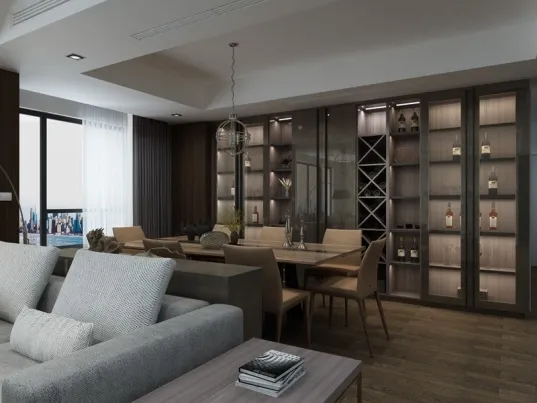
Let's be real—when you've spent years curating a wine collection that's more than just a hobby, it stops being about "storing bottles" and starts being about honoring the stories in each one. A $500 Bordeaux from your anniversary, a rare Barolo found on that trip to Italy, a case of natural wine from your favorite small producer—these aren't just drinks. They're memories, investments, and maybe even heirlooms. And when your shelf of 20 bottles turns into 50, then 80, then 120? A regular countertop wine rack won't cut it. That's where the large wine cabinet comes in: not just a piece of furniture, but a silent guardian for your most prized possessions. If you're here, you're probably past the "beginner's luck" phase of collecting—you need something that grows with you, protects what matters, and maybe even looks good doing it. Let's dive into what makes a great large wine cabinet for seasoned collectors like you.
First off, let's clarify: 50–150+ bottles isn't just a random range. It's the sweet spot where "serious hobbyist" becomes "seasoned collector." But here's the thing—capacity isn't just about how many bottles fit. It's about how they fit. A cabinet that "technically" holds 100 bottles might cram them so tight you can't pull one out without knocking over three others. Or maybe it only fits standard Bordeaux bottles, leaving your wider Burgundy or Champagne bottles out in the cold. So when we talk "size," we're really talking about usable capacity . Think about it: Do you collect mostly standard 750ml bottles, or do you have magnums, jeroboams, or even half-bottles mixed in? A good supplier will factor that in—more on that later.
Another angle: growth. If you're at 60 bottles now, but your goal is to hit 120 in the next five years, buying a 60-bottle cabinet is a mistake. You'll end up upgrading sooner than you think, and that's a waste of money (and space). Seasoned collectors plan for the future—so when shopping, aim for a cabinet that holds 20–30% more than your current collection. Trust me, you'll fill it faster than you expect.
Walk into any home goods store, and you'll see "large" wine cabinets—most hold 50–80 bottles, with basic wooden shelves and maybe a glass door. They're affordable, easy to find, and fine if you're just starting out. But for seasoned collectors? They often miss the mark. Here's why: your collection is unique, so your storage should be too. That's where custom options come in, and working with a specialized customized furnitures supplier can change the game.
| Type | Best For | Pros | Cons |
|---|---|---|---|
| Off-the-Shelf (50–80 bottles) | Collectors with standard bottle sizes, tight budget | Affordable, immediate delivery, easy setup | Limited shelf adjustability, generic design, may not fit odd-shaped bottles |
| Semi-Custom (80–120 bottles) | Collectors wanting some flexibility | Adjustable shelves, choice of finishes, better insulation | Still limited by manufacturer's templates, may not fit unique spaces |
| Fully Custom (100–150+ bottles) | Seasoned collectors with unique needs (odd bottle sizes, specific room layouts) | Tailored to your space/bottles, premium materials, integrated tech | Higher cost, longer lead time (6–12 weeks typical) |
I recently worked with a collector in Chicago who had a problem: his 120-bottle collection included 30% magnums and a few jeroboams (those giant 3L bottles). Off-the-shelf cabinets either couldn't fit the big bottles or wasted space with tiny shelves. He went custom, and the result? A cabinet that snuggled into his living room's awkward corner, with deep shelves for magnums on the bottom, standard slots up top, and even a hidden drawer for his wine tools. Total capacity: 145 bottles, with room to spare. That's the power of working with a wine cabinet supplier that gets collector needs.
Okay, let's get technical—but don't worry, I'll keep it simple. A wine cabinet's job is threefold: protect from heat, light, and vibration. For large cabinets (50+ bottles), these factors matter even more because there's more at stake. Let's break down the must-haves:
Here's the golden rule: wine hates temperature swings. A cheap cabinet might cool to 55°F, but if it bounces between 50–60°F every time the compressor kicks on, your wine will age prematurely. Look for dual-zone systems if you collect both reds and whites— Reds need 60–65°F, whites 45–50°F, and sparkling even colder. Premium cabinets use inverter compressors (quieter, more stable) and insulation thick enough to keep temps steady even if your home AC dies for a few hours.
Ever had a cork dry out and crumble? That's low humidity. Aim for 60–70% humidity in your cabinet. Avoid "dry" regions like Arizona or Nevada? You'll need a built-in humidifier. Live in a damp area (hello, Florida)? Look for dehumidifying features. Cheap cabinets skip this—big mistake. A good customized furnitures solution will include humidity control tailored to your climate.
You want to see your collection, but UV light is wine's worst enemy. LED lights are a must—they emit almost no UV and generate little heat. Some cabinets even have motion sensors, so the lights only turn on when you open the door (saves energy, too). Pro tip: Avoid glass doors unless they're UV-protected. Trust me, that "display" look isn't worth ruining a $2000 bottle.
Vibration disrupts sediment in older wines, making them taste muddy. Large cabinets are heavier, so they vibrate less than small ones, but it still matters. Look for compressors mounted on rubber gaskets (reduces noise and shake) and avoid placing the cabinet near appliances like washing machines or fridges—those vibrations travel through floors.
Your cabinet's material affects everything from insulation to style to how well it ages. Let's compare the top options:
Pros: Classic look, natural insulation, ages beautifully (develops a rich patina). Oak is antimicrobial, which helps fight mold in humid environments.
Cons: Heavy (needs strong flooring), expensive, can warp if humidity is too high/low. Avoid untreated wood—it may off-gas chemicals into your wine.
Best For: Traditional homes, collectors who value aesthetics as much as function.
Pros: Durable, moisture-resistant, easy to clean (great for humid climates). Modern, sleek look that fits minimalist homes.
Cons: Conducts heat/cold—needs extra insulation. Can dent if hit hard. Fingerprints show easily (invest in a fingerprint-resistant finish).
Best For: Contemporary kitchens, wine rooms, or collectors who prioritize low maintenance.
Pros: Affordable, stable (resists warping), comes in wood-look finishes. Lightweight, so easier to install.
Cons: Not as durable as solid wood—veneers can peel if exposed to moisture. Less "premium" feel.
Best For: Budget-conscious collectors who want a wood look without the price tag.
Okay, you've decided on size, type, and materials—now let's talk about the fun part: making it yours. Here are my top tips for designing a cabinet that works for you :
You don't want to rearrange 100 bottles to get to the one you want tonight. Design with "zones": everyday drinkers at eye level, special occasion bottles on lower/higher shelves, and a "quick grab" section near the door. Sliding shelves are a game-changer here—no more reaching to the back!
Details matter. Add a lock if you have kids or curious guests. Install a digital hygrometer/thermometer (visible from the outside, so you don't have to open the door to check). Include a drainage system in case of spills (yes, it happens). And if you're handy, add USB ports for charging your wine opener or phone while you're picking a bottle.
A large wine cabinet shouldn't stick out like a sore thumb. If you have a traditional home, a wood cabinet with glass doors and brass hardware fits. Modern? Go for stainless steel with frosted glass. And if you're doing a whole-house reno, consider whole-house customization —integrate the wine cabinet into your kitchen island, living room built-ins, or even a dedicated wine wall. It'll look intentional, not afterthought.
Okay, let's talk about the elephant in the room: finding someone to build or sell you this cabinet. A quick Google search for "large wine cabinet" will give you 100 options, but here's how to separate the pros from the amateurs:
Ask for collector references. A good wine cabinet supplier will have clients who are serious collectors—ask to see their projects. If they only show photos of 20-bottle cabinets, move on.
Check their tech specs. Any supplier worth their salt can tell you the insulation R-value, compressor type, and humidity control range off the top of their head. If they say, "It's just cold," run.
Warranty matters. Look for at least a 3-year warranty on parts (compressor, thermostat) and 5+ years on the cabinet itself. Wine storage is an investment—your supplier should stand behind it.
I once worked with a supplier who specialized in custom wine cellars, and when I mentioned my client's magnum collection, they didn't bat an eye. They sent over CAD drawings with adjustable dividers, suggested a deeper shelf depth, and even recommended a specific wood (teak) that resists warping in high humidity. That's the level of service you want.
At the end of the day, a large wine cabinet isn't just a piece of furniture. It's a commitment—to your collection, to the stories in each bottle, and to the future memories you'll add. Seasoned collectors know: you don't just buy wine—you curate a legacy. And that legacy deserves protection, care, and a little bit of style.
So take your time. Measure twice, ask questions, and don't settle for "good enough." Whether you go semi-custom or fully bespoke, make sure your cabinet grows with you, protects what matters, and maybe even makes you smile every time you open the door. After all, collecting wine is about joy—and your storage should be too.
Recommend Products












