
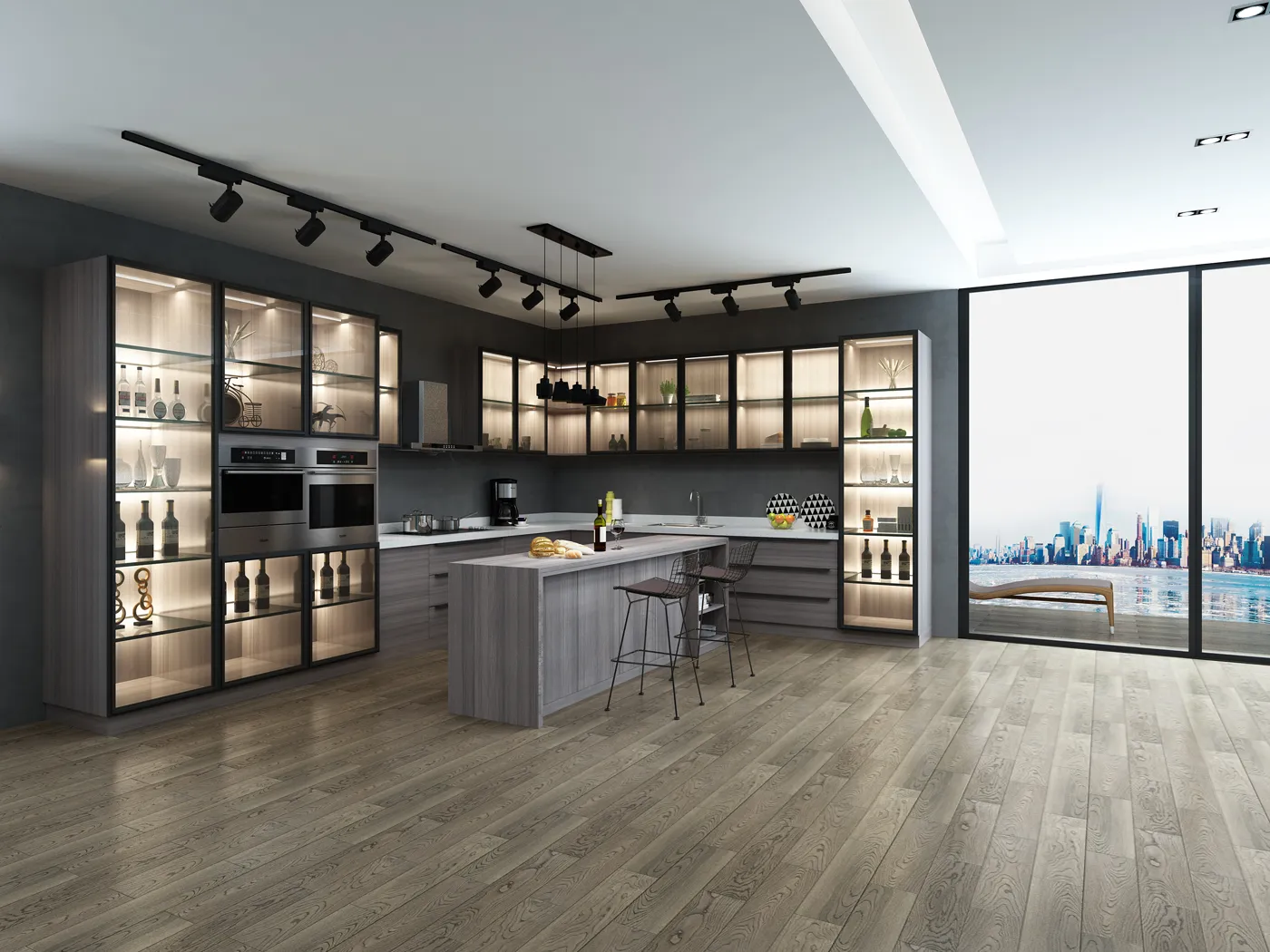
Your ultimate guide to finding the perfect kitchen cabinets that balance beauty and functionality
Clean lines and simplicity define Shaker cabinets, making them a perennial favorite. Their recessed panel design creates depth without clutter, working with everything from farmhouse chic to modern minimalism. The beauty of Shaker style is how it adapts to any hardware choice - whether you pick sleek bar pulls or vintage knobs, it maintains its timeless appeal.
Minimalism meets modern in slab cabinets, featuring smooth, uninterrupted surfaces that celebrate negative space. These clean-lined cabinets are the ultimate canvas for bold paint colors and unique finishes. Without frames or panels to interrupt the surface, they create a seamless look that makes small kitchens appear larger. The simplicity means every scratch shows though, so they work best in adult-only households.
If cottage charm makes your heart sing, beadboard cabinets bring that cozy character to your kitchen. The vertical grooves add texture and rhythm that catch both light and attention. While traditionally white, painting them in moody blues or soft greens can update this classic. Just remember those grooves can trap cooking splatters, so they require regular wiping down.
Traditional yet adaptable, raised-panel cabinets add dimension with their contoured centers that seem to float above the frame. This style feels substantial without being stuffy, creating shadows that change with the light. For contemporary flair, use dark espresso finishes with metallic hardware. The contours do require careful cleaning to prevent buildup in the recessed areas.
Inset cabinets represent bespoke craftsmanship where doors nestle perfectly within the frame. The precision-fit creates crisp sightlines and an heirloom-quality appearance. Each gap between door and frame measures exactly 1/8 inch - enough to create definition without revealing the cabinet interior. This tailored look comes with matching demands for climate control since wood expansion can throw off the delicate alignment.
For a sleek, nearly frameless appearance, full overlay cabinets offer maximum storage visual continuity. The doors and drawers cover nearly all the cabinet framework, creating uninterrupted planes that contemporary design favors. When choosing hardware, opt for integrated pulls that maintain the clean lines. This style works magic in galley kitchens by making tight spaces appear uncluttered.
Striking a balance between traditional and transitional, partial overlay cabinets reveal slim bands of the cabinet frame around each door. This intentional reveal adds rhythm to the kitchen composition while making alignment more forgiving than full overlay designs. The exposed framework provides natural places for handles or knobs that become decorative elements themselves.
The workhorses of kitchen storage, base cabinets support your counters while housing sinks, appliances, and all your daily-use items. Smart base cabinets incorporate specialized storage like deep drawers for pots, pull-out shelves for heavy mixers, and built-in recycling centers. Standard depth ranges from 24-30 inches, providing substantial storage without impeding movement.
Hovering above countertops, wall cabinets keep everyday dishes and glassware within arm's reach. Standard depths run 12-15 inches, maximizing storage without making you feel boxed in. Clever solutions include glass fronts that display pretty dishware, interior lighting to eliminate shadowy corners, and adjustable shelves that adapt to your collection. Remember, they should hang about 18 inches above counters for comfortable use.
Reaching from floor to ceiling, tall cabinets are the pantry heroes that swallow bulk goods, cleaning supplies, and small appliances. Their height makes them ideal for brooms, mops, or even creating appliance garages that conceal countertop clutter. Consider roll-out shelves and custom dividers to transform deep cabinets from black holes into organized systems.
Make every inch count with specialty cabinets that solve unique challenges. Corner lazy susans, appliance garages that hide stand mixers, spice drawer inserts, tilt-out sink trays, and integrated wine racks turn unused spaces into functional assets. These custom solutions require precise measurements but pay back in daily convenience.
Nothing matches the warmth and character of solid wood kitchen cabinets. Species like maple, cherry, oak, and hickory offer distinctive grains that add organic beauty. Wood naturally expands and contracts with humidity changes though, requiring stable home environments. For lasting beauty, consider wood species appropriate for your climate.
When selecting wood for cabinets, plywood kitchen cabinets are often considered superior to particleboard alternatives due to their durability and resistance to warping.
Modern laminates transform budget-friendly cabinets into design statements with endless colors, patterns, and even realistic wood or stone looks. The durable plastic surface resists stains, heat, and scratches far better than painted finishes. Sealed edges prevent moisture intrusion, making laminate ideal for humid kitchens. New texturing techniques create realistic wood grain and stone surfaces that fool even close observers.
Thermofoil creates seamless, molded surfaces by heat-fusing vinyl over MDF. This technique produces curved and detailed profiles impossible with wood, while maintaining flawless color consistency. Though susceptible to heat damage near ranges and ovens, thermofoil withstands everyday cleaning with non-abrasive products. The main drawback? Delamination if the adhesive fails in high-heat or high-moisture areas.
Replacing upper cabinets with open shelves creates an airy feel that's perfect for displaying your prettiest cookbooks and ceramics. This approach makes kitchen items accessible while forcing organization. Open shelves work beautifully when mixed with some closed storage - keep your mismatched mugs hidden while showing off heirloom dishes. Expect more frequent dusting and arrangement maintenance though.
Glass-front cabinets offer the best of both worlds - protection from dust with visibility of your curated collections. Choices range from clear glass that shows everything to fluted, frosted, or reeded glass that obscures contents while diffusing light. Lighting interiors transforms them into glowing displays at night. Plan for attractive arrangements and keep contents tidy.
Assess your lifestyle: Do you cook daily? Entertain frequently? Rarely home? Your patterns determine durability needs and storage requirements. Active kitchens benefit from tough finishes and organized interiors.
Consider your space: Measure precisely, noting unusual angles, soffits, and obstacles. Tall ceilings can accommodate dramatic cabinets, while compact kitchens need smart space solutions.
Establish priorities: Rank must-haves against nice-to-haves. Focus investment on features you'll use daily, and save on less-visible areas.
Mix and match: Combine cabinet types strategically - glass uppers above solid lowers, or open shelving flanking a range hood. Contrasting colors or materials create compelling focal points.
Professional guidance: Consult designers who can translate your vision into functional reality. Their material knowledge and problem-solving experience prevents costly mistakes.
Your kitchen cabinets form both the visual backbone and practical foundation of your cooking space. Invest in quality construction that harmonizes with your cooking style and design aesthetic. Thoughtfully selected cabinets deliver beauty and functionality for decades - transforming everyday cooking into something truly special.
Recommend Products












