
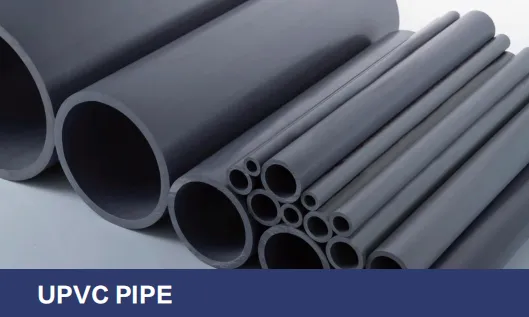
Choosing the right building materials supplier is like laying the foundation of a project—get it wrong, and the entire structure could face costly delays, safety risks, or performance issues down the line. This is especially true when it comes to UPVC pipes, a staple in modern plumbing and drainage systems for both residential and commercial buildings. Whether you're a contractor working on a high-rise apartment complex, a developer planning a shopping mall, or a homeowner renovating your property, the upvc pipe supplier you partner with will directly impact the durability, efficiency, and long-term success of your project. But with so many suppliers claiming to offer the "best" products, how do you separate the reliable from the risky? The answer lies in asking the right questions. In this guide, we'll walk you through the critical inquiries that will help you evaluate potential suppliers, ensuring you select one that aligns with your project's unique needs—whether you're a residential building materials supplier sourcing for homes or a commercial building materials supplier managing large-scale developments.
UPVC pipes are not created equal. Their performance, safety, and compatibility with local regulations hinge on adherence to strict industry standards. A reputable supplier should be able to rattle off certifications without hesitation—because compliance isn't just a box to check; it's a promise that their products won't fail when put to the test. For example, in Saudi Arabia, where construction projects must meet stringent local and international benchmarks, a saudi arabia building materials supplier worth their salt will ensure their UPVC pipes conform to standards like ASTM D1785 (for pressure piping), DIN 8062 (for water supply), or SASO (Saudi Arabian Standards Organization) requirements. Why does this matter? Non-compliant pipes may crack under pressure, leach harmful chemicals into water, or fail to withstand temperature fluctuations—issues that could lead to leaks, mold growth, or even structural damage in residential homes or commercial spaces.
Don't stop at general standards, though. Dig deeper: "Do your pipes meet specific requirements for the applications I'm targeting?" If you're installing drainage systems, for instance, you might need pipes that comply with ASTM D2665 (for PVC DWV—Drain, Waste, Vent—systems), which is where a pvc dwv pipe supplier would focus. For high-pressure water supply lines in commercial buildings, ask about pressure ratings (PN10, PN16, etc.) and whether the pipes are tested for burst pressure. A supplier that can tailor their compliance answers to your project's use case (residential plumbing, commercial irrigation, industrial drainage) is one that understands your needs beyond just selling a product.
"Our pipes are high-quality!" It's a phrase you'll hear from almost every supplier, but talk is cheap. What you need is tangible evidence. UPVC pipes are exposed to a lot—constant water flow, chemicals (like cleaning agents in commercial settings), temperature changes, and even soil corrosion in underground installations. A reliable supplier should be able to back up their claims with third-party test reports, material safety data sheets (MSDS), and warranty documents that outline exactly what's covered (and for how long).
Start by asking about the raw materials: "What grade of PVC resin do you use, and where is it sourced?" Virgin resin, for example, is more durable than recycled material, which may contain impurities that weaken the pipe over time. Then, request data on key performance metrics: impact resistance (how well the pipe handles accidental bumps during installation), chemical resistance (will it stand up to acidic or alkaline water?), and lifespan (do they guarantee 50 years of service under normal conditions, as many industry leaders do?). For commercial projects like hospitals or schools, where safety is non-negotiable, you might even ask if their pipes meet additional criteria, such as low smoke emission or fire resistance—though UPVC is inherently flame-retardant, certifications here add an extra layer of assurance.
Warranties are another red flag (or green flag). A supplier that offers a 10-year warranty with clear terms (e.g., "covers manufacturing defects but not improper installation") shows confidence in their product. Be wary of vague promises like "lifetime warranty" with no fine print—these often come with loopholes that leave you holding the bag when issues arise.
A one-size-fits-all approach rarely works in construction. A small residential bathroom renovation might require 20mm UPVC pipes for sink drains, while a commercial shopping mall could need 200mm pipes for main drainage lines. The best upvc pipe supplier will act as a one-stop shop, offering a comprehensive range of sizes, thicknesses, and configurations to avoid the hassle of coordinating with multiple vendors. This is especially critical for residential building materials supplier s, who often juggle projects of varying scales—from single-family homes to townhouse complexes.
Ask for a detailed product catalog: "Do you stock pipes from 16mm to 630mm in diameter? What pressure ratings are available?" Beyond size, consider specialized options: flexible UPVC pipes for tight bends, double-walled pipes for extra strength in underground applications, or colored pipes for easy system identification (e.g., blue for potable water, gray for wastewater). A supplier that can also provide compatible fittings—elbows, tees, couplings, valves—saves you time and reduces the risk of mismatched components, which can lead to leaks or pressure loss.
Don't forget to inquire about customization: "Can you produce pipes with specific dimensions or features for unique project requirements?" For example, a luxury residential development might need custom-length pipes to minimize joints (and potential leak points), while a factory might require pipes with reinforced walls to handle high-pressure industrial fluids. A supplier with in-house manufacturing capabilities or strong partnerships with production facilities is more likely to accommodate such requests.
Imagine this: You're six weeks into a commercial project, and your commercial building materials supplier informs you they can't deliver the 5,000 meters of UPVC pipe you ordered—their factory is backed up, and the new lead time is three months. Suddenly, your timeline is derailed, labor costs skyrocket, and clients start asking tough questions. To avoid this nightmare, production capacity and lead times are non-negotiable topics when vetting suppliers.
Start with the basics: "What is your monthly production capacity for UPVC pipes?" A supplier with a small facility might struggle to meet large orders, while one with multiple production lines and automated machinery can scale output to match demand. Follow up with: "What's your typical lead time for orders of [X] size?" For residential projects, a two-week lead time might suffice, but commercial projects often require bulk orders that could take 4–6 weeks. Be sure to ask about peak seasons—construction booms in spring or fall can stretch lead times, so a supplier with buffer stock or the ability to prioritize urgent orders is a valuable asset.
It's also wise to discuss contingency plans: "What happens if there's a delay in production or shipping?" A reliable supplier will have backup plans, such as partnerships with alternative manufacturers or warehousing facilities in strategic locations, to ensure your project stays on track. Transparency here is key—suppliers who dance around these questions may be hiding capacity issues that could sink your timeline.
The relationship with your upvc pipe supplier shouldn't end when the last truckload is delivered. Construction projects are complex, and even the best products can underperform if installed incorrectly. That's why post-sales support—technical guidance, training, and after-sales service—is just as important as the pipes themselves.
Start with technical support: "Do you provide installation guides, or can your team visit the site to advise on best practices?" UPVC pipe installation requires precision—too much torque on fittings can crack the material, while improper slope in drainage lines can cause clogs. A supplier that offers on-site training for your crew or access to engineers via phone/email is investing in your project's success. For commercial projects with tight deadlines, this support can save hours of troubleshooting and rework.
After-sales service is equally critical. Ask: "What's your process for handling defective products or warranty claims?" A supplier that makes you jump through hoops (e.g., "fill out 10 forms and wait 30 days") when a pipe fails is not a partner—they're a liability. Look for suppliers with dedicated customer service teams that respond promptly (within 24–48 hours) and offer practical solutions, such as replacing defective parts or sending technicians to assess issues on-site.
Finally, consider long-term partnership potential: "Do you offer loyalty programs, bulk discounts, or preferential pricing for repeat clients?" As a residential building materials supplier or commercial contractor, you'll likely need UPVC pipes for future projects—building a relationship with a supplier that rewards loyalty can lead to cost savings and smoother collaborations down the line.
To better understand how UPVC pipes fit into your project, it's helpful to compare them with other common pipe types. The table below highlights key differences between UPVC, PVC DWV, and PPR pipes—three options you might encounter when working with a pvc dwv pipe supplier or ppr pipe and fitting supplier .
Table 1: Comparison of UPVC, PVC DWV, and PPR Pipes
| Feature | UPVC Pipes | PVC DWV Pipes | PPR Pipes |
|---|---|---|---|
| Primary Use | Potable water supply, irrigation, chemical transport | Drainage, waste, and vent systems (residential/commercial) | Hot and cold water plumbing (residential/commercial) |
| Pressure Rating | High (PN10–PN25) | Low (not designed for pressure) | Moderate to high (PN10–PN20) |
| Temperature Resistance | Up to 60°C (short-term); ideal for cold water | Up to 40°C (drainage of non-hot liquids) | Up to 95°C (suitable for hot water systems) |
| Chemical Resistance | Excellent (resists acids, alkalis, salts) | Good (resists household chemicals) | Good (resists most household chemicals) |
| Common Standards | ASTM D1785, DIN 8062 | ASTM D2665, DIN 19537 | ISO 15874, DIN 8077/8078 |
| Typical Supplier Focus | upvc pipe supplier | pvc dwv pipe supplier | ppr pipe and fitting supplier |
Talk is cheap, but results speak volumes. A supplier's track record is the most reliable indicator of their ability to deliver. Ask: "Can you share examples of projects similar to mine that you've supplied UPVC pipes for?" For a residential building materials supplier , this might mean hearing about a 500-unit apartment complex where their pipes have performed flawlessly for 10 years. For commercial clients, it could be a hospital or shopping mall that required high-pressure UPVC systems for irrigation or fire sprinklers.
Don't hesitate to request references—contacting past clients can reveal insights no sales pitch will. Ask those clients: "Did the supplier meet deadlines? Were there any issues with product quality? How responsive was their customer service when problems arose?" A supplier with nothing to hide will happily connect you with satisfied customers. Conversely, excuses like "We can't share client details due to confidentiality" (without offering anonymized case studies) should raise suspicions.
Case studies also help you gauge the supplier's experience with your specific project type. For example, if you're building a coastal residential development, a supplier who has supplied UPVC pipes for beachfront properties will understand the challenges of saltwater corrosion and can recommend appropriate solutions. Similarly, a supplier with experience in commercial high-rises will know how to navigate the logistics of delivering large pipes to tight urban job sites.
Choosing a upvc pipe supplier isn't just about buying a product—it's about forging a partnership that impacts every stage of your project, from planning to completion and beyond. By asking the right questions—about standards, quality, range, capacity, support, and track record—you'll move beyond the sales hype and uncover the supplier who truly aligns with your goals, whether you're a residential building materials supplier focused on homeowner satisfaction or a commercial building materials supplier managing multi-million-dollar developments. Remember, the best suppliers don't just sell pipes; they sell peace of mind. And in construction, where every decision counts, that peace of mind is priceless.
Recommend Products












