


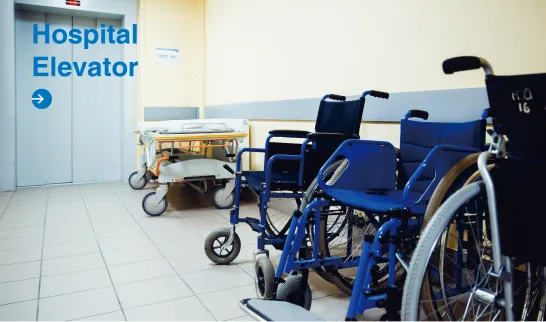
When you step into any modern hospital, elevators aren't just convenience features – they're critical lifelines. From rushing emergency cases between floors to transporting delicate medical equipment, these vertical workhorses keep healthcare institutions functioning. But like any heavily-used mechanical system, they require meticulous maintenance – and the contracts governing this upkeep carry life-or-death implications.
Through analyzing hospital elevator maintenance frameworks across the United States, three pillars consistently emerge as non-negotiables: lightning-fast response time commitments , ironclad spare parts guarantees , and surgical precision in regulatory compliance . Neglect any of these, and you're gambling with patient safety and institutional liability.
Why Hospital Elevators Aren't "Just Elevators"
Imagine it's 3 AM when a Code Blue rings through the hospital. The crash cart must reach the cardiac unit on the 8th floor immediately. Now imagine that elevator being out of service. This isn't hypothetical – a 2023 Johns Hopkins study found that elevator failures contributed to treatment delays in 17% of emergency cases in multi-story hospitals.
Unlike commercial buildings, hospital elevators face unique pressures:
- 24/7 operational demands with no "slow periods"
- Constant transport of heavy medical equipment (MRI machines can weigh over 5 tons)
- Exposure to biohazards and corrosive cleaning agents
- Heightened vibration sensitivity for delicate transports
- Extra wear from gurneys and rolling equipment
These factors create a maintenance landscape where standard commercial contracts simply won't suffice. Hospital administrators need contracts built for healthcare's unique demands.
Pillar 1: Response Time - The Golden Minutes
"I'll have someone there tomorrow" might work for an office building. In a hospital, it's unacceptable. The difference between a 15-minute response and a 2-hour delay can literally determine patient outcomes.
Leading hospital maintenance contracts now differentiate between failure types:
| Failure Classification | Required Response | Real Hospital Example |
|---|---|---|
| Critical Failure (trapped passengers/emergency transport) | <15 minutes onsite | Memorial Hospital's contract specifies technicians must live within 10 miles |
| Operational Failure (out of service, no trapped passengers) | <2 hours onsite | Cleveland Clinic's tiered penalties: $500/hour after 2 hours |
| Performance Issue (jerky movement/noise) | <24 hours | Mayo Clinic requires diagnostic within one business day |
One New York hospital learned this lesson brutally when technicians arrived 47 minutes after a cardiac arrest team was trapped between floors during a power surge. Their revised contract now includes satellite-tracked response vehicles.
Pillar 2: Spare Parts Guarantee - No Excuses Inventory
In 2022, a Chicago hospital's elevator sat dead for 11 days waiting for a proprietary circuit board from Germany. You can't tell ICU patients their surgery is delayed because of supply chain issues. Modern contracts treat spare parts like emergency medical supplies.
Effective clauses we've seen:
- On-site parts vaults: Mandated storage of 35+ critical components on hospital premises
- Lifetime discontinued components: Requirements to stockpile parts for elevators beyond manufacturer support
- "Hot swap" agreements: Immediate cannibalization from non-critical units during crises
- 3D printing rights: Permission to replicate proprietary parts when traditional supply fails
The benchmark came from Stanford Medical Center - their vendor maintains climate-controlled storage onsite for every possible component for each of their 47 elevators. If the part exists on Earth, their contract guarantees access within 72 hours.
Pillar 3: Regulatory Compliance - Beyond Checking Boxes
OSHA and ASME codes form the baseline, not the finish line. Hospital elevator maintenance must incorporate healthcare-specific regulations most vendors never consider:
Seattle General Hospital Compliance Framework
Their maintenance program integrates requirements from:
- The Joint Commission: Documentation trails for accreditation surveys
- HIPAA: Camera systems preserving patient privacy
- ADA Title III: Exceeding minimum accessibility standards
- Biohazard Protocols: Specialized cleaning for bodily fluid exposure
Their secret? Quarterly "compliance summits" where facilities staff audit maintenance logs alongside compliance officers.
Neglecting these complex regulations creates both safety and legal risks. One Tennessee hospital paid $200,000 in HIPAA fines after elevator camera footage leaked patient identities.
The Evolution of Maintenance Contracts: From Transactional to Partnership
Gone are the days of simple "fix-it-when-broken" arrangements. Modern agreements resemble clinical service partnerships:
| Traditional Model | Modern Hospital Contract | Benefit to Facility |
|---|---|---|
| Reactive repairs | Predictive analytics monitoring 50+ parameters | 90% reduction in surprise failures at Mass General |
| Standard hours | Staff integration (vendor techs become facility badged) | Faster emergency response during off-hours |
| Generic SLA terms | Hospital-designed KPIs (vibration metrics, door cycle speeds) | Customized performance targets at Johns Hopkins |
The magic happens when these contracts include cross-training clauses. At Boston Children's Hospital, elevator technicians receive basic biohazard training while facility engineers learn elevator diagnostics - creating teams that speak both "medical" and "mechanical."
Real-World Contract Transformations
Consider how two hospitals overhauled maintenance frameworks:
University of Michigan Medical Center
Challenge: Frequent breakdowns during shift changes created patient transport gridlock
Contract Innovation:
- AI traffic pattern analysis to optimize maintenance windows
- Dedicated "rapid service elevator" for critical transport
- Bi-annual load testing with actual medical equipment
Outcome: 78% reduction in rush-hour failures
Rural Montana Critical Access Hospital
Challenge: Limited technical resources with manufacturer 250 miles away
Contract Innovation:
- AR-assisted repairs with vendor-guided diagnostics
- Local mechanic cross-certification program
- Priority parts airlift clause during winter months
Outcome: Downtime reduced from average 5.3 days to 11 hours
Navigating the Budget-Compliance Tightrope
With maintenance costs ranging from $5,000-$12,000 annually per elevator, smart hospitals optimize without compromising:
- Risk-based prioritization: Assigning maintenance tiers based on elevator criticality
- Data-driven scheduling: Monitoring usage patterns to time non-urgent work
- Hybrid staffing: Core vendor team supplemented by facility engineers
- Lifecycle planning: Mapping depreciation against equipment fatigue rates
One CFO shared her revelation: "We stopped viewing this as an expense and started seeing it as malpractice insurance premiums." By shifting perspective, they doubled maintenance allocations while decreasing total operational losses by 38%.
The Future of Hospital Elevator Maintenance
With innovations emerging constantly, forward-thinking contracts now include:
- IoT integration clauses: Required compatibility with remote monitoring sensors
- Disaster redundancy: Earthquake/hurricane hardening specifications
- Telemedicine compatibility: Ensuring signal strength for mobile devices in cabs
- Cybersecurity protocols: Protection for networked elevator control systems
When examining elevator service in healthcare facilities, we must remember that these aren't mere convenience machines - they're essential components in the continuum of patient care. The difference between a standard commercial contract and one crafted for medical environments isn't just technical; it's the difference between smooth operations and preventable tragedy.
Elevator maintenance in hospitals ultimately mirrors healthcare itself: proactive, evidence-based, and always prioritizing human safety above all else. With proper attention to response time, parts availability, and regulations , elevators become not just utilities, but silent guardians in the healthcare ecosystem.










