
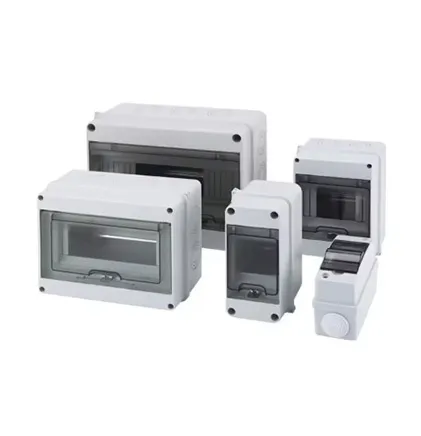
Think about your photovoltaic installation as a living organism. The DC cables are its arteries, transporting raw energy from solar panels. Grid-connected distribution boxes? They're the nervous system, coordinating safe power transfer to your home or the utility grid. Choosing these components isn't just technical box-ticking - it determines whether your system thrives for decades or becomes a maintenance headache.
Those unassuming wires running from your panels carry tremendous responsibility. Three factors make or break their performance:
Quality cables have built-in battle gear: UV inhibitors that prevent sun degradation like sunscreen for wires, and halogen-free materials that won't emit toxic smoke if overheated. Ever seen cracked, brittle wiring after a few summers? That's what happens when UV protection fails.
It's not just about matching numbers. Oversized cables waste money; undersized ones overheat dangerously. We calculate using the formula: Minimum Ampacity = (Isc × 1.56) where Isc is short-circuit current. Then we derate for temperature - because a 95°F roof can push cable temps 30°F higher than ambient air.
Here’s where physics meets wallet impact: Allow more than 2% voltage drop between panels and inverter, and you're literally throwing away sunlight. The math isn't scary: Vd = (2 × L × I × R) / 1000. Keep L (length) short, choose low R (resistance) conductors like copper, and watch your energy harvest soar.
These unassuming metal enclosures are where safety meets connectivity. A high-caliber box prevents catastrophic failures in three critical ways:
Ever seen charred equipment after a lightning storm? Proper isolation compartments prevent DC arc flashes from jumping between circuits. The best boxes separate live parts with reinforced barriers and maintain creepage distances exceeding 8mm per kilovolt.
Lightning strikes aren't just dramatic - they're wallet destroyers. Your boxes need Type 1+2 SPDs that shunt 100kA impulses away from sensitive electronics. This isn't optional add-on; it's insurance against thousand-dollar replacement bills.
Those terminal blocks aren't just metal connectors. Top-tier versions use silver-plated copper for corrosion resistance, spring-loaded cages that maintain tension over decades, and torque markings so installers don't under-tighten (arc risk) or over-tighten (cracked terminals).
Steer clear of pinch points near mounting hardware. Use sweeping bends (never sharper than 6× cable diameter) and secure with UV-resistant ties every 18 inches. Trapped cables = damaged insulation = fire risk.
Position within panel "shadow zones" to prevent enclosures baking in direct sun all day. Thermal stress cracks housings and degrades electronics. Bonus: central locations minimize cable runs and voltage drops.
That green wire is your lifeline. Use irreversibly crimped lugs with dual corrosion seals. Connect to dedicated ground rods (not repurposed building steel) and maintain >6" separation from live conductors. Grounding done half-heartedly is worse than none at all.
Meeting NEC 690 or IEC 62446 is the baseline, not the finish line. Here's how leaders build beyond compliance:
Future-Proof Testing: Don't just check "present/not present". Run impedance tests on ground paths (should read <0.5Ω to rod), infrared scans under full load to find hot spots, and insulation resistance tests at 1000V DC. Document everything with timestamps - it's your warranty armor.
Maintenance Traps: Build accessibility into the design. Distribution boxes need clear working space (at least 30" wide × 36" deep), swing-down panels, and cable management that doesn't force electricians into yoga poses.
Component Synergy: Your cables and distribution box should be engineered to play nicely together. Mismatched connectors? Vibration damage. Disimilar metals? Galvanic corrosion. A seamless system outperforms the sum of its parts.
We must consider the broader implications of our material choices in renewable energy systems. Specifying solar panels with integrated environmental protections reduces long-term degradation.
When you nail these selections, something remarkable happens: Your system becomes boringly reliable. No midnight fault alarms. No angry utility disconnect notices. Just consistent kilowatt-hours flowing year after year. That reliability comes from respecting the physics in your DC cables and honoring the protective role of distribution boxes. Make these choices thoughtfully, and your system won't just produce energy - it'll radiate confidence.
Recommend Products












