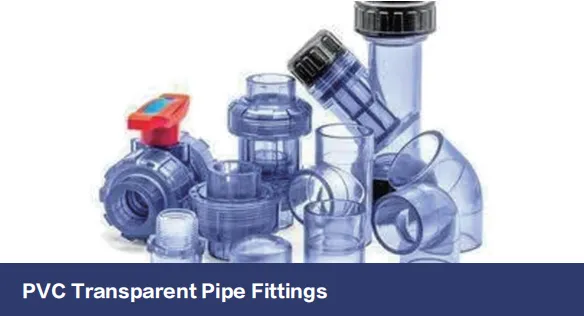
When it comes to industrial piping systems that operate under extreme conditions, your choice of materials can't be casual. Especially when dealing with temperatures that make ordinary fittings warp, crack, or become brittle – it's downright dangerous to settle for inadequate solutions. That's where specialized PVC transparent
pipe fittings come into play. Unlike standard PVC fittings that tap out at around 140°F (60°C), these high-performance variants laugh in the face of temperatures ranging from frigid lows of -40°F (-40°C) all the way up to scalding 230°F (110°C). But before you commit to any purchase, let's get real about what separates truly reliable fittings from those that'll end up as expensive regrets.
1. Understanding What Makes PVC Fitting Special
The magic isn't just in what PVC is – it's what clever chemical engineering makes it become. Regular PVC starts acting up above 140°F. But chemically modified versions gain molecular stability through carefully crafted additives like chlorinated polyvinyl chloride (CPVC), extra stabilizers for UV resistance, and temperature-defying plasticizers that give transparent PVC its see-through quality without sacrificing toughness.
The beauty of transparent fittings isn't just visual. They let you spot flow patterns, catch debris buildup, identify blockages early, and monitor fluid clarity without messy disassembly. Think about spotting early signs of corrosion in chemical lines or sediment accumulation in water systems before they turn critical.
The Transparent Advantage Isn't Just About Looks
Anyone can mold plastic until it's clear enough to see through. But can that plastic maintain clarity while boiling at 212°F? Will it stay transparent when you hit subzero temperatures? True transparent fittings use formulations that prevent discoloration, clouding, and loss of clarity under thermal stress. They'll look exactly the same after thousands of thermal cycles as they did fresh off the shelf – no yellowing, no haziness, no surprises.
Chemical Compatibility Matters More Than You Think
That aggressive solvent pumping at 180°F? It might shred a standard PVC fitting in months. But specialized PVC formulations designed for transparency won't cloud, swell, or dissolve when exposed to acids, caustics, hydrocarbons, or solvents. Always check the chemical resistance chart specifically for the transparent grade – it'll behave differently than opaque cousins.
Pressure Rating Isn't Just a Number
Manufacturers love advertising their peak pressure ratings. But that rating plummets as heat climbs. A fitting rated for 250 PSI at 73°F might collapse at half that pressure when running above 180°F. Trustworthy suppliers provide detailed pressure-temperature charts that show exactly how pressure tolerance decreases as temperature climbs. Don't trust any vendor who can't give you this data upfront.
Installation Temperature ≠ Operating Temperature
Here's a brutal reality check: Temperature shocks kill fittings. A system assembled at room temperature then blasted with boiling oil? That's asking for cracks at joints. Quality fittings handle thermal cycling better through smart material engineering. Look for fittings designed with thermal expansion rates that won't stress joints during temperature fluctuations.
2. Critical Parameters for Extreme Temperature Performance
|
Parameter
|
Ideal Specification
|
Performance Risks if Compromised
|
Real-World Verification Methods
|
|
Maximum Continuous Use Temperature
|
Min. 200°F (93°C)
|
Deformation, joint failure, system collapse
|
Ask for ASTM D648 heat deflection test results
|
|
Low-Temperature Impact Resistance
|
No cracks at -20°F (-29°C)
|
Brittle fractures during cold startups
|
Require ASTM D256 Izod impact tests at temperature
|
|
Thermal Expansion Coefficient
|
≤ 5.5 × 10
-5
in/in/°F
|
Pipe stress, joint separation at connections
|
Confirm ASTM E831 TMA test data
|
|
Hydrostatic Design Basis (HDB)
|
≥ 2500 psi at 73°F
|
Catastrophic burst failure under pressure
|
Verify with ISO 9080 extrapolation method
|
Notice I didn't just list "temperature tolerance" as a single spec. True reliability comes from verifying performance through standardized lab testing against measurable criteria. If your supplier can't provide ASTM test certification documents for their transparent PVC fittings, assume it's cheap junk that'll fail when conditions get extreme.
The Hidden Role of UV Stabilizers in Transparent Fittings
Sunlight absolutely destroys unprotected PVC through photo-degradation. While all fittings need UV protection, transparent versions require special stabilizer packages to prevent UV-triggered yellowing and clouding. Titanium dioxide? Forget it – it makes PVC opaque. Look instead for proprietary organic stabilizers like Tinuvin™ or Cyasorb® formulations specifically engineered for clarity preservation. They cost more, but they're the difference between fittings that stay optical-grade clear for decades versus those that look fogged within a year.
Food Processing Nightmare Avoided
A dairy plant learned the hard way that cheap transparent PVC fittings couldn't handle the combination of hot CIP cleaning cycles and lactic acid. Failed fittings caused contamination, resulting in $250K product loss and a voluntary recall. After switching to chemically resistant transparent PVC fittings rated for 195°F (90°C) and acid exposure, they've operated incident-free for five years. The extra $0.87 per fitting? The best insurance policy they ever bought.
3. Connection Types - Where Rubber Meets Road
Material quality matters, but a weak joint connection undermines everything. In high-temperature applications, you can't afford unreliable joints. Solvent welding remains gold standard for permanent connections – but not every supplier uses compatible cement formulas for their transparent PVC. Threaded fittings offer removability but introduce stress points vulnerable to cracking under thermal cycling. Flanged connections handle thermal expansion better but take more real estate. Each method suits different applications:
-
Solvent Welding
: Best for permanent lines with diameters under 12". Requires specific cement formulations matching the PVC compound to form true molecular bonds. Don't use generic cement on specialty PVC.
-
Threaded Connections
: Ideal for temporary testing setups or where occasional disassembly occurs. Must use tapered pipe threads (NPT) with teflon tape – never pipe dope that may degrade PVC.
-
Flanged Systems
: Necessary for pipes over 8" diameter or applications experiencing frequent thermal cycles. Allows bolt retensioning as materials expand/contract.
For installations where both extreme temperatures and rapid installation matter,
cpvc pipes fittings
offer superior weldability while maintaining clarity. Their superior heat tolerance makes them particularly popular in industrial applications where standard PVC would fail.
4. Certification and Compliance - Your Legal Shield
Never gamble with unverified materials in pressure systems. Reputable manufacturers test their transparent PVC fittings to internationally recognized standards:
-
ASTM D1784
: Classifies rigid PVC compounds – look for Cell Class 12454-B or better
-
NSF/ANSI 61
: Mandatory for any fittings contacting drinking water
-
ISO 9001
: Confirms consistent manufacturing quality control
-
EN 1452-2
: European standard for buried or above-ground pressure piping
Why do certifications matter beyond paperwork? Material that fails NSF leaches plasticizers and stabilizers into your fluid stream. Substandard PVC compounds with poor heat tolerance will creep under pressure, gradually distorting until joints blow apart. Without certifications, you're blindly trusting marketing claims with your safety, your process, and your liability exposure.
5. Cost vs. Lifetime Value Calculation
High-performance transparent PVC fittings cost 30-50% more than standard PVC. But that premium buys exponential value when calculated across the installation lifecycle:
-
Zero Downtime Costs
: Unlike metal fittings needing frequent retorquing after thermal cycles, properly specified PVC fittings maintain seal integrity
-
Inspection Savings
: Visual monitoring saves hours of diagnostic disassembly – one pharmaceutical plant cut inspection costs 82%
-
Corrosion Elimination
: PVC is immune to rust, electrolysis, and chemical corrosion eating away metal alternatives
-
Insulating Properties
: Non-conductive material prevents galvanic corrosion and protects against thermal burns
So don't just compare part cost per piece. Calculate total cost of ownership considering maintenance savings, reduced downtime, and extended service life. Premium PVC transparent fittings consistently deliver the lowest lifetime cost per operating hour – especially when processing expensive fluids where leaks equal disaster.
6. Practical Tips for Successful Implementation
Design for Thermal Movement
PVC expands more than metals (3-5 times more than steel!). For long straight runs over 20 ft, incorporate expansion loops or offsets. Anchor pipe properly to prevent buckling at fitting joints during heating.
UV Exposure Management
Even with UV stabilizers, protect outdoor transparent systems with opaque wraps or paint to maximize clarity lifespan. Direct sunlight will eventually degrade any plastic.
Avoid Mechanical Stressors
Never force-align misaligned pipes when installing fittings – it creates constant stress points vulnerable to thermal cracking. Use proper pipe supports every 4 ft max.
Remember – transparent PVC is still plastic, not invincible armor. Avoid direct flame impingement, protect from physical impact damage, and don't expose to strong oxidizing agents like concentrated hydrogen peroxide. Know the limits and design accordingly.
Conclusion: See Clearly, Choose Wisely
Selecting high-performance transparent PVC fittings isn't about grabbing whatever looks shiny. It demands attention to material science fundamentals, validated performance metrics, and intelligent system design. When you invest the effort to specify fittings that match both your fluid chemistry and thermal realities, you gain more than just piping – you gain transparent confidence in your system integrity.
The clarity advantage offers something even more valuable than cost savings: peace of mind. Seeing what's happening inside pipes lets you anticipate problems instead of reacting to disasters. With proper specification, transparent PVC withstands temperatures that melt ordinary plastics while maintaining visibility into your process. That's not just convenient – it's powerful protection against the unpredictable.