
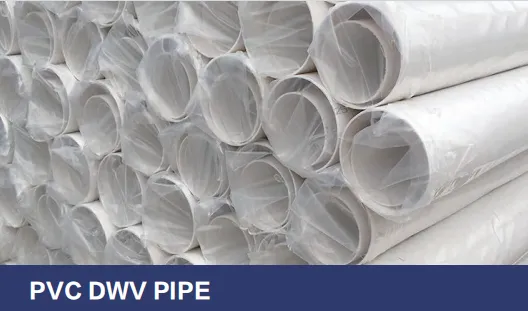
In the world of construction and plumbing, some components work tirelessly behind the scenes, often unnoticed—until they fail. The Drain-Waste-Vent (DWV) system is one such unsung hero. Tasked with carrying wastewater away from sinks, showers, and toilets while venting harmful gases to the outdoors, a reliable DWV system is the backbone of a healthy, functional building. When it comes to DWV systems, PVC (Polyvinyl Chloride) has emerged as the material of choice for its durability, affordability, and versatility. But not all PVC DWV pipe systems are created equal. Whether you're a contractor, builder, or homeowner, selecting the right system requires knowing what to look for. Let's explore the key features that set high-quality PVC DWV pipe systems apart, and why partnering with the right pvc dwv pipe supplier matters just as much as the pipes themselves.
At the heart of any high-quality PVC DWV pipe lies its raw material. Not all PVC is the same, and cutting corners here can compromise the entire system. Top-tier pipes start with virgin PVC resin—pure, unadulterated plastic that's free from recycled scrap or contaminants. Why does this matter? Recycled materials often contain impurities like dirt, additives from previous uses, or inconsistent polymer chains, which weaken the pipe's structural integrity. Over time, these impurities can lead to cracks, brittleness, or failure under stress.
A reputable pvc dwv pipe supplier understands this and invests in sourcing the highest-grade virgin PVC resin. They'll also add carefully measured stabilizers, impact modifiers, and UV inhibitors to enhance performance. For example, calcium-zinc stabilizers are preferred over lead-based alternatives for their safety and environmental benefits, especially in residential and commercial buildings where health standards are strict. When evaluating a supplier, ask about their material sourcing practices—transparency here is a good sign of quality.
Industry standards aren't just suggestions—they're guardrails designed to ensure safety, reliability, and consistency. For PVC DWV pipes, two of the most critical standards are ASTM D2665 (from the American Society for Testing and Materials) and DIN 11852 (a European standard). These standards dictate everything from wall thickness and dimensional accuracy to impact resistance and temperature tolerance.
For instance, ASTM D2665 specifies minimum wall thickness for each pipe size to ensure structural strength. A 1-1/2-inch pipe, for example, must have a wall thickness of at least 1.9mm. DIN 11852, on the other hand, emphasizes tight tolerances for outer diameter to ensure compatibility with fittings across brands. High-quality pvc dwv pipe solutions will always come with certification that they meet or exceed these standards, along with test reports verifying impact strength, chemical resistance, and thermal stability. Skipping this step is a red flag—non-compliant pipes are prone to leaks, clogs, and premature failure.
| Parameter | ASTM D2665 Requirement | DIN 11852 Requirement |
|---|---|---|
| Minimum Wall Thickness (1-1/2" Pipe) | 1.9mm | 2.0mm |
| Impact Resistance | Notch test at 0°C; no failure after 5 impacts | Charpy impact test at -5°C; ≥ 4 kJ/m² |
| Maximum Operating Temperature | 60°C (continuous) | 60°C (continuous) |
| Outer Diameter Tolerance | ±0.3mm | ±0.2mm |
| Material Purity | Virgin PVC resin (minimum 95%) | Virgin PVC resin (minimum 97%) |
Imagine installing a pipe where the diameter is slightly off, or the wall thickness varies along its length. Even small inconsistencies can lead to misaligned joints, weak spots, or leaks—all of which spell trouble for a DWV system. High-quality PVC DWV pipes are manufactured with meticulous attention to dimensional accuracy, ensuring every inch meets the exact specifications outlined in industry standards.
Modern extrusion processes, paired with advanced calibration tools, allow top manufacturers to maintain tight tolerances for outer diameter, inner diameter, and wall thickness. For example, a 4-inch DWV pipe should measure exactly 4.0 inches in outer diameter, with a wall thickness that's consistent from end to end. This precision ensures a snug fit with fittings, reducing the risk of leaks at the joints. When inspecting pipes, check for uniformity—any warping, bulging, or uneven thickness is a sign of poor manufacturing. A trusted pvc dwv pipe supplier will have strict quality control measures in place, including automated checks at every stage of production, to guarantee this precision.
A pipe is only as strong as its weakest joint. In DWV systems, where pipes connect to elbows, tees, and traps, joint integrity is critical. High-quality PVC DWV systems are designed with joints that create a permanent, leak-proof seal, even under the stress of constant wastewater flow and temperature fluctuations.
The most common jointing method for PVC DWV pipes is solvent cement welding. When done correctly, this process fuses the pipe and fitting into a single, homogeneous piece, eliminating gaps where leaks could occur. But for this to work, the pipes and fittings must be designed to complement each other. Look for pipes with smooth, burr-free ends and fittings with precise socket depths—this ensures maximum contact area for the solvent cement to bond. Some pvc dwv pipe solutions even include specially formulated solvent cements that cure quickly and create a chemical bond stronger than the pipe itself. Avoid systems with loose-fitting or poorly molded joints; these are accidents waiting to happen.
Wastewater is a harsh environment. It's loaded with detergents, soaps, food scraps, and even harsh chemicals from cleaning products. Over time, these substances can corrode weaker materials, leading to pipe degradation and leaks. PVC, by nature, is resistant to most chemicals, but not all PVC DWV pipes offer the same level of protection.
High-quality pipes are formulated to withstand a wide range of pH levels (from acidic to alkaline) and common household chemicals, including bleach, ammonia, and detergents. They're also resistant to corrosion from hydrogen sulfide, a toxic gas produced by decomposing organic matter in wastewater. This resistance ensures the pipes maintain their structural integrity for decades, even in high-use commercial settings like restaurants or apartment buildings. When evaluating a pvc dwv pipe supplier, ask about chemical resistance testing—reputable suppliers will have data proving their pipes can handle the toughest wastewater conditions.
Construction sites are rough places. Pipes are moved, stacked, and sometimes dropped. Once installed, they may face pressure from soil, concrete, or other building materials. High-quality PVC DWV pipes are built to withstand these challenges, thanks to their impact and crush resistance.
Impact resistance is especially important in cold climates, where PVC can become brittle if not properly formulated. Top pipes include impact modifiers that keep the material flexible even at low temperatures (down to -10°C or lower). Crush resistance, meanwhile, ensures the pipe can handle the weight of backfill or other loads without collapsing. Look for pipes that meet or exceed ASTM D2444 standards for impact testing, which involves striking the pipe with a weighted pendulum at freezing temperatures—no cracks or breaks mean it's up to the task. A reliable pvc dwv pipe supplier will prioritize these properties, knowing that durability on the job site translates to fewer replacements and happier clients.
Wastewater flows best when it encounters minimal resistance. A rough inner pipe surface can slow flow, leading to clogs, backups, and even odors as debris gets trapped. High-quality PVC DWV pipes feature a smooth, glossy inner surface that promotes fast, efficient flow—think of it as a "slippery slope" for wastewater.
The smoothness of a pipe's inner surface is measured by its Hazen-Williams coefficient, a value that indicates flow efficiency. PVC pipes typically have a Hazen-Williams coefficient of 150, higher than materials like cast iron (130) or concrete (100), making them ideal for DWV systems. This smoothness not only reduces clogs but also lowers the risk of buildup, which can corrode pipes over time. When comparing pipes, run your finger along the inside—any roughness or irregularities are a sign of poor extrusion quality. A top pvc dwv pipe solutions provider will use advanced extrusion dies and cooling processes to ensure a consistently smooth inner surface.
While DWV systems aren't designed to carry flammable materials, they can still play a role in fire safety. In the event of a fire, pipes that melt or burn can allow flames and smoke to spread through walls and ceilings. High-quality PVC DWV pipes are formulated with flame-retardant additives that slow combustion and reduce the spread of fire.
Look for pipes that meet Class B or better fire ratings, as defined by ASTM E84 (the standard for surface burning characteristics). These pipes have a flame spread index of 20 or less and a smoke developed index of 450 or less, making them suitable for use in most residential and commercial buildings. For specialized settings like hospitals or schools, where fire safety is critical, some suppliers even offer pipes with enhanced fire resistance—though it's important to note that DWV systems are not the primary fire barrier, so always consult local building codes. A responsible pvc dwv pipe supplier will clearly label their products with fire ratings and provide test reports upon request.
Time is money in construction, and a PVC DWV system that's easy to install can significantly cut labor costs. High-quality pipes are lightweight (far lighter than cast iron or copper), making them easy to transport, lift, and maneuver in tight spaces like crawl spaces or wall cavities. They're also easy to cut with standard tools (hacksaws, pipe cutters) and require minimal preparation before jointing—no soldering, threading, or special equipment needed.
Additionally, top pvc dwv pipe solutions include a full range of compatible fittings (elbows, tees, couplings, vents) designed to work seamlessly with the pipes. This compatibility ensures quick, error-free installation, even for less experienced plumbers. Some suppliers even offer pre-insulated pipes or color-coded systems to simplify identification, further speeding up the process. When choosing a supplier, ask about their fitting range and installation support—clear guides, tutorials, or on-call experts can make a big difference in getting the job done right the first time.
Finally, no discussion of high-quality PVC DWV pipe systems is complete without mentioning the supplier. A great pvc dwv pipe supplier is more than just a seller—they're a partner who adds value at every stage of the project. From helping you select the right products for your needs to ensuring on-time delivery and providing post-purchase support, the right supplier can turn a complex plumbing project into a smooth, stress-free experience.
What should you look for in a supplier? Start with experience—suppliers with years in the industry have a deeper understanding of DWV systems and the challenges they face. Look for certifications (like ISO 9001 for quality management) and a commitment to customer service. A good supplier will also offer flexible pvc dwv pipe solutions, including custom lengths, colors, or fittings for unique projects. And when issues arise (because even the best products can have hiccups), they'll stand behind their products with warranties and responsive support.
A high-quality PVC DWV pipe system is an investment in the future of a building. By prioritizing features like premium materials, strict compliance, dimensional accuracy, and strong joints, you're not just avoiding leaks and clogs—you're ensuring the health, safety, and comfort of everyone who uses the space. And by partnering with a reputable pvc dwv pipe supplier, you're adding expertise and reliability to the mix.
So, the next time you're in the market for PVC DWV pipes, remember: it's the details that matter. Inspect the materials, check the certifications, and ask questions about manufacturing processes. Your building (and your budget) will thank you for it. After all, when it comes to DWV systems, quality isn't just a feature—it's a necessity.
Recommend Products












