
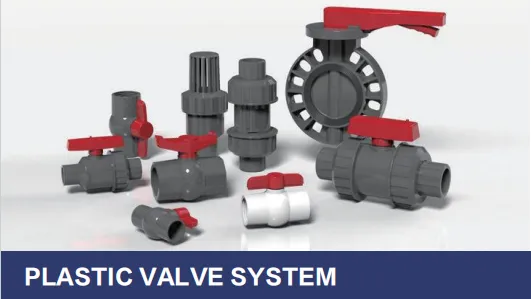
When you're in the market for a plastic valve system supplier, the choices can feel overwhelming. From residential building projects to large-scale commercial developments in Saudi Arabia, the quality of plastic valves and related components—like PVC DWV pipes, PPR fittings, or UPVC pipes—directly impacts the safety, durability, and compliance of your project. But how do you separate a reliable supplier from one that might cut corners? The answer lies in certifications. These aren't just pieces of paper; they're a supplier's promise that their products meet rigorous industry standards, undergo strict testing, and align with global best practices. In this guide, we'll walk you through the critical certifications to verify when choosing a plastic valve system supplier, why they matter, and how they protect your project from costly mistakes.
Plastic valves are the unsung heroes of plumbing, HVAC, and industrial systems. They control the flow of water, chemicals, and gases in everything from residential bathrooms to hospital piping networks. A faulty valve can lead to leaks, water damage, mold growth, or even regulatory fines. For example, if you're working with a PVC DWV pipe supplier for a high-rise apartment complex, non-compliant pipes could fail under pressure, causing sewage backups and expensive repairs. Certifications act as a safeguard, ensuring that the products you're buying have been independently tested for performance, safety, and reliability. They also demonstrate that the supplier follows consistent quality control processes—essential for projects where consistency across batches is critical.
For international projects, certifications also bridge regulatory gaps. A plastic valve system supplier operating in Saudi Arabia, for instance, must meet local standards while potentially exporting to markets like the EU or the U.S. Certifications like CE marking or ASTM compliance ensure that products can cross borders without rework. In short, certifications reduce risk: they give you confidence that the supplier's products will perform as advertised, comply with local building codes, and stand the test of time.
ISO 9001:2015 is the gold standard for quality management systems (QMS). Issued by the International Organization for Standardization (ISO), this certification applies to any industry, including plastic valve manufacturing. It focuses on processes, not just products, ensuring that the supplier has a structured approach to quality control, customer satisfaction, and continuous improvement.
For a plastic valve system supplier, ISO 9001:2015 certification means they've documented every step of their production process—from raw material sourcing to final product testing. Auditors check that suppliers have clear procedures for identifying defects, training employees, and addressing customer complaints. For example, if a batch of PPR pipe and fitting products fails a pressure test, an ISO 9001-certified supplier will have a protocol to investigate the issue, fix the root cause, and prevent it from recurring. Non-certified suppliers, by contrast, may lack these processes, leading to inconsistent product quality.
When evaluating a supplier, ask to see their ISO 9001 certificate and check the scope. The certificate should explicitly mention "plastic valve manufacturing" or "production of thermoplastic piping components" to ensure it's relevant to your needs. Avoid suppliers with generic certificates that don't specify their product line—this could be a red flag that their QMS isn't tailored to plastic valves.
ASTM International (formerly the American Society for Testing and Materials) develops voluntary consensus standards for materials, products, systems, and services. For plastic valves and pipes, ASTM standards are critical because they define specifications for material composition, dimensional accuracy, pressure resistance, and durability.
For example, if you're sourcing PVC DWV pipes (used for drain, waste, and vent systems), the relevant standard is ASTM D2665. This standard specifies requirements for PVC pipe dimensions, impact strength, and chemical resistance. A reputable PVC DWV pipe supplier will provide test reports showing their products meet ASTM D2665's criteria—like a minimum tensile strength of 4,000 psi or a deflection temperature under load (DTUL) of 140°F. Similarly, PPR pipe and fitting suppliers should adhere to ASTM F2389, which covers the performance of polypropylene random copolymer (PPR) piping systems for hot and cold water.
Why does this matter? ASTM standards are widely adopted by building codes, including the International Plumbing Code (IPC) and the Uniform Plumbing Code (UPC). If your project uses non-ASTM compliant pipes, you may fail inspections, delaying occupancy permits. For instance, a commercial building in Riyadh using PPR pipes that don't meet ASTM F2389 could be forced to replace the entire system, costing time and money. Always ask the supplier for a copy of their ASTM test report, and verify that it's issued by an accredited third-party laboratory (look for accreditations like ISO/IEC 17025).
If your project involves potable (drinking) water systems—such as residential plumbing or hospital water lines—NSF/ANSI 61 certification is non-negotiable. Developed by NSF International and the American National Standards Institute (ANSI), this standard ensures that plastic valves, pipes, and fittings do not leach harmful contaminants like lead, phthalates, or heavy metals into drinking water.
The testing process for NSF/ANSI 61 is rigorous. Products are submerged in water under elevated temperatures and pressures to simulate long-term use. The water is then analyzed for contaminants, and only products with levels below strict thresholds earn certification. For example, a UPVC pipe supplier providing pipes for a school's drinking water system must have NSF/ANSI 61 certification to guarantee that the plastic doesn't release chemicals that could harm children.
Be wary of suppliers who claim their products are "safe for drinking water" without NSF/ANSI 61 documentation. Even if a product meets ASTM standards for strength, it may still fail NSF/ANSI 61's chemical leaching tests. For instance, some low-quality plastic valves use cheap additives that can break down over time, releasing toxins. Always check that the certification covers the specific product type (e.g., "PVC ball valves" or "PPR elbows") and that it's current (certifications typically expire after 5 years and require renewal).
For projects in the European union (EU) or those exporting to EU countries, CE marking is mandatory for plastic valves and piping components. The CE mark indicates that a product meets the essential requirements of EU directives, such as the Pressure Equipment Directive (PED) or the Construction Products Regulation (CPR).
For plastic valves used in pressure systems (like those handling water at high temperatures), the PED (2014/68/EU) applies. This directive sets safety standards for equipment with a maximum allowable pressure (MAP) greater than 0.5 bar. A plastic valve system supplier must conduct a conformity assessment—either through self-declaration (for low-risk products) or third-party testing (for high-risk products)—to affix the CE mark. The CPR (Regulation (EU) No 305/2011) is relevant for construction products like UPVC pipes, requiring suppliers to provide a Declaration of Performance (DoP) that includes information on durability, fire resistance, and mechanical strength.
CE marking isn't just for EU-based suppliers. If you're a contractor in Saudi Arabia sourcing plastic valves for a project in Germany, the supplier must provide CE-certified products. Without the CE mark, customs may seize the shipment, and the project could face legal penalties. When verifying CE marking, check that the supplier's DoP includes the product's harmonized standard (e.g., EN 1452-2 for plastic pipes for water supply) and that the certification body is accredited by an EU Notified Body (look for a 4-digit Notified Body number on the certificate).
While not strictly a product performance certification, ISO 14001 is increasingly important for projects focused on sustainability. This standard outlines requirements for an environmental management system (EMS), ensuring that the supplier minimizes its environmental impact—from reducing waste in production to using recycled materials.
For example, a plastic valve system supplier with ISO 14001 certification may use energy-efficient manufacturing processes, recycle scrap plastic, or design products that are easier to recycle at the end of their life. This is especially valuable for green building projects aiming for LEED certification or Saudi Arabia's own sustainability initiatives, like the Saudi Green Initiative. While ISO 14001 doesn't directly affect product quality, it signals that the supplier is committed to ethical practices—an important consideration for brands prioritizing corporate social responsibility (CSR).
| Certification | Purpose | Relevance to Plastic Valves/Pipes | What to Ask the Supplier |
|---|---|---|---|
| ISO 9001:2015 | Ensures consistent quality management and process control | Guarantees reliable, repeatable product quality across batches | "Can you provide a copy of your ISO 9001 certificate, and does it cover plastic valve manufacturing?" |
| ASTM D2665 (PVC DWV) | Specifies performance for drain, waste, and vent PVC pipes | Ensures pipes resist corrosion, impact, and temperature fluctuations | "Do your PVC DWV pipes meet ASTM D2665? Can I see the test report for tensile strength and impact resistance?" |
| NSF/ANSI 61 | Verifies safety for drinking water contact | Prevents leaching of harmful chemicals into potable water | "Is your product NSF/ANSI 61 certified? What contaminants were tested, and what were the results?" |
| CE Marking (PED/CPR) | Compliance with EU safety and construction standards | Required for exporting to the EU; ensures adherence to strict safety rules | "Do you have CE marking for these valves? Can you provide the Declaration of Performance (DoP) and Notified Body number?" |
| ISO 14001 | Environmental management and sustainability | Indicates commitment to reducing environmental impact | "What steps has your company taken to reduce waste in production? Do you use recycled materials?" |
Even if a supplier claims to have certifications, be on the lookout for these warning signs:
Choosing a plastic valve system supplier is a decision that impacts your project's safety, budget, and reputation. Certifications like ISO 9001, ASTM, NSF/ANSI 61, and CE marking are more than just credentials—they're proof that the supplier prioritizes quality, safety, and compliance. Whether you're sourcing PVC DWV pipes for a residential project or PPR fittings for a commercial building in Saudi Arabia, taking the time to verify these certifications will save you from costly rework, delays, and legal issues down the line.
Remember: A supplier's willingness to share certification documentation, answer detailed questions, and stand behind their products is just as important as the certifications themselves. By prioritizing certified suppliers, you're not just buying plastic valves—you're investing in peace of mind.
Recommend Products












