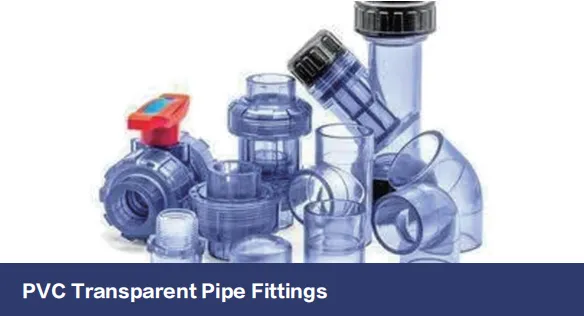
If you've ever enjoyed a crisp soda, savory sauce, or creamy dairy product, you've indirectly benefited from a hidden hero in food processing: PVC transparent pipe fittings. Unlike traditional opaque piping that works "in the dark,"
transparent pipe
solutions create a window into production processes that's transforming food safety and efficiency standards across our industry.
At processing plants worldwide, the shift toward see-through piping isn't just an aesthetic choice – it's a critical operational upgrade with real impact on both quality control and consumer protection.
Why Transparency Matters in Food Processing Systems
Picture a typical food production environment where liquids flow through miles of closed pipes. Before clear PVC solutions, quality checks meant stopping production, dismantling equipment, or relying solely on sensor data. Today's clear PVC revolution offers:
Real-Time Visual Monitoring
The ability to spot sediment buildup, color variations, or particulate contamination without disrupting flow. A major dairy processor reduced quality incidents by 68% after switching to transparent lines in their cream separation process.
Simplified Cleaning Validation
Clear surfaces let staff verify cleaning effectiveness visually after CIP (Clean-in-Place) cycles, a critical requirement in FDA and EU food safety regulations.
Accelerated Problem-Solving
During a recent incident at a beverage plant, engineers identified crystallization in a syrup line within minutes thanks to visible piping – a process that previously took hours of diagnostic work.
Critical Use Cases Across Food Processing
Dairy Production: Beyond Milk Transfer
In cheese production facilities, PVC transparent pipes aren't just moving milk between tanks. They're enabling crucial visual checks at multiple stages:
-
Emulsion Verification:
During processed cheese creation, operators visually confirm uniform melting and blending through clear pipelines before filling.
-
Culturing Process Monitoring:
Transparent sections in yogurt fermentation lines allow technicians to track consistency development without opening tanks.
-
Butterfat Separation:
Cream separation efficiency is visibly verifiable, eliminating guesswork in fat content standardization.
Sauce & Condiment Manufacturing
The challenges with viscous products like ketchup, mayonnaise, and dressings make transparent fittings especially valuable:
-
Particulate Suspension:
Visible lines confirm uniform distribution of herbs, spices, and vegetable pieces that tend to settle.
-
Air Bubble Detection:
In emulsified products like mayonnaise, trapped air pockets that ruin texture are easily spotted.
-
Temperature-Sensitive Transfer:
Chocolate and caramel lines use transparent pipe to monitor flow consistency while maintaining precise thermal control.
A leading ketchup producer eliminated a seasonal variation complaint by identifying sediment accumulation in previously hidden pipe sections during tomato harvest season.
Beverage Production Lines
Carbonated drinks, juices, and alcoholic beverages benefit uniquely from clear PVC systems:
-
Carbonation Verification:
Bubble size and distribution can be visually assessed before bottling.
-
Pulp Distribution:
In juice production, even pulp suspension is confirmed at multiple process points.
-
Fermentation Monitoring:
Craft breweries use clear PVC to track fermentation progress visually without sampling.
-
Bottling Line Prevention:
Visible particles triggering rejection at filling are traced upstream through transparent sections.
Specialty Applications
-
Edible Oil Refining:
Clarity reveals impurities like phosphatides and soapstock before final filtration.
-
Sugar Processing:
Crystal formation from supersaturated solutions is detected at critical transfer points.
-
Biofilm Detection:
The earliest signs of microbial growth appear as subtle hazing on pipe walls long before sensors trigger alerts.
Installation Considerations for Food Safety
Selecting transparent piping requires understanding nuanced implementation factors:
-
FDA Compliance:
Only FDA-compliant compounds meeting CFR 21.177.1010 should be specified for food contact surfaces.
-
Temperature Thresholds:
While clear PVC handles standard processing temperatures, extended +150°F (+65°C) exposure may require CPVC alternatives.
-
UV Sensitivity:
Factory sunlight exposure requires UV-stabilized formulations to maintain clarity.
-
Connection Design:
Avoid internal crevices at joints where contamination can hide - specify smooth weld or sanitary clamp connections.
Maintenance Protocols for Clear Systems
Maintaining optimum clarity requires specific care routines:
-
Scratch Prevention:
Use dedicated cleaning tools with non-abrasive heads - micro-scratches create light diffusion that obscures visibility.
-
Chemical Compatibility:
Chlorine-based sanitizers can cloud surfaces over time - alternate with peroxide solutions monthly.
-
Inspection Cycles:
Implement quarterly haze measurement using light transmission testing per ASTM D1003.
-
Aging Evaluation:
replace sections showing any yellow tinting indicating material degradation.
Beyond Visibility: Secondary Benefits
While transparency drives adoption, plant managers cite these additional advantages:
-
Workplace Engagement:
Technicians troubleshoot more proactively when they "see the process."
-
Training Visualization:
New operators grasp system functions faster watching actual product flow.
-
Capital Efficiency:
Reduced diagnostic downtime pays for installation in 3-9 months for most facilities.
-
Brand Protection:
Visible confidence in processes reassures auditors and retail buyers during facility tours.
The Future of Transparent Processing
Innovative applications continue to emerge beyond traditional pipe fittings:
-
Smart Integration:
AI-enabled cameras monitoring flow lines can detect deviations before human observers notice abnormalities.
-
Self-Cleaning Surfaces:
Emerging photocatalytic coatings use UV light to maintain clarity between cleanings.
-
Temperature-Responsive Pigments:
Research teams are developing additives that temporarily change hue when thermal limits approach.
The era of "mystery flow" in food processing is ending. As consumer expectations evolve and regulations tighten, PVC transparent pipe fittings have transitioned from novel convenience to operational necessity - creating visibility that delivers accountability at every point between raw ingredient and finished product.