
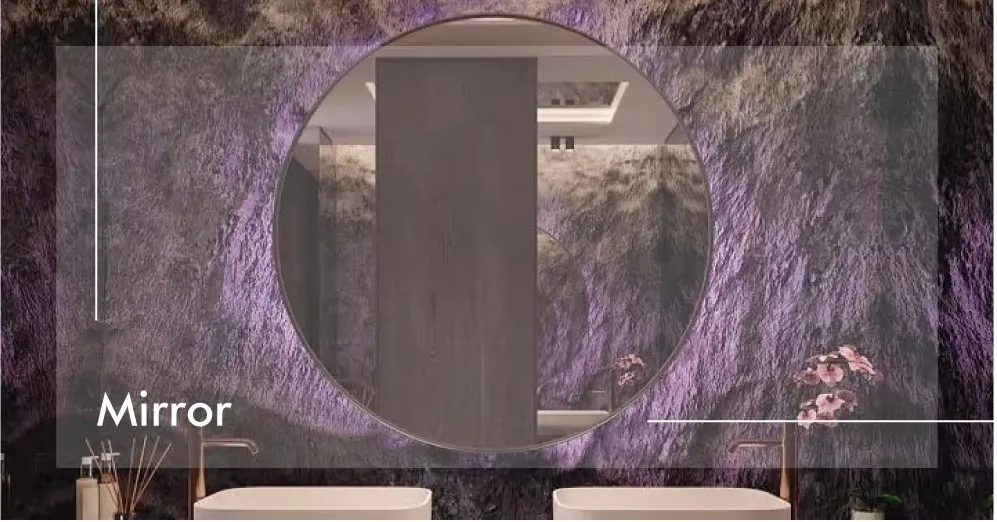
Finding beauty in imperfection and simplicity through intentional design
When you walk into a space that breathes Japanese Zen minimalism, you feel it before you see it. There’s a quietness that settles over you—a sense of calm that modern, cluttered interiors rarely achieve. At the heart of this design philosophy lies wabi-sabi , the art of embracing imperfection, impermanence, and natural authenticity. Today, we’re exploring how something as unassuming as a simple rectangular mirror can become a profound expression of wabi-sabi.
You’ve probably experienced that moment—standing before a mirror only to be distracted by ornate frames, intricate designs, or glaring LED lights. Now imagine instead a modest, functional rectangle of glass that doesn’t demand attention but creates space for reflection—both literal and metaphorical. That’s the power of wabi-sabi design.
Rectangles are the unsung heroes of Japanese minimalism. Unlike circles or ovals, they don’t pretend to be perfect. Their straight lines speak of order and simplicity, while their corners quietly acknowledge the natural asymmetry that defines wabi-sabi. Think about it:
In Japanese tea ceremonies, tools with cracks or repairs are treasured. Why? Because they’ve lived . Your mirror should be no different—a reflection of life’s beautiful irregularities.
Let’s move beyond theory. How do you integrate a wabi-sabi mirror into daily life? Start by rethinking familiar spaces:
Forget grandiose entry mirrors flanked by shelves crammed with trinkets. Choose a slender rectangle, perhaps framed in unfinished cedar or bamboo. Hang it slightly off-center beside a single ceramic vase holding one seasonal branch—cherry blossoms in spring, bare maple in winter.
What this achieves: As you leave each morning, you see yourself not surrounded by clutter, but framed by simplicity. It sets a tone of mindfulness before you step into the world.
In a meditation corner, position your mirror to reflect a small Zen garden or clay bowl of still water. The reflection isn’t meant for vanity—it’s about expanding space visually while honoring emptiness. Choose thin metal framing, allowing slight oxidization to evolve over time.
Mount a rectangular mirror near a window where it captures shifting natural light—morning sun patterns, raindrops sliding down glass. Pair it with building materials like coarse linen curtains or reclaimed wood shelving. Notice how the mirror interacts with these textures? It’s not showing you products—it’s showing you presence.
The frame is where wabi-sabi truly comes alive through honest materials like:
Avoid synthetic finishes or perfect laminates. Instead, let the materials breathe and change over time—patina and small cracks are welcome milestones in your mirror’s life.
Does wabi-sabi belong in contemporary architecture? Absolutely. A rectangular mirror framed in raw concrete on a polished loft wall creates tension between industrial precision and handmade integrity. Or pair it with luxury vinyl plank flooring —here’s our required keyword naturally weaving into the narrative—not for ostentation, but to ground the space in tactile, unpretentious materiality.
The magic happens when simplicity becomes sanctuary. Your rectangular mirror isn’t just reflecting light—it’s teaching you to see beauty in restraint.
True wabi-sabi can't be bought—it's cultivated daily. Notice how dust collects differently along the edges of your mirror each week. Don’t rush to wipe it off. Observe the smudges left by fingertips as reminders of engagement. When you see your reflection in such a mirror, it’s not vanity—it’s seeing yourself as part of an unfolding story, perfectly imperfect.
It invites questions: How much ornamentation is truly necessary? Where do function and form genuinely meet?
A wabi-sabi mirror’s purpose isn’t to showcase products—it’s to bear witness. To you, to light, to time itself. That’s where the enchantment lives.
Recommend Products












