


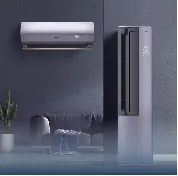
Discover why inverter ACs are revolutionizing home cooling with unparalleled efficiency and how this technology puts money back in your pocket over time
The Hidden Efficiency Revolution
Picture this: It's mid-July, the mercury’s climbing past 90°F, and your traditional air conditioner keeps cycling on and off like an overworked engine. Every time it restarts, you're not just hearing that loud clunk—you're feeling it in your electricity bill too. This wasteful start-stop dance is precisely what inverter air conditioners eliminate.
At its core, an inverter AC adjusts its motor speed instead of shutting down completely. Think of it like a car cruising steadily at 55 mph versus repeatedly accelerating from 0 to 60. One method conserves energy; the other burns through it. By maintaining consistent temperatures rather than swinging between extremes, inverter systems tackle both comfort and cost with elegant efficiency.
Why This Matters Now
The Department of Energy reports that air conditioning accounts for nearly 20% of household electricity use in America. With heatwaves intensifying globally, cooling systems with "smart" technology like inverters aren't just luxury upgrades—they're becoming essential tools for climate adaptation and financial prudence.
Energy Savings You Can Measure
Let's break down the numbers that make inverter ACs compelling investments. A typical 24,000 BTU conventional unit might guzzle 2,700 watts during operation. Its inverter counterpart? Just 1,500 watts when maintaining temperature. That's a 45% reduction in real-time consumption before even factoring in the elimination of startup surges.
| Aspect | Traditional AC | Inverter AC |
|---|---|---|
| Startup power surge | Yes (3-7x normal draw) | None |
| Average consumption (24k BTU) | 2,700W | 1,500W |
| Daily kWh (10hr use) | 24.3 kWh | 16.5 kWh |
| Temperature consistency | ±4°F fluctuations | ±1°F precision |
| Annual cooling cost (avg.) | $485 | $260 |
Quantifying Seasonal Savings
During Texas summer trials, homeowners saw staggering differences: The Wilson family replaced two aging units with inverter models and slashed their July-September cooling costs from $1,100 to $550—saving enough over three seasons to cover installation costs. How? Inverter units operate like precision surgeons versus conventional ACs' sledgehammer approach.
These savings multiply in humidity-prone regions where consistent operation prevents moisture rebound. When air handlers cycle off, humidity climbs rapidly. Inverter systems maintain gentle airflow, continuously extracting moisture without temperature overshooting.
Long-Term Financial Upside
Yes, inverter ACs cost 20-30% more upfront. But view this through the lens of lifecycle economics. Three pillars support their superior value proposition:
Durability Dividend
Electronics fail most often during power cycling. Inverter compressors avoid thousands of stressful startups each season. Industry data shows inverter units averaging 15-20 year lifespans versus 8-12 years for conventional models. That means potentially skipping one entire replacement cycle.
Maintenance Matters
Steady operation prevents coil freeze-up and reduces strain on capacitors/contactors. HVAC technicians report inverter systems needing 40% fewer emergency calls. Consider the avoided costs of off-hour service visits averaging $200 each.
The Rebate Bonanza
Through 2032, the Inflation Reduction Act offers tax credits covering 30% of qualified energy efficiency upgrades. Combined with utility rebates often exceeding $400 per ton, this effectively eliminates the upfront cost difference in many cases. Suddenly that "premium" price disappears.
When integrating with renewable energy sources like solar panels —one of the required keywords—the equation becomes even more compelling. Inverter ACs can modulate their power draw to match solar output, maximizing self-consumption of generated power.
Beyond Dollars: Silent Revolution
Consider the hidden benefits numbers can't fully capture:
Comfort That Hugs You
The gentle whisper of an inverter fan versus the disruptive blasts of conventional units creates a fundamentally different environment. Homes maintain consistent temperatures without "hot spots" or sudden chills that trigger thermostat wars between family members.
Grid-Friendly Innovation
During peak demand events, utilities increasingly reward homeowners who allow temporary power reductions. Inverter systems can gracefully dip consumption by 50% with barely perceptible temperature change. Think of it as virtual power plant participation without inconvenience.
Making the Transition
Not all inverter systems perform equally. Prioritize these features when considering upgrades:
Critical Specifications
Look beyond SEER ratings to IPLV (Integrated Part Load Value) scores which better reflect real-world efficiency. Units scoring over 15-16 provide maximum savings in mild weather conditions. Variable-speed air handlers with ECM motors enhance benefits.
Sizing Matters More
Traditional oversizing approaches backfire with inverters. Accurate Manual J load calculations are essential since oversized systems can short-cycle even in modulating mode. Professional assessment typically costs $100-$300 but prevents costly mistakes.
The technology journey continues as smart integrations emerge. Wi-Fi enabled units now learn usage patterns and anticipate cooling needs before temperatures climb. Geofencing features adjust settings when your phone approaches home. And during extended vacations, "eco guard" modes prevent humidity damage using minimal energy.
The Environmental Imperative
While personal savings drive adoption, the collective impact deserves attention:
Replacing 10 million conventional units with inverter models could reduce summer peak demand by 15 gigawatts—equivalent to 30 midsized power plants. Water savings become substantial too; conventional power plants consume about 1.6 gallons per kWh. The DOE estimates inverter tech could save 100+ billion gallons annually nationwide.
The Practical Path Forward
For homeowners still using pre-2010 AC systems, replacement now—rather than waiting for failure—makes mathematical sense. Even relatively "young" 8-year-old units become prime candidates. Immediate energy savings typically cover financing costs, while manufacturers offer 10-year compressor warranties on premium models.
The New Cooling Standard
Like smartphones replacing landlines, inverter technology represents a fundamental shift rather than incremental improvement. With regulations increasingly phasing out less efficient fixed-speed models worldwide, this efficient future is becoming unavoidable.
The transformation happening in cooling parallels other efficient appliances that save money by working smarter. From refrigerators to washing machines, technological evolution consistently proves less energy consumption doesn't mean less comfort—it delivers precisely the opposite.
In our ever-warming world, achieving cool comfort sustainably isn't just possible—it's becoming increasingly essential. The inverter revolution shows we can beat the heat without breaking budgets or ecosystems.










